Let them be wild!
Let them be wild!
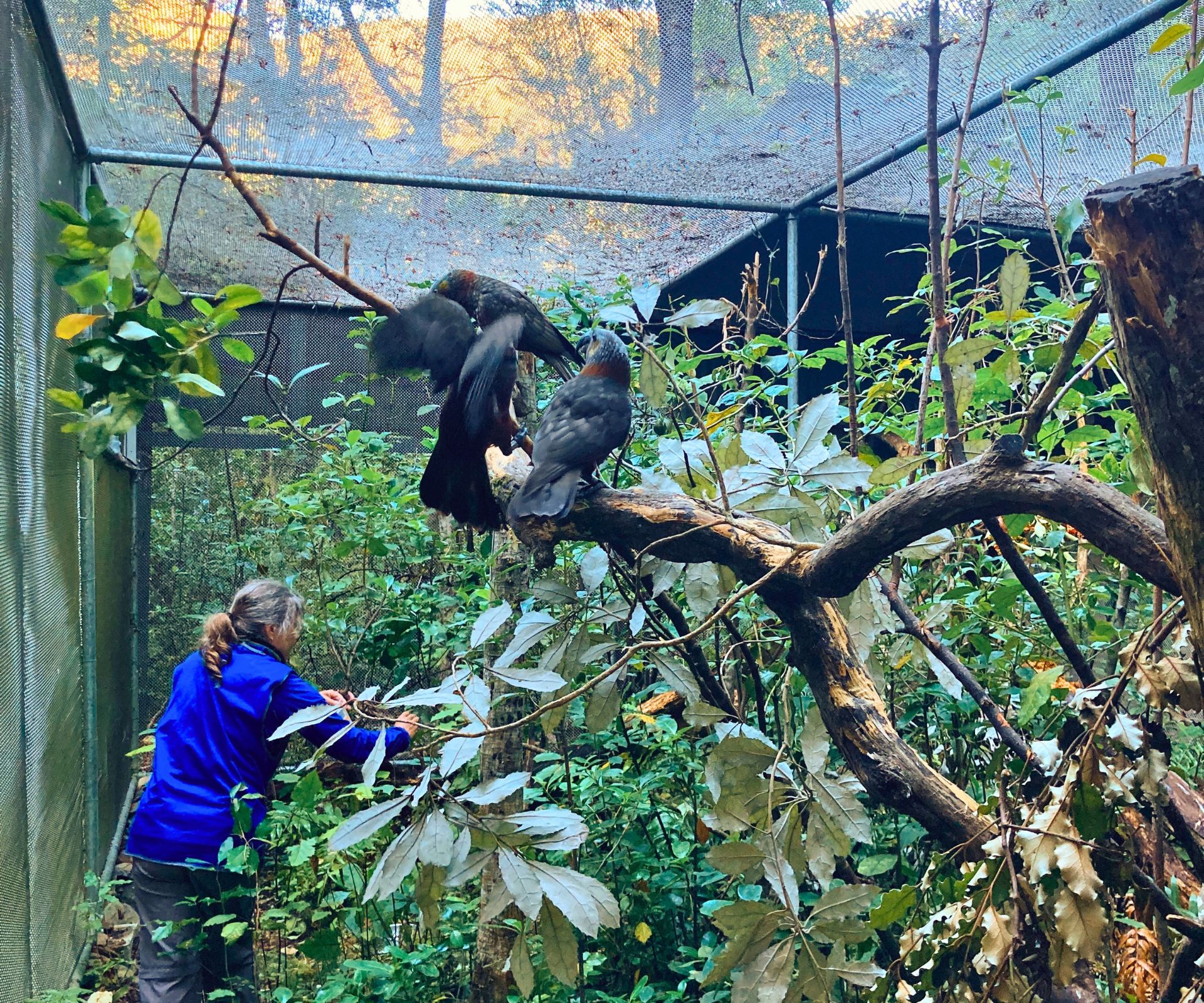
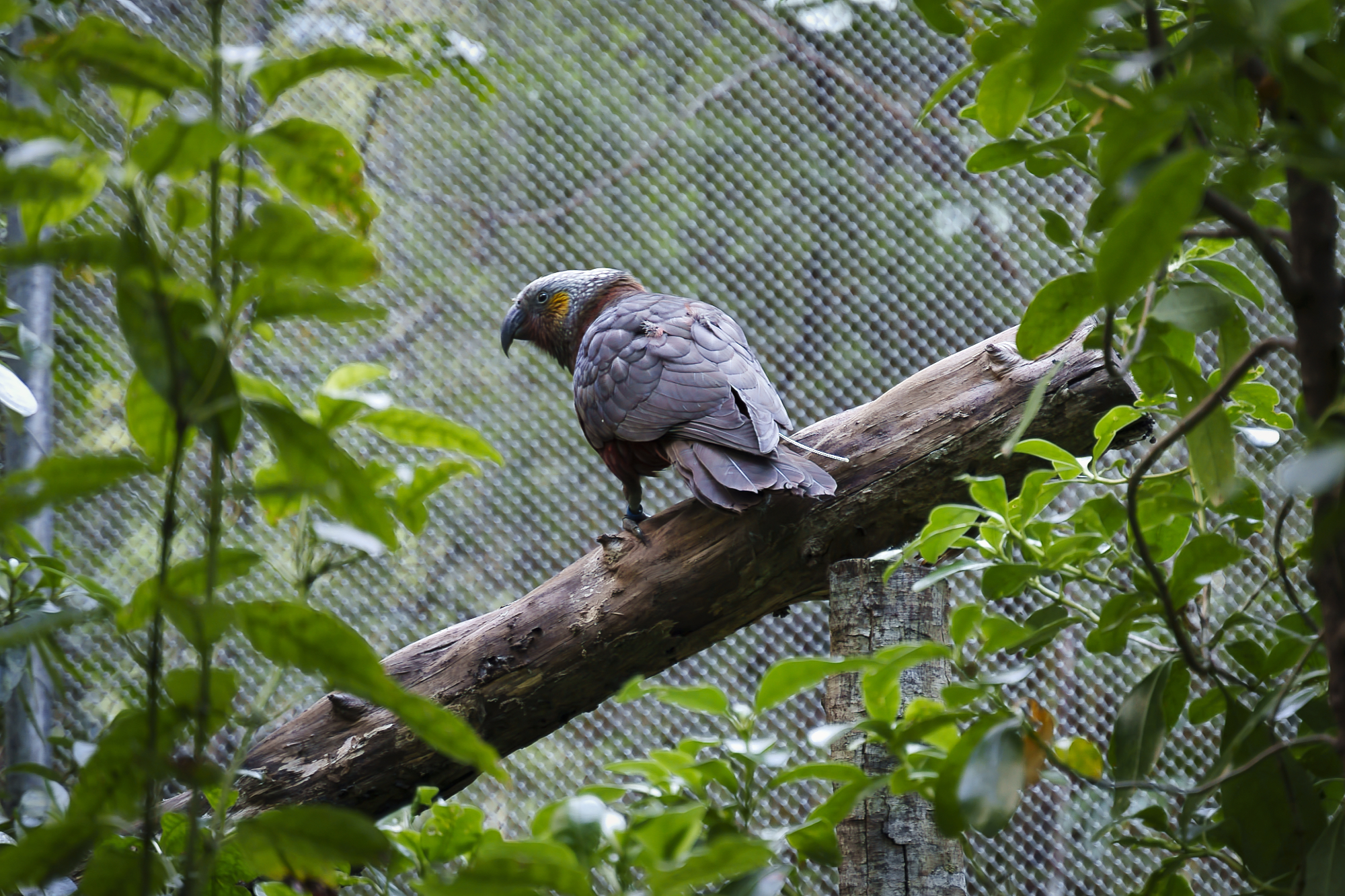
Most of you might have already spotted our new, most exciting residents (sorry Ruruku!): three cheeky young kākā, who will only rest from playing and investigating their surroundings when they are asleep!
To recover from the stress of the transport from Dunedin to Nelson, gain weight and feel home here the kākā were kept inside our aviary for several weeks. Soon these three captive bread birds will finally roam free and hopefully stay inside our safe invasive- mammal free area of the Sanctuary.
What’s next?
During their time in the aviary, the kākā were well attended by a team of sanctuary volunteers, Natureland staff, and Brook Waimārama Sanctuary staff. The busy work included a morning and an afternoon shift where water is replenished, feeding stations cleaned and filled, droppings are scrubbed, food items poked onto branches, and enrichment in the form of rotten logs, branches, and native berries added.
However, once the birds can roam free, we need your help to keep them safe, and some dangers might be a little unexpected. Here the golden rules for all who want to be kākā- carers!
- Only looking, no touching! Kākā are in possession of extremely sharp and strong beaks which they use to investigate, climb, rip, and break. You would not like any of your body parts to be a part of those games. Even if the parrots would not intentionally harm or attack a person, they could accidently injure you if you tried to interact with them. However, we do encourage everyone to keep an eye out for kākā, and report any sightings on the iNaturalist- App.
- Let them forage for their kākā kai! These forest parrots have one main job, which they are extremely good at if we leave them to it: foraging for natural food. Foraging keeps them entertained, well regulated, and they know exactly what should be on their menu- a mix of native berries, nectar, and bugs they find in rotting logs and dead trees.
There are several reasons for never feeding kākā:
- At bird feeding stations a high density of various birds accumulates, all leaving food waste, doing their business, and all of it in one small place. This can lead to bacterial, viral and fungal infections. It is a hotspot for diseases which are transmitted between birds and can be a problem especially once avian influenza arrives in New Zealand.
- Bird food usually attracts and feeds mice and rats as well, which are an additional risk for parasites/diseases, and helps critters thrive in great numbers.
- When it is too easy for kākā to get food, especially very energy dense bird-food, they will soon start satisfying their curiosity and overflowing energy by destroying garden plants, decks, roofs, and more which can be harmful for them and costly for property owners.
- Wrong food will cause serious suffering and death! A common result is marrow bone diseases which causes deformities in the beak, spongy bones, broken feathers and leads to birds not being able to walk or even sit properly, or death.
“Let them be wild – never feed kākā”
If you want to help not only kākā but all native birds, the best way is to transform your garden into natural wildlife paradise! Great guidance on what plants to use can be found in the Living Heritage Plant Guide (find a free download on the Nelson City Council website), or local nurseries such as Titoki Nursery.
Prepare your property and manage pests!:
If you are lucky enough to live or work somewhere with a large glass/ window front, it can be a real life saviour for various birds to put window stickers on to prevent bird strike.
However, different to the kākā in Wellington with Zealandia surrounded by suburbia, our birds have the luxury of having plenty of primeval forest adjacent to the Sanctuary, hence we don’t expect them to show themselves in town. The only downside about the forest surrounding the sanctuary is, there are many mammalian predators present.
Kākā are the most vulnerable to predation by stoats when they are still young chicks in the nest, or females sitting on eggs. Therefore, supporting sustained small mammal pest control at landscape scale would make the biggest difference not only for kākā, but for all native birds, and even lizards, insects, and plants!
A big thank you to everyone who has been involved so far!
Looking ahead, we remain committed to protecting native wildlife, restoring habitats, and creating meaningful conservation experiences for our community.