
An Update on Bird Flu
Information on H5 bird flu
Brook Waimārama Sanctuary Prepared and Vigilant as New Zealand Responds to HPAI H5N1 Bird Flu Threat
Nelson, New Zealand – Brook Waimārama Sanctuary is closely monitoring the evolving Highly Pathogenic Avian Influenza (HPAI) H5N1 situation and is working proactively to help protect the Sanctuary’s bird populations, especially our threatened species such as kākāriki karaka, kiwi pukupuku and kākā.
While HPAI H5N1 has not been detected in the South Island, the Trust is taking precautions and is following guidance from Biosecurity NZ, MPI and the Department of Conservation.
“The health and wellbeing of our native wildlife is our highest priority. While there is currently no cause for alarm within the Sanctuary, we are taking a precautionary approach and ensuring we are prepared should the situation change.”
The Sanctuary is reminding visitors that everyone has a role to play in protecting New Zealand’s unique wildlife.
Visitors are encouraged to:
- Avoid visiting if they have been in recent contact with H5N1, sick or dead birds
- Stay away from any wildlife, even if it looks like it needs help! Instead, take a note of the location inside the Sanctuary, and let a staff member know. Outside the Sanctuary, if you see a sick or injured native bird, inform DOC. If you see three or more dead or sick birds, call the MPI hotline.
- Do not touch any feathers you find.
- Practice good hygiene, including cleaning footwear before entering the Sanctuary.
At your home, you can keep your garden birds safe by instead of offering bird feeders or bird baths, planting native flowering plants. Bird feeders and bird baths are hotspots for bacteria even without bird flu due to an unnaturally high accumulation of birds in one place. Native plants encourage natural foraging behaviour, appeal to our native manu, and prevent the direct or indirect spread of diseases and parasites.
Staff and volunteers will remaining vigilant for any unusual bird behaviour or unexplained mortalities and will report any concerns through the appropriate biosecurity channels.
The Sanctuary will continue rely on the advice from DOC, MPI and Biosecurity New Zealand to ensure the latest information and best practice measures are implemented.
Brook Waimārama Sanctuary encourages anyone who observes sick, injured or dead wild birds to avoid contact and report them through the appropriate MPI reporting channels.
As New Zealand prepares for the possibility of HPAI H5N1 arriving, Brook Waimārama Sanctuary remains committed to protecting one of the country’s most important conservation sites.
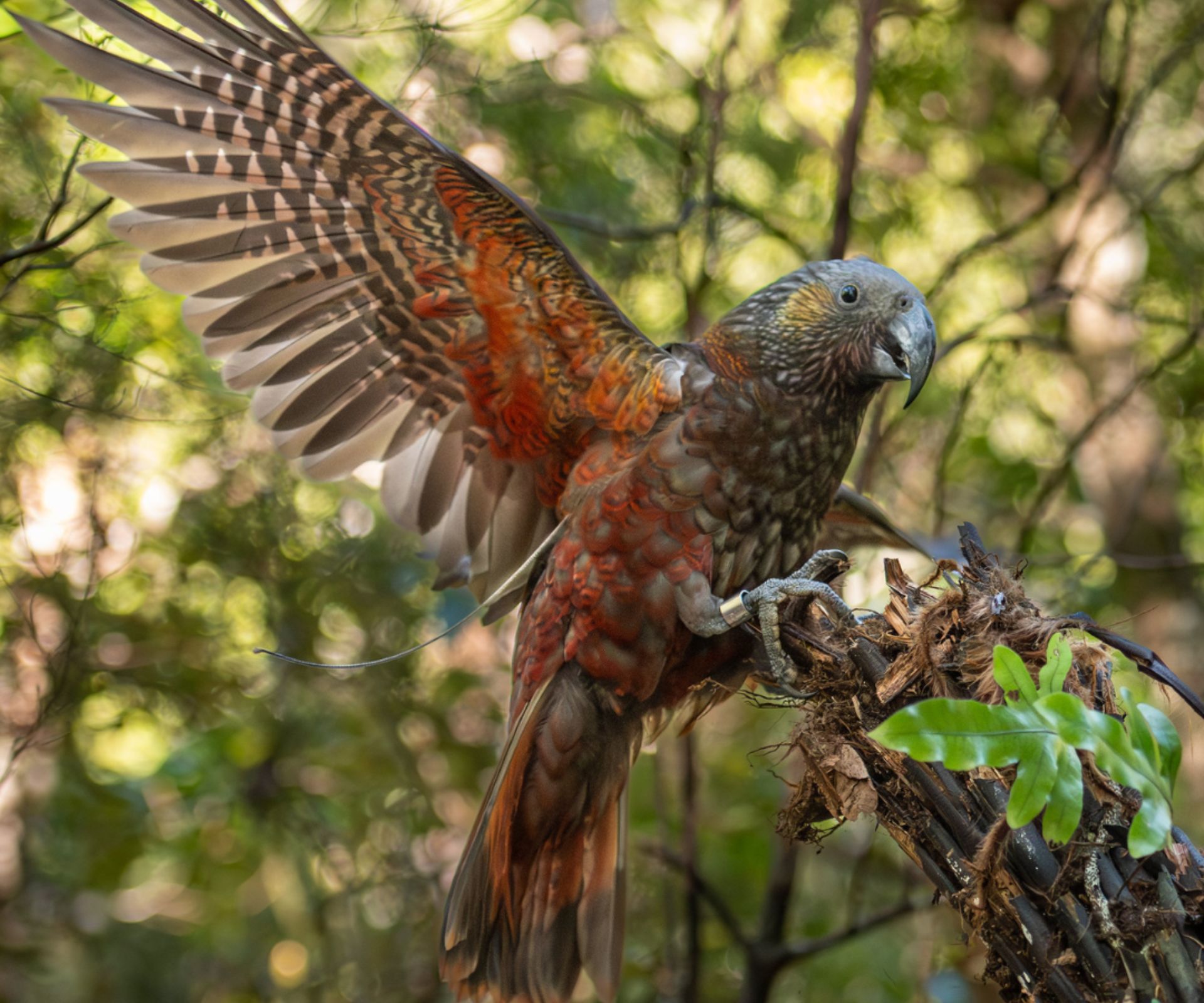
Here’s what you can do:
Keep your distance from wildlife. Even if it’s hard to not interfere with fledgelings fallen out of the nest, birds with window strike, birds which got caught by pets, or sick birds. It is very stressful for wild birds to be handled, and they have the best chance of survival and recovery when left alone.
Please, under no circumstance bring wildlife to the Sanctuary as we don’t have facilities to care for them. In addition, it can risk the health of our threatened species at the Sanctuary.
Thanks for helping to keep our manu safe!
Inside the sanctuary:
If you see a sick, injured or dead bird, please let our team know ASAP, including the location and any info you can provide about the species.
Outside the sanctuary:
If you find a sick or injured native bird, contact DOC on 0800 DOC HOT.
If you see three or more sick or dead wild birds in a group, please report it to MPI’s Pest and Disease hotline – 0800 80 99 66.
To help reduce the spread of H5 bird flu, don’t feed wild birds at home. Let them be wild.