Rare tree discovered in the Sanctuary
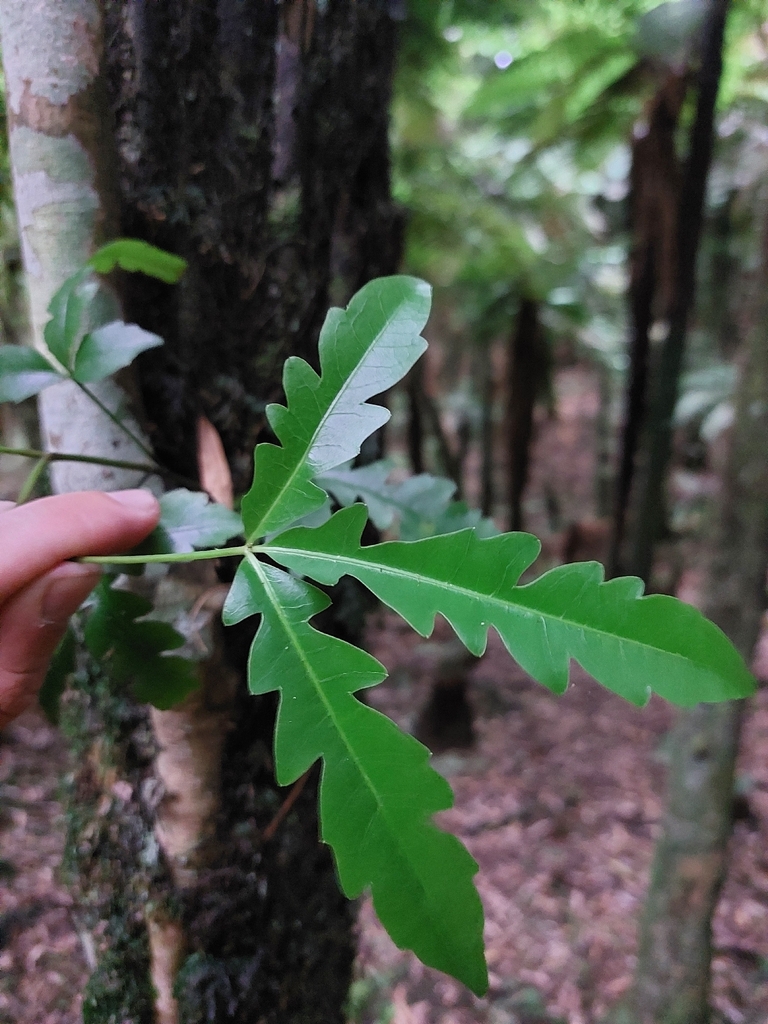
During our annual kākāriki karaka survey, Sanctuary Biodiversity Ranger Chelsea spotted some suspiciously glossy, deeply lobed leaves. A small sapling growing high up the trunk of a kātote tree fern. These leaves, plus the fact the plant was growing as an epiphyte (on another plant) caused a bolt of instant recognition. Looking harder she noticed more glossy leaves further down the gully. Noting the location she continued the survey. After the survey fellow Sanctuary Biodiversity Ranger Henry accompanied Chelsea to the site and together they confirmed the discovery of a small population of Raukaua edgerleyi, common name raukawa. They did a quick survey of the surrounding area and found 4 large mature trees and many juveniles.
Why is it rare and why is it so great that the species is protected within the Sanctuary?
New Zealand has an exceptionally unique flora, with over 80% of the ~2500 species being endemic, meaning only growing here. Almost half of these species are threatened with extinction. Many species have become sparse across a large range. The culprits are often the same, possums, deer, goats, rabbits and hares defoliate them, pigs root them up and rodents chew their seeds. These pressures, among others like climate change and habitat destruction, exerted at the same time will compound and push populations towards extinction.
Raukawa is one such tree whose large shiny leaves are delicious to possums and deer. In the 2023 Department of Conservation report on the conservation status of vascular plants, raukawa was recently moved from ‘Not Threatened’ to the threat category of ‘At Risk – Declining’. This reflects its increasing rarity of this species nationally, however, the threat status of the plant locally in eastern Nelson is potentially quite worse.
The Brook Waimārama Sanctuary is nestled within the Bryant Range and neighboring Richmond Forest Park. Within these ranges, raukawa is scarce. Where raukawa still does persist, it does so under constant threat of destruction. On the ground, its seedlings will soon be taken up by deer. It will germinate on tree ferns and some larger trees out of reach, perhaps an adaptation that allowed them to avoid moa in the past. It doesn’t help them to avoid possums which go out of their way to climb to the tastiest, least accessible leaves. Old trees that continue to be browsed will not have energy to make flowers and reproduce, and will eventually be lost from the forest. To lose a once common tree from the forest is alone a tragedy, but it is also a loss of its place within the ecosystem, as a source of habitat, food and biodiversity.
The Richmond and Bryant Ranges receive next to no possum or ungulate(hoofed animals) control, so pest numbers remain high. The Sanctuary is free of these mammals, and in turn has become a refuge for historically common plants like orchids, mistletoes and palatable trees like raukawa.
What is this tree? How and where does it grow?
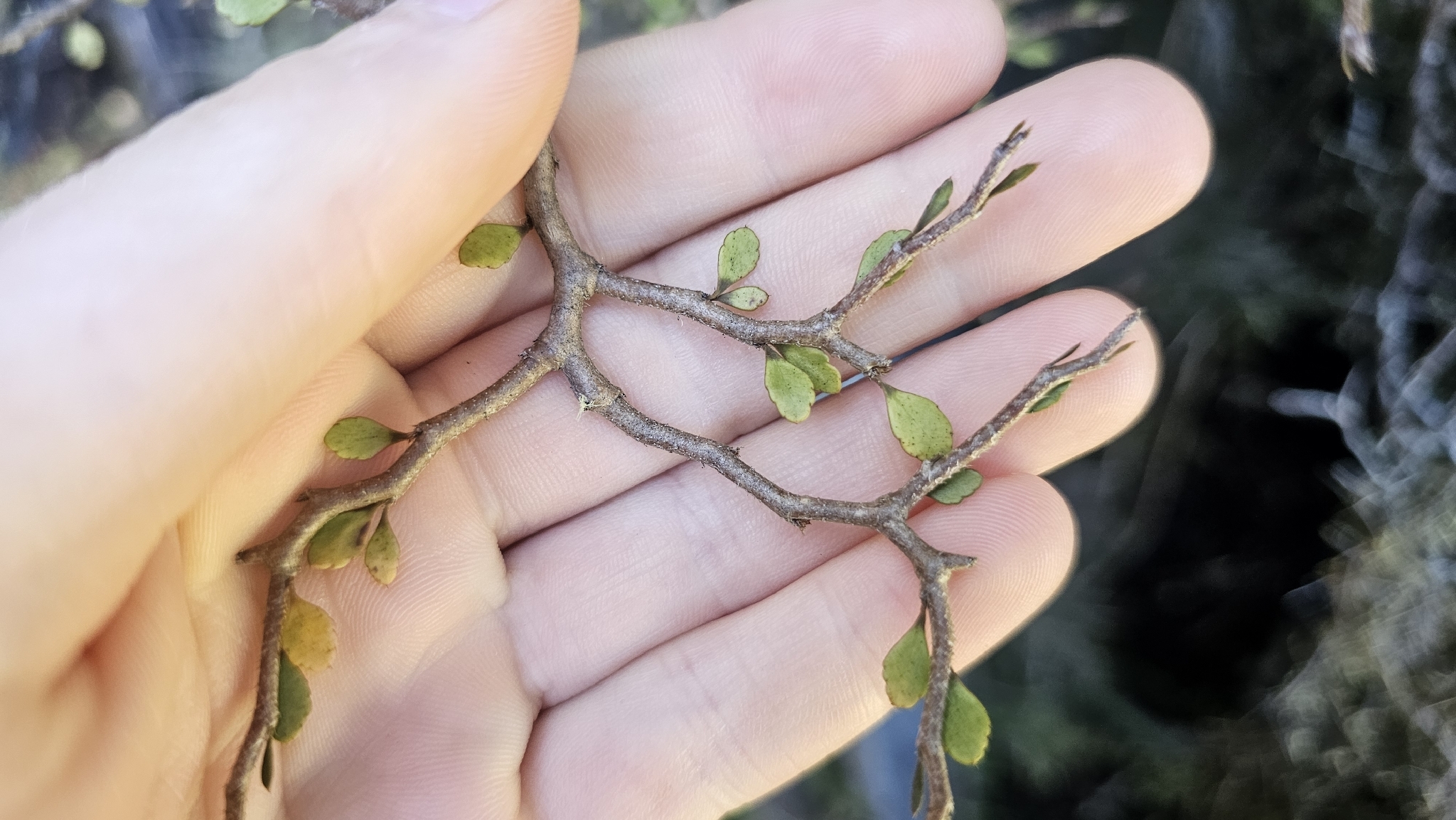
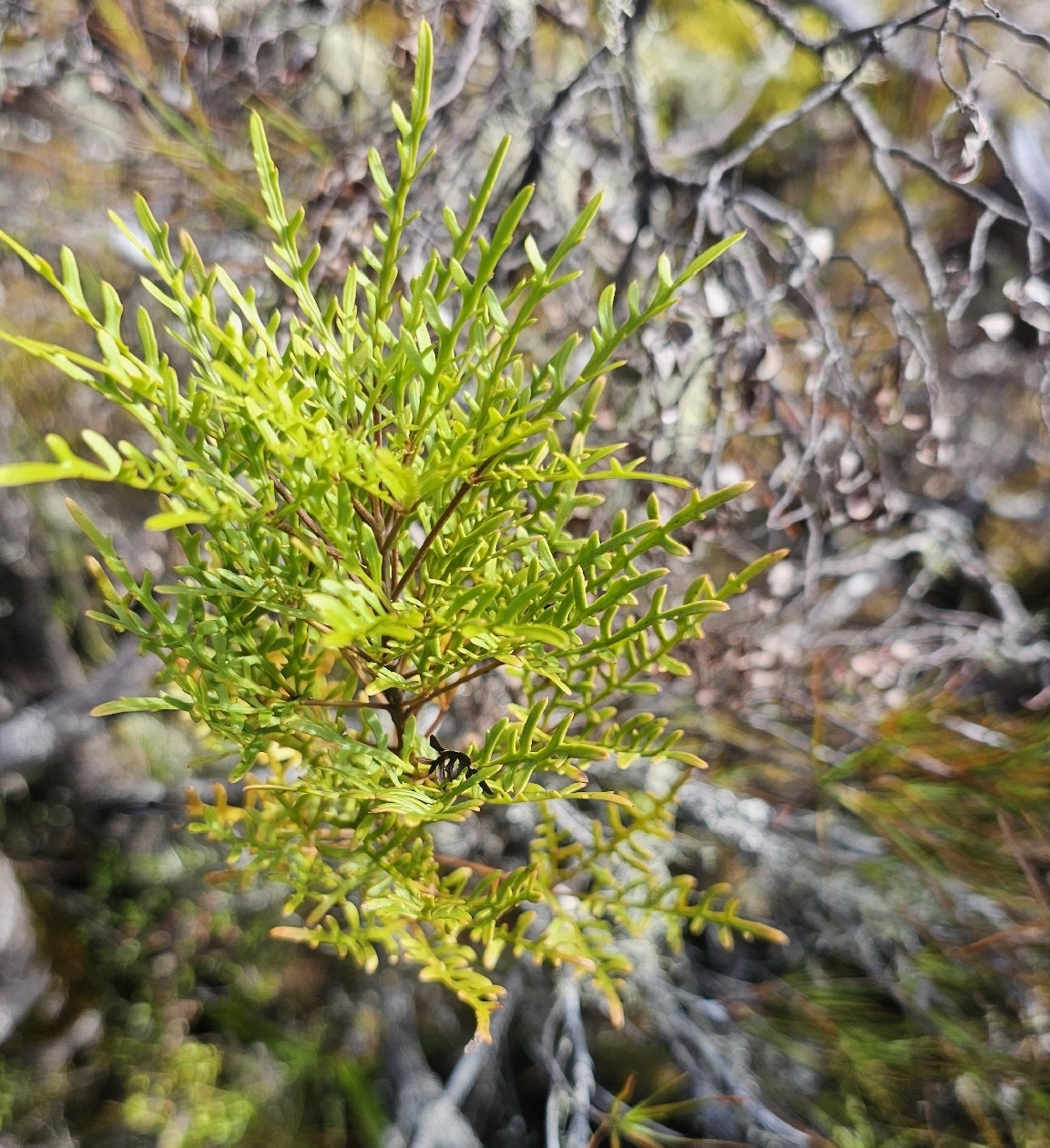
Raukawa is the namesake for the genus Raukaua. It is related to other native species like lancewoods, five fingers(Pseudopanax) and seven fingers(Schefflera). These genera are within the family Araliaceae, commonly referred to as the dreaded ivy family. Within the Raukaua genus there are three New Zealand endemics, two Chilean species and one in Tasmania. This is a classic Gondwanan distribution, where the species are distributed among landmasses that were once members of the great Gondwanan megacontinent. Molecular evidence suggests that the common ancestor between the Raukaua species of Aotearoa and the seven finger may have arrived soon after Zealandia split from Gondwana 80 million years ago. This deeply endemic lineage has thus been here for longer than many of our iconic bird species like takahē and kiwi. The two other native species are haumakāroa (R. simplex) and R. anomalous. Haumakāroa is generally a higher altitude species with very intricate lacy juvenile leaves. It is also commonly sought after by possums and is becoming rare in the Richmond Ranges. Raukaua anomalous is… well an anomaly. Its leaves are only 1cm long and it grows in a dense, thick-stemmed, wide-angled shrub. While it is an anomaly in its genus, this growth form is the norm for many species in Aotearoa, hypothesised to be an adaptation for ice age frosts and browsing moa species.
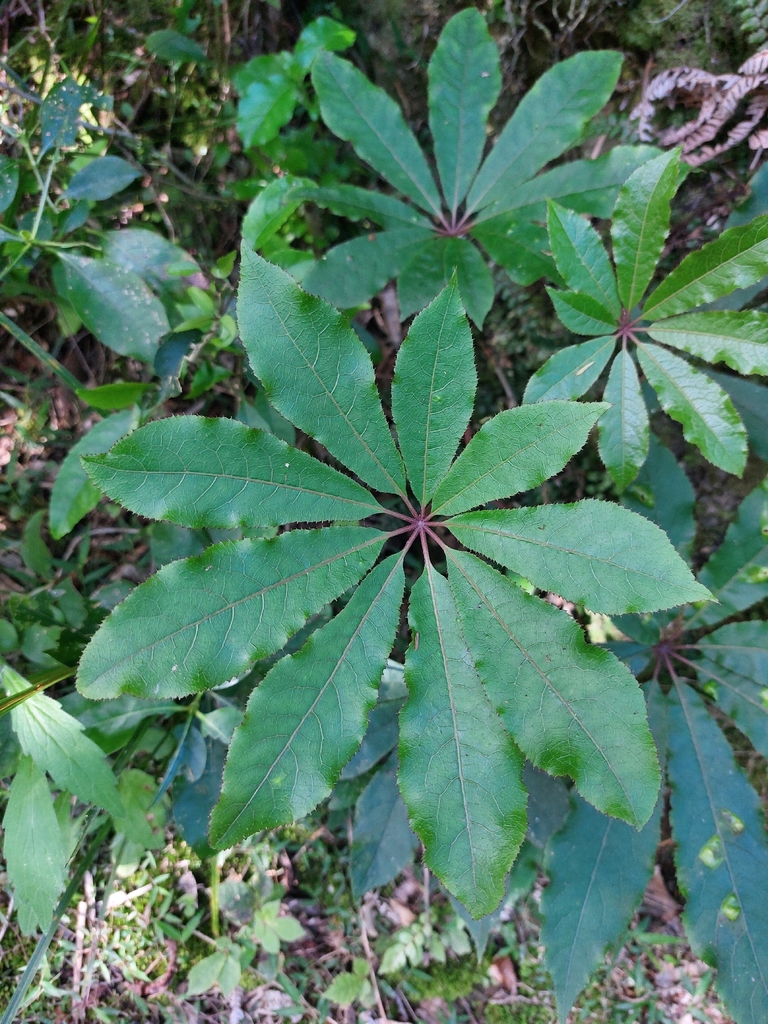
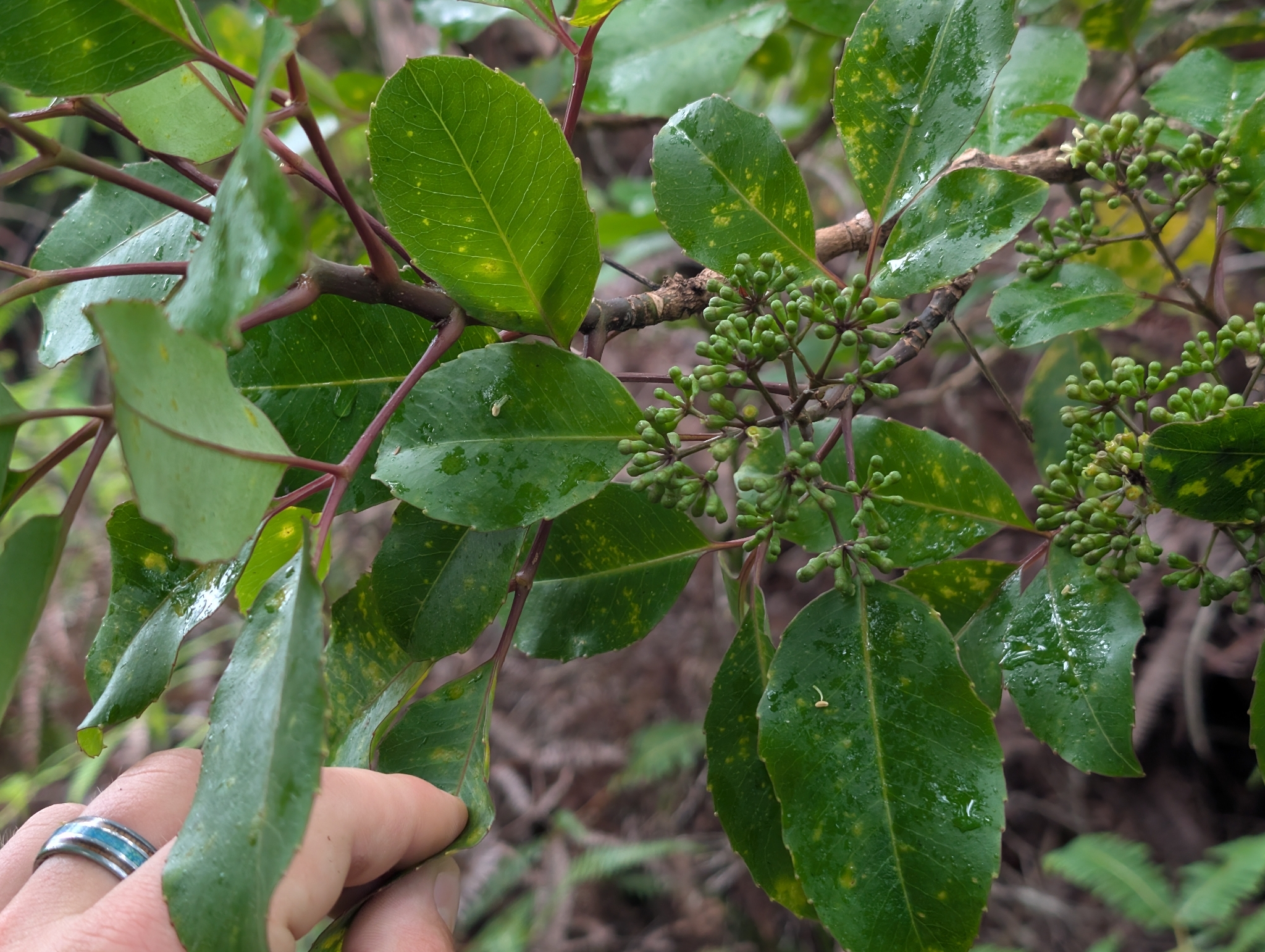
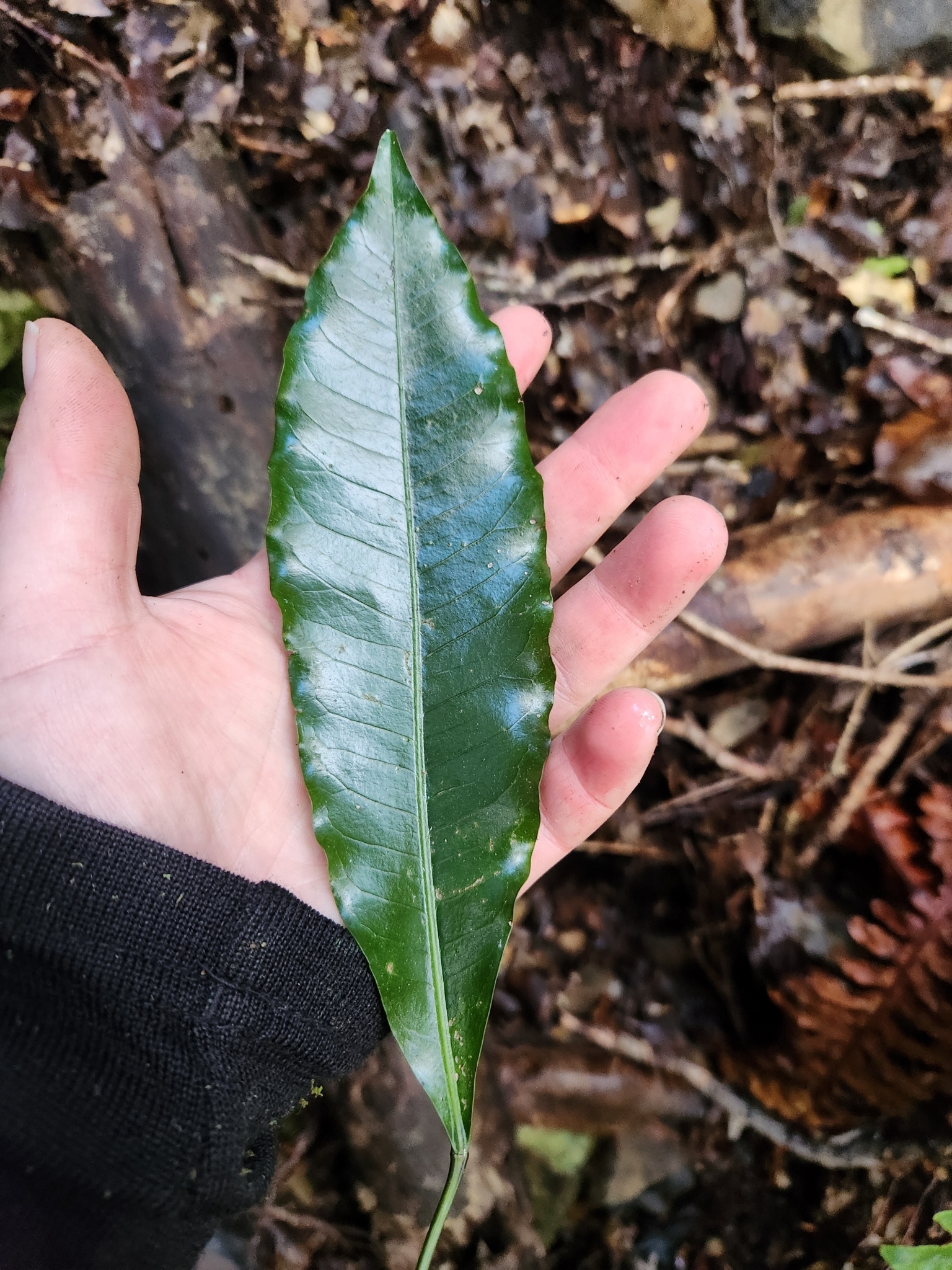
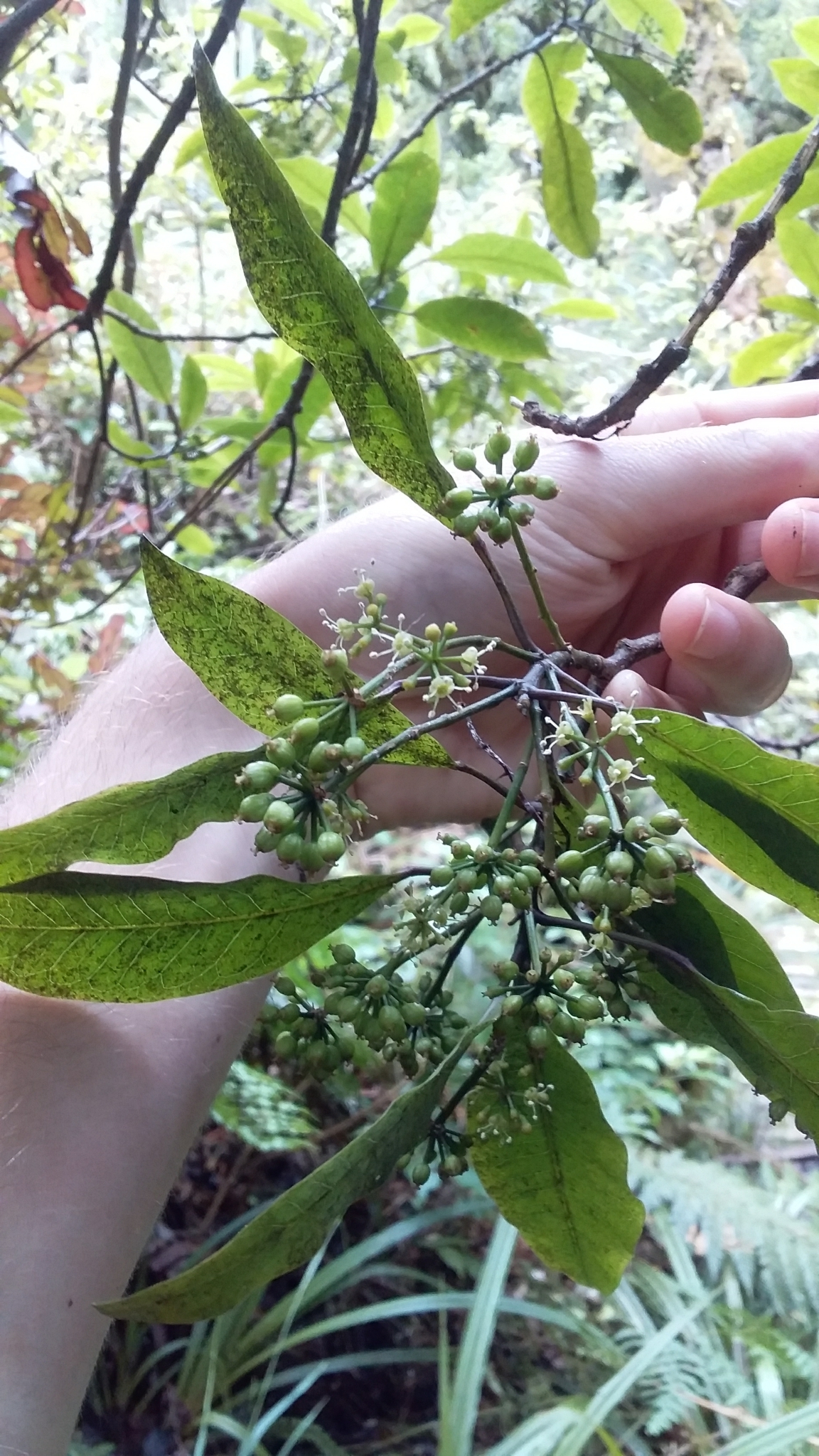
Raukawa is a highly scented plant, with a strong peppery smell. Māhinaarangi used the plant as a perfume when meeting each night with her lover Tūrongo. They named their son Raukawa, the ancestor of the current day Ngāti Raukawa iwi. The leaves are large, thick and glossy, and as juveniles, come in sets of three leaflets. The juvenile leaves are distinctively lobed/ deeply toothed. Once an adult, leaves are produced singly with an entire margin that undulates like a crinkled chip. Their flowers are understated, but interesting up close(something that can be said for most New Zealand natives). They are borne on what are called umbels, a type of inflorescence(collection of flowers) that branch from a central point. They multiply to make compound umbels. Think of flowers in the carrot family for reference, Queen Anne’s lace, fennel, etc… Raukawa inflorescences however contain a mixture of separate male and female flowers that are arranged on different umbels within the same compound umbel. This cleverly separates their sexes spatially which may help them to avoid self pollination.
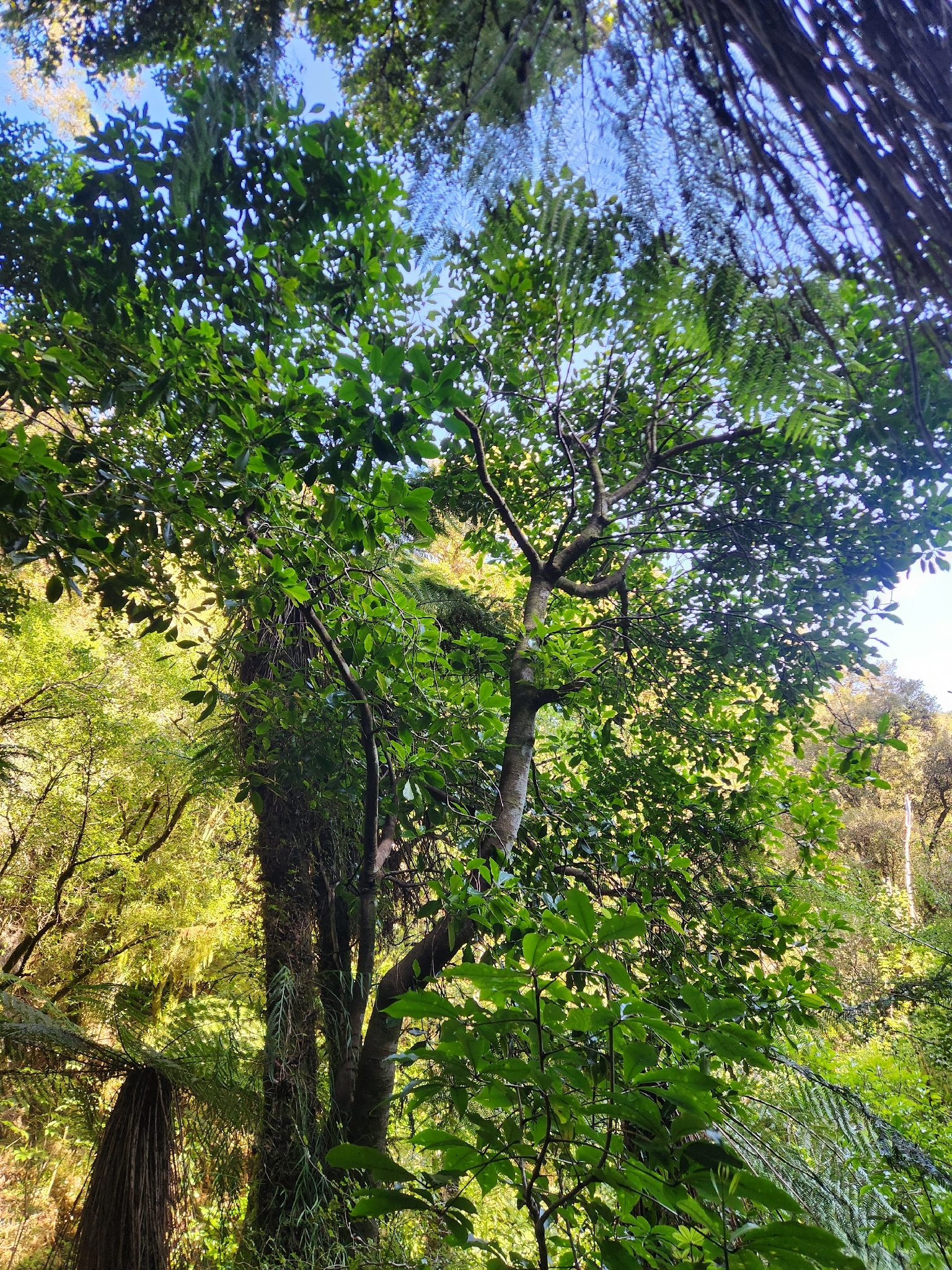
Raukawa is what is called a facultative epiphyte. This means that it has the capacity to begin its life in a tree, in this case tree ferns like kātote and ponga. This ability allows the seedling access to light at an early stage of life. Eventually a root reaches the ground and then becomes hard like a trunk, at which point the raukawa slowly outgrows its host. The trees can become reasonably large, comparable to other broadleaf trees like whauwhaupaku and mahoe. One of the larger trees found in the Sanctuary had outgrown its host and toppled, still clinging to its long dead fern. Luckily the tree continues to grow upwards from lateral branches. Because of this habit, the trees tend to grow in moist gullies and cloud forests where tree ferns are common. But, we expect that as the species regains its foothold in the valley, it will grow more and more from the ground up as its seedling won’t fall victim to pests.
Chelsea’s find embodies the natural wonder that is beneath the surface of the Sanctuary. And, the importance of the Sanctuary, not just for birds, but for plants, lizards, invertebrates and habitats and communities as a whole.