Kākāriki Thriving in the Sanctuary: A Conservation Win
Kākāriki survey crashed by local kea!
On the 1st and 2nd of September the Brook Waimārama Sanctuary held the kākāriki karaka population count. Led by the DoC kākāriki karaka team, alongside Sanctuary staff and volunteers. The method used a recorded call of the kākāriki karaka, played at predetermined points on a grid within the Sanctuary. The call was used to elicit a response in nearby birds, allowing them to be lured in and counted. Though, the playback was far more effective at luring angry bellbirds in than kākāriki!
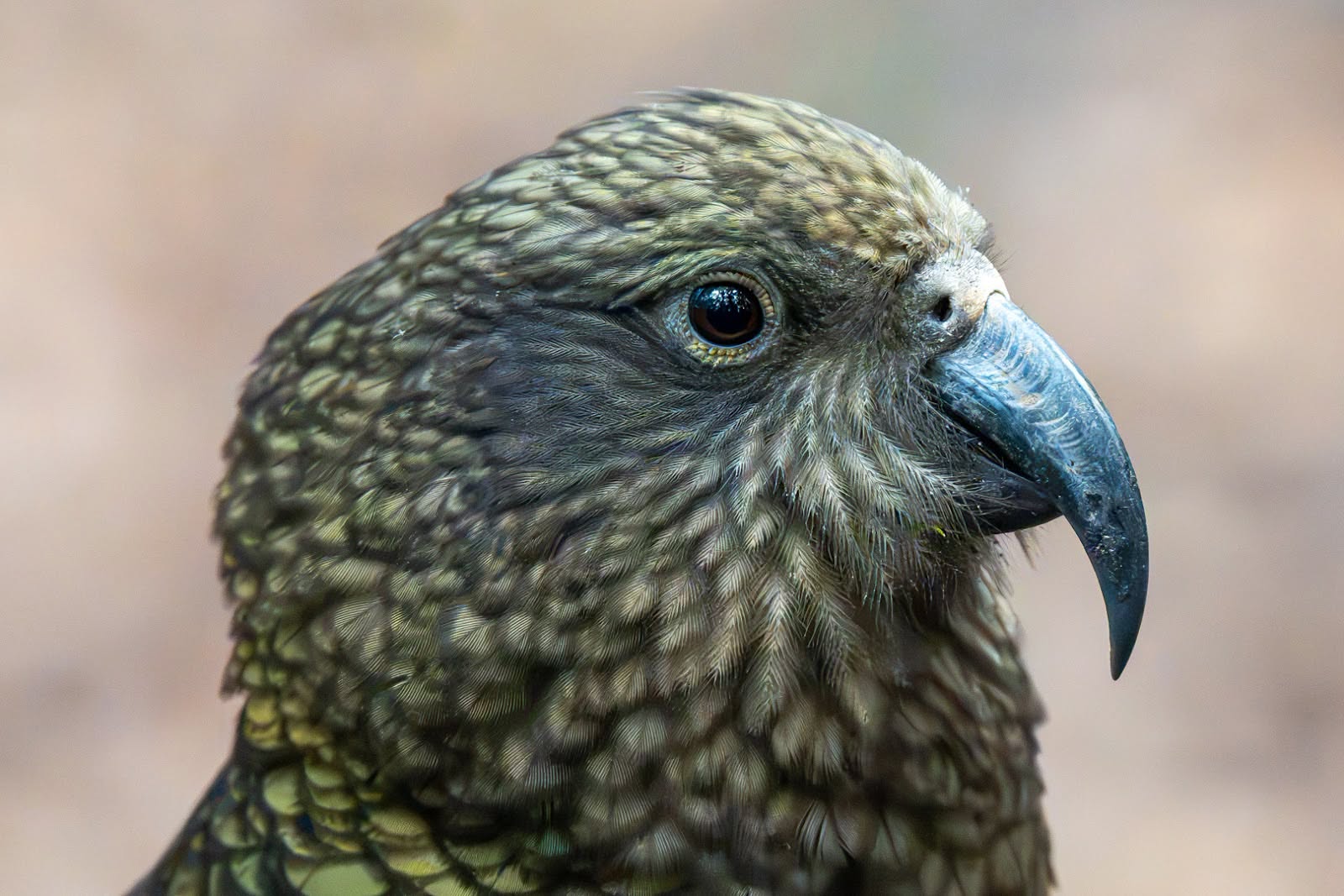
A large cohort of participants gathered at one of the Sanctuary’s higher altitude fence hatches(aptly named Kākāriki Hatch) early each morning. On the second day they were surprised to be greeted by a very curious kea! Not quite the parrot they were after, and not at all a parrot they were expecting.
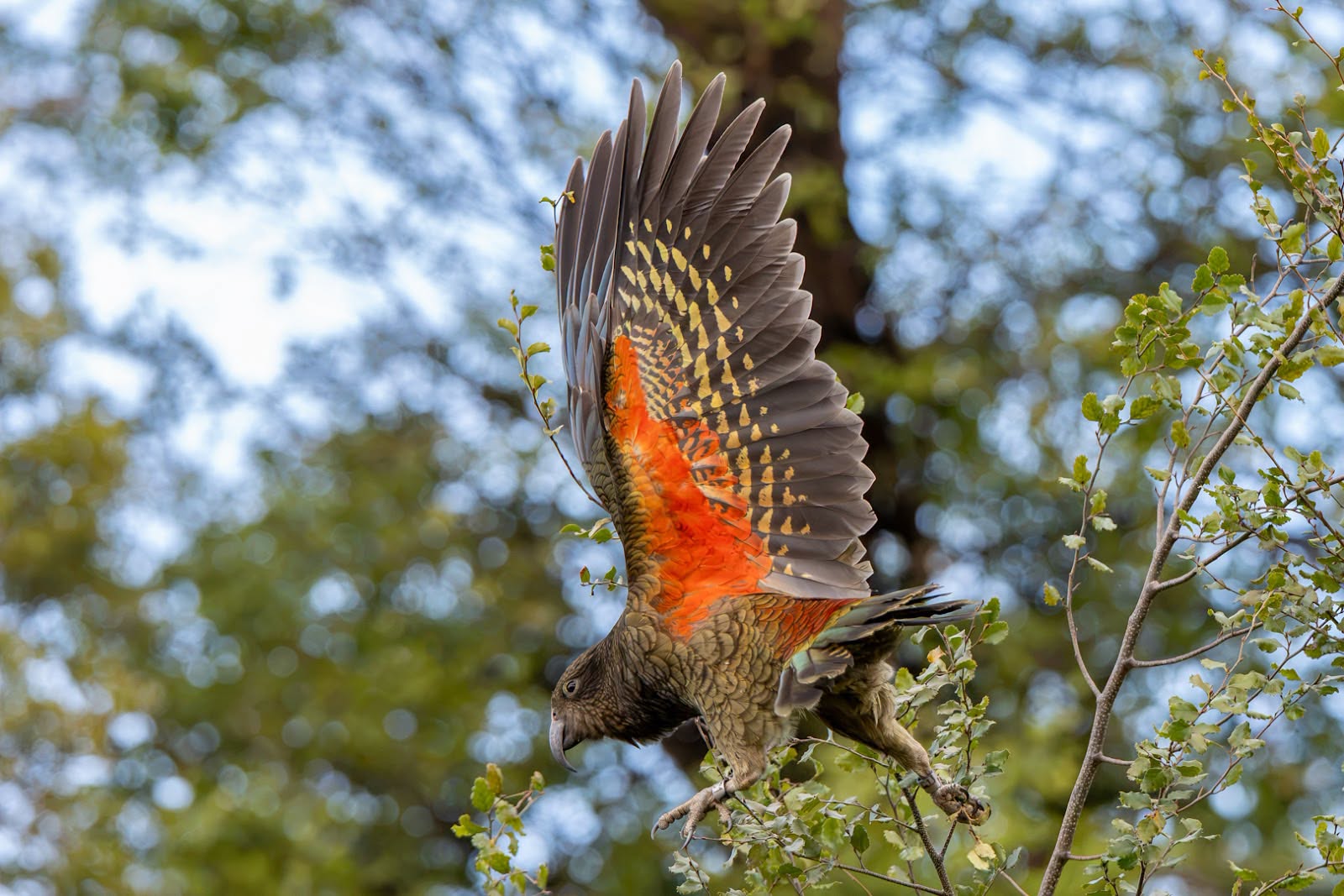
He flew overhead a few times in the morning light, exposing his beautifully coloured underwings. After half an hour of watching and photographing him, the group decided to go on with the count. He began to follow the group, and took a liking to two of our volunteers. He followed them for around one and a half kilometres, causing general kea mayhem in the process. He nibbled their shoes, landed on their heads and threw the pest tracking tunnels off the tracks. The kea in question had leg bands (C1 on gray). Kea are banded nationally, allowing individual kea to be tracked through the online kea database . Our cheeky friend’s name is “Track”. He is a subadult male kea who was banded in a forestry block near Murchison.
You may think this is a strange place for kea who are notorious as alpine parrots, but that is not the full story. Kea were once widespread over the South Island, including lowland areas, and may have been present in the North Island. The alpine environment remains today as the safest place for kea to breed, with much reduced pest numbers compared to warm areas. Their safe haven however is slowly being invaded with pests with the changing climate. Kea are extremely intelligent, resourceful and adaptable. They are most closely related to kākā, both being in the same genus Nestor. They both share a family with kākāpō. These three very distinctive species are one of New Zealand’s deeply endemic families remaining from our Gondwanan roots. They belong to the Strigopidae family, the earliest branching lineage from the entire parrot group. They likely split off from early parrots when New Zealand split from Gondwana, or arrived soon after.
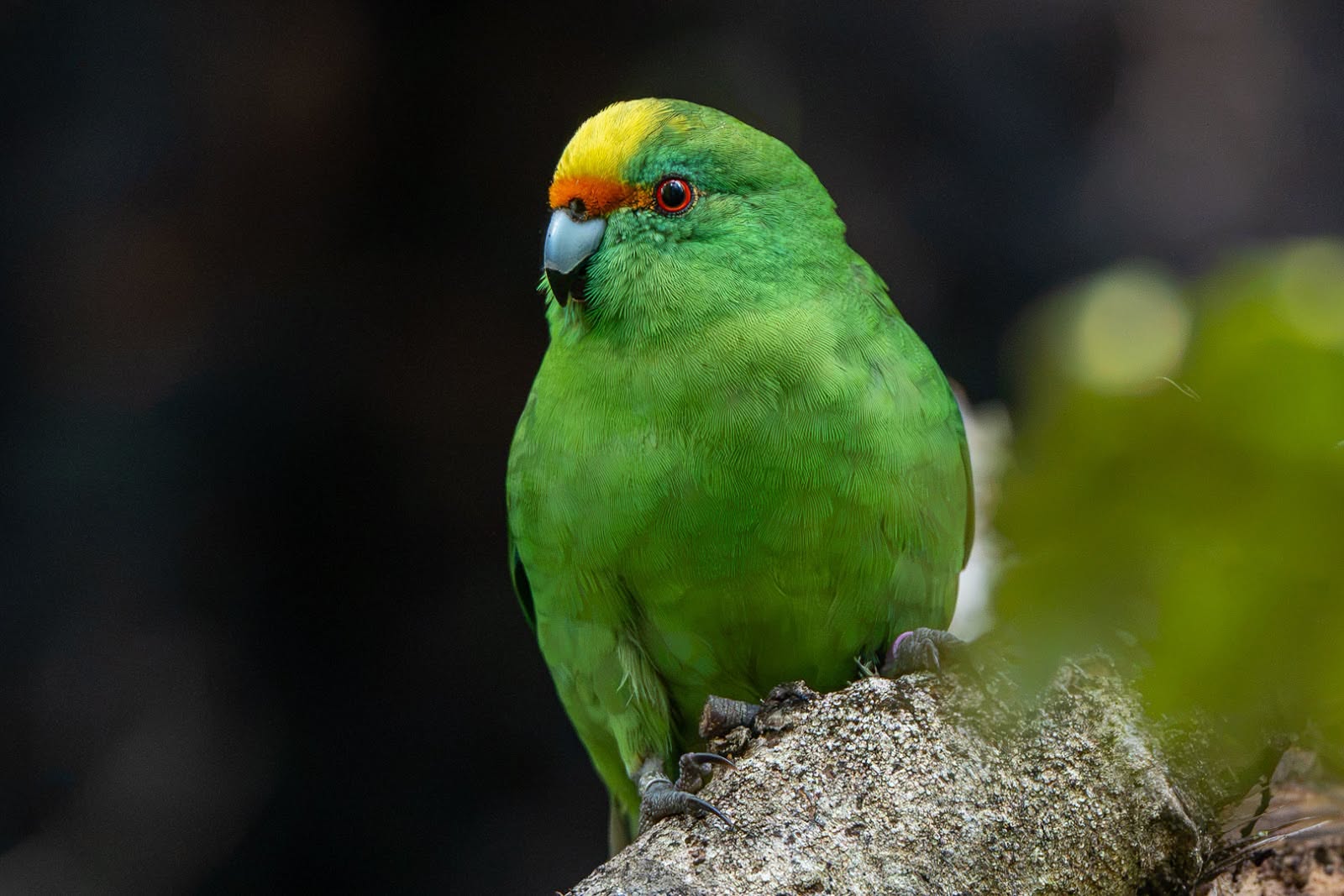
Conversely, kākāriki are recent arrivals to Aotearoa, probably ~500,000 years ago, flying over from New Caledonia. Despite this, they wasted no time spreading across the pacific islands and splitting into 11 species and several subspecies. In Aotearoa, three species are endemic to the mainland, three are endemic to our offshore islands (Antipodes and Chatham islands), and several additional subspecies also endemic. The rarest of them all is the orange-fronted kākāriki, the smallest species of kākāriki.
Kākāriki karaka were most common on the South Island, with its presence in the North Island still contentious. It cohabited forests alongside the other two mainland species, the yellow-crowned and red-crowned kākāriki. The larger red-crowned kākāriki became extinct on the mainland with the arrival of ship rats, but managed to thrive on pest-free islands. The yellow-crowned kākāriki managed to survive at low densities in high altitude forests with continued pest suppression. Kākāriki karaka did not have any island refugia, nor did it survive on the mainland, with the exception of three isolated valleys in North Canterbury.
It brushed close to extinction twice before even being accepted as a distinct species. It turned out through genetic testing that the orange-fronted species was more closely related to parakeets on the sub-antarctics than to either of the mainland species. Once accepted as a species, kākāriki karaka were immediately recognised as critically endangered, the same threat level as kākāpō. Since then, intensive management has allowed those valley populations to cling to survival. Mass seeding of tāwhai/beech trees drive rat numbers through the roof every 4 to 5 years, causing large declines in the bird populations. Captive breeding and translocations have tried to establish species on islands, but only the Oruawairua/Bluemine Island population remains.*
In 2021, a staggered release of 120 birds into the Sanctuary was conducted with great success. Kākāriki have the remarkable ability to breed very quickly, especially during times of abundance. They can now be found very widely across the Sanctuary, though in much higher densities in some areas compared with others.
During this year’s count, we saw large flocks of kākāriki of a dozen or more birds. On the first survey day we counted almost 300 birds. Despite 23 participants, we were still limited in the number of birds we could count. We weren’t able to count birds outside of the core survey area, only two thirds of the Sanctuary. And birds we couldn’t count that weren’t interested in playback, something we expect to become more of an issue at high densities. A handful of the original banded birds were found, probably nearing retirement age for kākāriki standards. But, the vast majority of birds are Sanctuary born. Though we can never truly know the total number of birds, it would be reasonable to estimate the population to be above 400. The Sanctuary is the world’s largest population of this species.
Buller noted in 1869 that the species was common in the hills behind Nelson. Six years ago that statement would have been untrue. They are now so common that DOC are harvesting eggs from this population to boost their captive breeders.
It has been a delight to watch this species thrive and regain its place in the ngahere.
*Pukunui/Anchor Island kākāriki reintroduction is still in an establishment phase
A huge thank you to the DOC kākāriki karaka team, our wonderful volunteers and Nelson City Council staff for their work. And thank you to Sean McGrath for capturing these fantastic images. If you enjoyed the photographs, check out Sean’s blog: seanmcgrath.nz