Trapping and kākā
Trapping and kākā
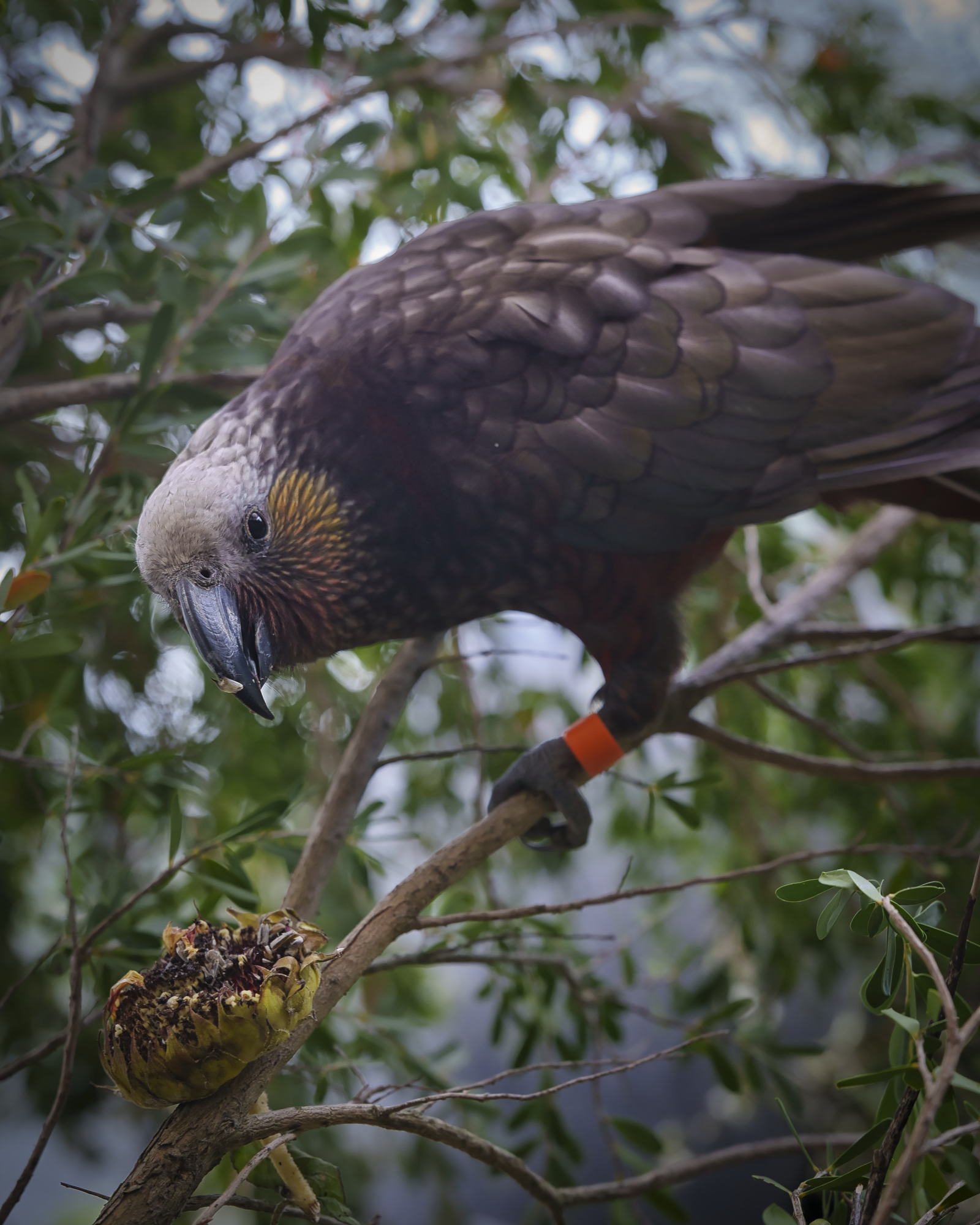
Since kākā were reintroduced to Nelson, they are increasingly being observed beyond Brook Waimārama Sanctuary. While pest control remains an important tool for protecting native wildlife, traps can also pose a risk to kākā if they are not selected and installed carefully. Other kākā reintroduction programmes around New Zealand have experienced accidental deaths in traps, highlighting the need for safe trapping practices.
General guidance for possum and rat traps
Kākā are naturally inquisitive birds and will investigate trap boxes and attractive lures. To reduce the risk of accidental capture or injury:
- Do not use apples, pears or other fruit as bait, as these are fed to kākā in the sanctuary.
- Avoid using Timms, Trapinator, Warrior traps
- Mount traps at least 1.35 metres above ground level.
- Install traps on a vertical trunk or post with no branches, perches or other access points beneath them.
- Use sturdy trap boxes that exclude kākā and other non-target species.
- Avoid tree-mounted rat traps unless fully enclosed within a suitable box.
- Use animal welfare approved trap designs and avoid trap types known to pose a higher risk to non-target species.
AT220 and A24 traps
- AT220 and A24 traps can present a higher risk to kākā because they are tree-mounted and have relatively large openings.
- Cinnamon-based lures are preferred, don’t use fruit.
- Set AT220 traps to operate at night only.
- Ensure sufficient daylight reaches the trap for the light sensor to function correctly.
- Ensure traps cannot be reached by kākā from the ground or from nearby branches.
- Ensure AT220 traps are operating with the latest recommended firmware and settings.
- Avoid using A24 traps in known or potential kākā habitat.
Need advice?
If you are unsure whether a trap design or installation method is safe for kākā, please seek advice before deployment.
Brook Waimārama Sanctuary and Nelson Nature nelson.nature@ncc.govt.nz