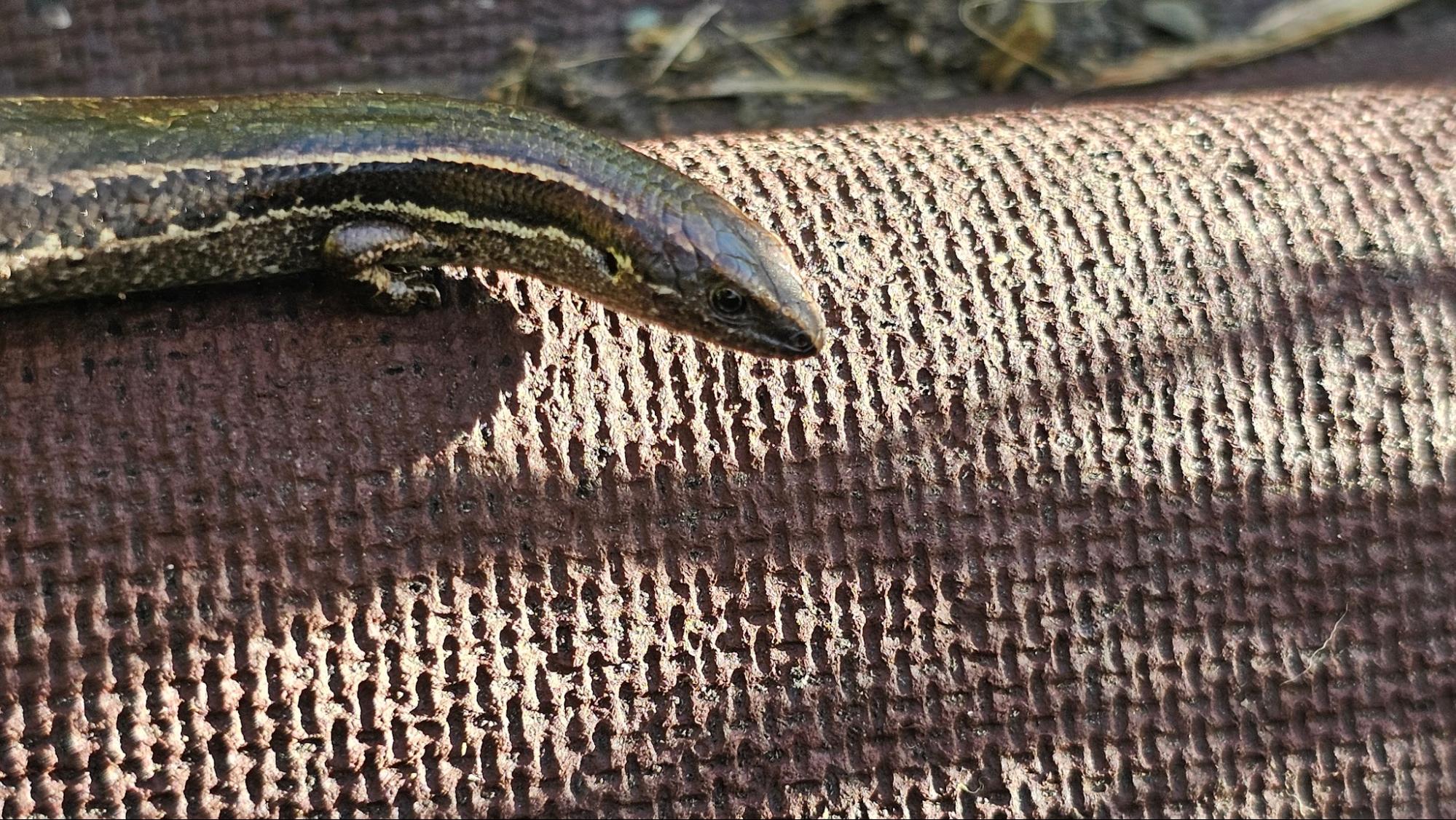
Plague skinks recorded in Nelson – How to tell between invasive and native mokomoko
Aotearoa’s lizard fauna is far more diverse than most people are aware. The list of species and undescribed taxa has reached 159, and continues to grow as new species are found. But, as fast as new species are discovered, more and more species drift perilously nearer to the brink of extinction. Nelson/Tasman alone is host to ten described lizard species, plus a further nine taxa that are not yet formally described. Another three large lizard species may be extinct from the region, only being found on pest-free islands. Of our 22 lizard taxa, only two species are considered “Not Threatened” with extinction. Eleven of those 22 taxa are only found in this region.
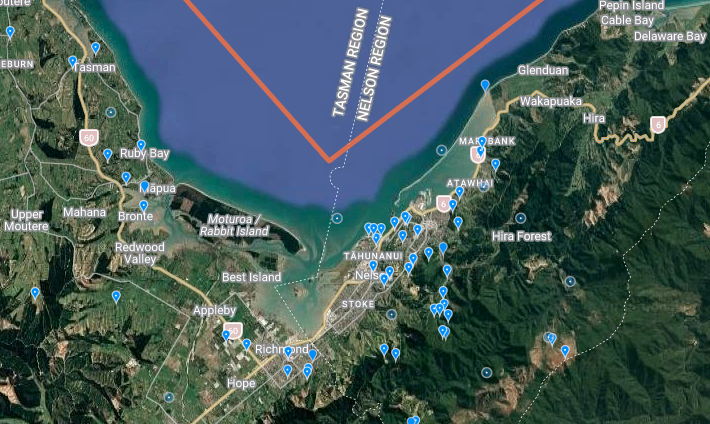
The lizards of Nelson have become scarce. The classic suite of pests; rats, cats and stoats, and in particular, mice seriously threaten lizards. Secondarily, the habitat destruction that comes with developments can wipe out local populations. A new threat has arrived in Whakatū Nelson, the plague skink. Plague skinks, named so because of their plague numbers. Common now in the upper North Island, these skinks can easily be accidentally transported with materials and plant pots to new parts of the country. They thrive in human-altered environments like gardens. Last year, they were detected at Enner Glynn, having been accidentally transported there, probably in building materials. There is still a chance to stop their spread and possibly even eradicate them before it’s too late.
Why are plague skinks a threat to native lizards?
Plague skinks may compete with native lizards for food and space, potentially displacing them and causing them to decline. The combined effects of pests, climate change, habitat destruction may make our endemic lizards even more vulnerable to plague skinks, which may be better adapted for these threats.
How do I tell a plague skink from a native skink?
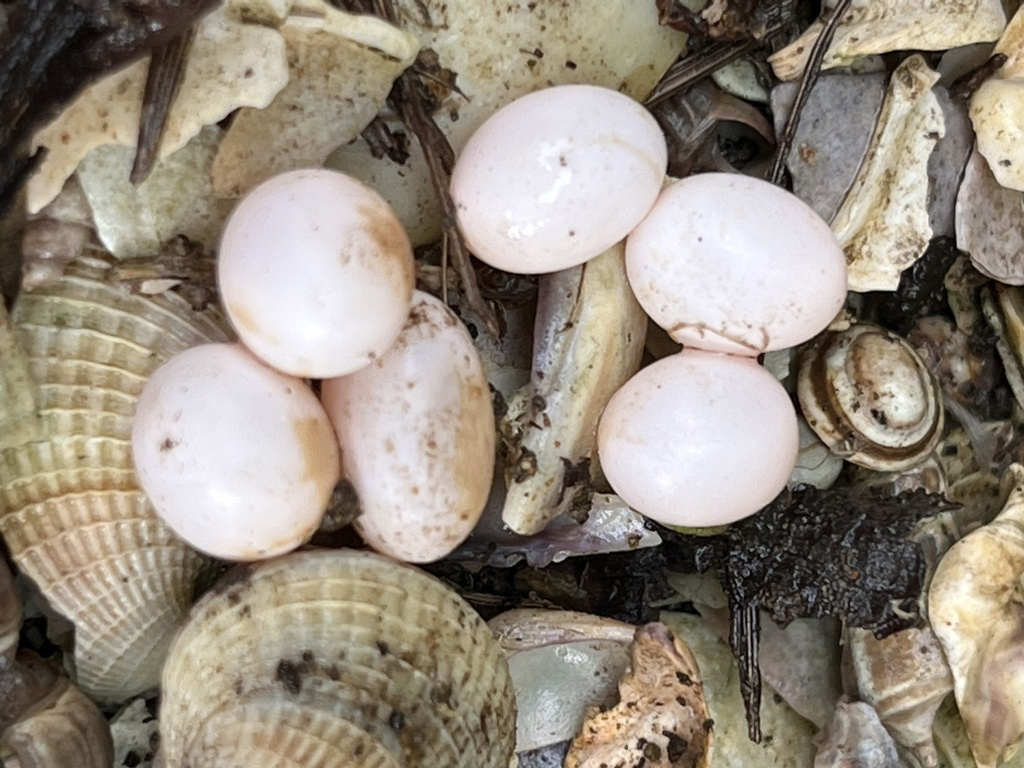
Our native mokomoko/lizards all give birth to live young(except for the egg laying skink of the northern North Island). Plague skinks however, lay clusters of eggs, each under one centimetre long.
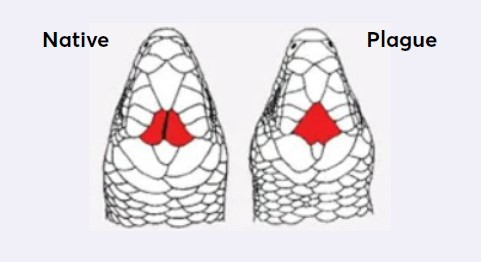
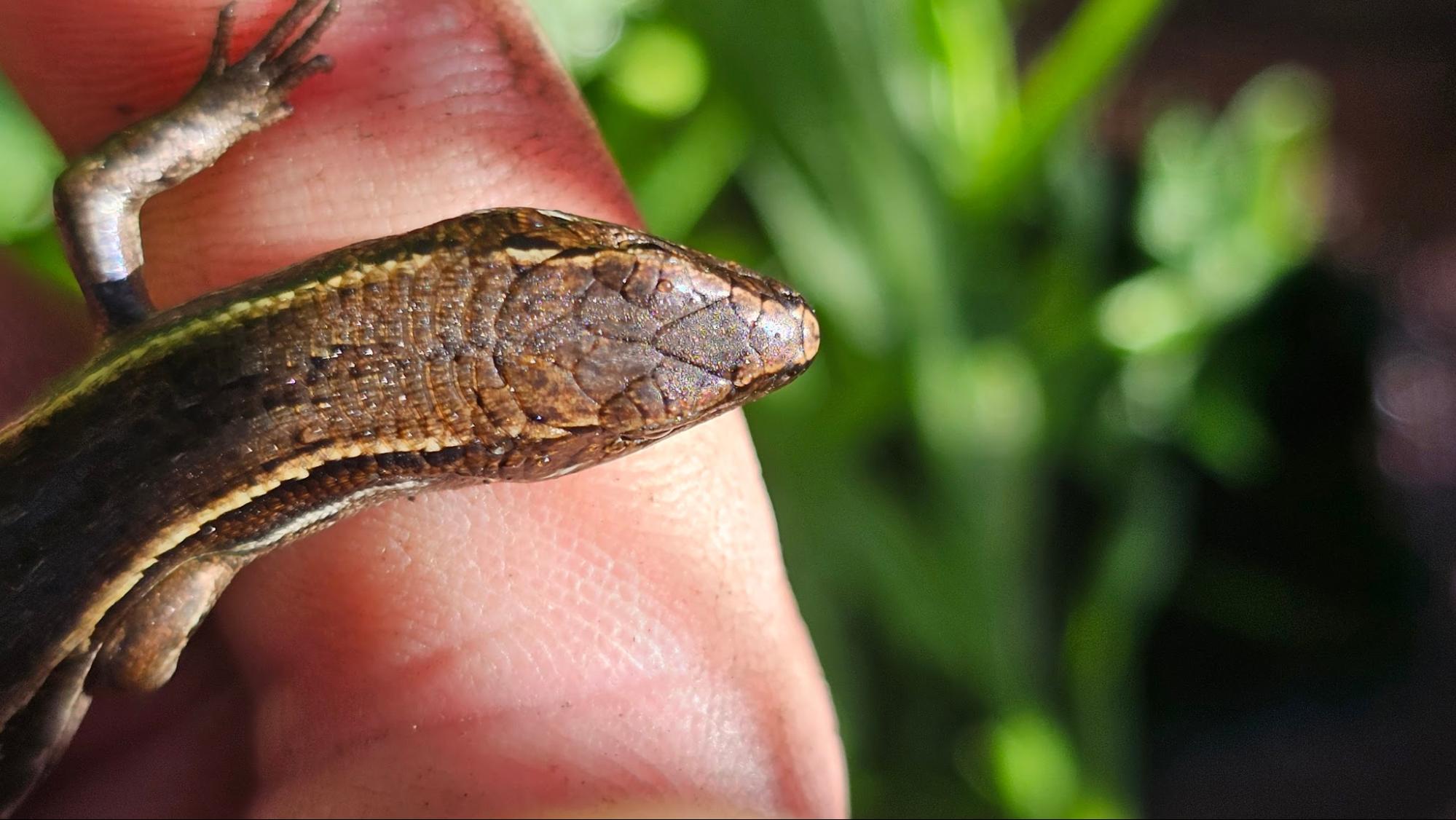
Plague skinks have a single united central head scale with a triangular shape as seen in the below image. In native skinks this scale is divided in two.
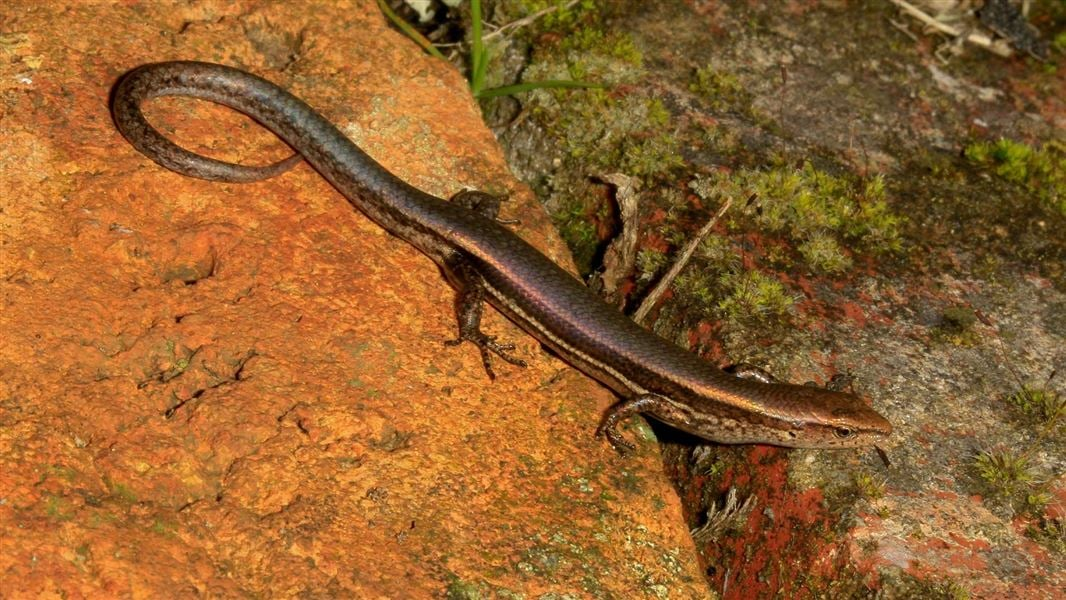
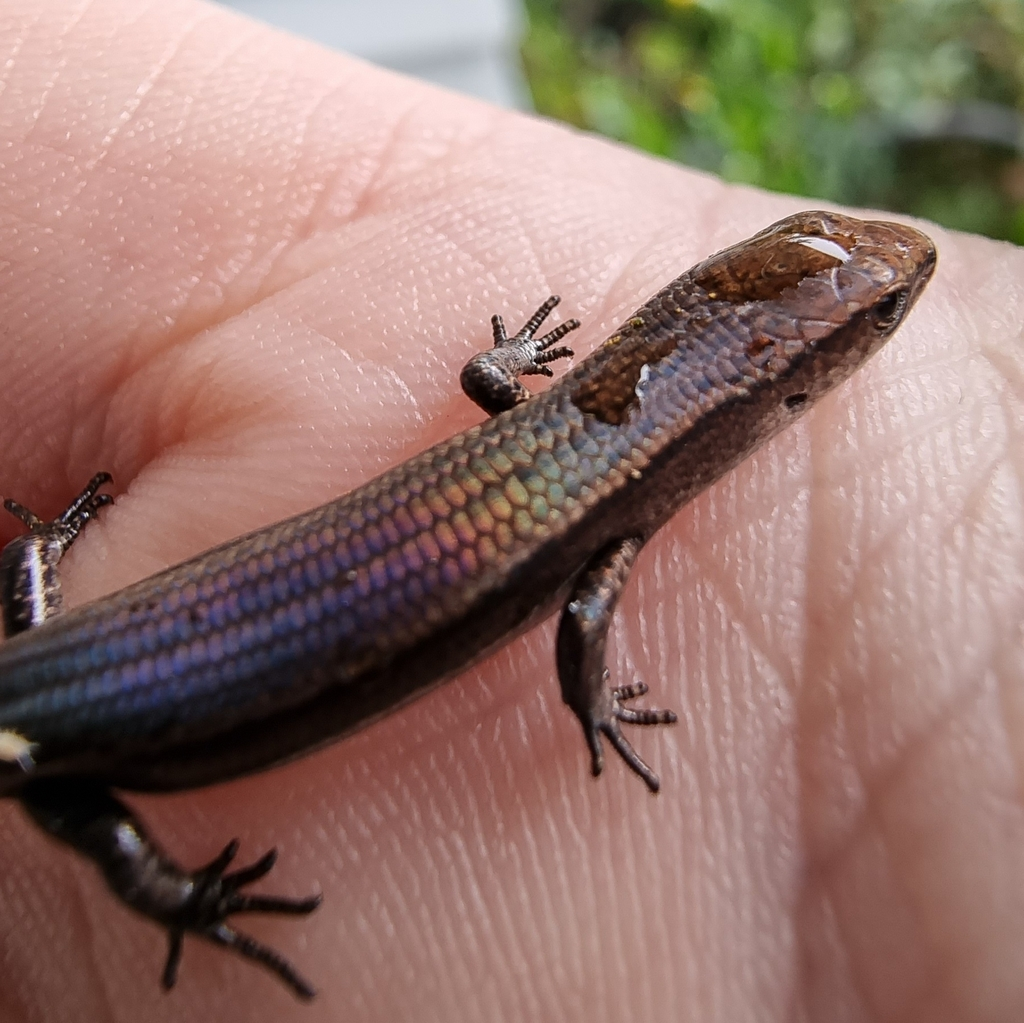
Plague skinks, also known as rainbow skinks, have a metallic rainbow-like shimmer along their bodies.
What do I do if I see a plague skink or plague skink eggs?
If your cat brings in a skink, please take decent photos of its head and body. You can upload these images to the INaturalist app, or INaturalist.nz for identification. Please contact your local council biosecurity team.
Lizards at the Sanctuary
Plague skinks have not been recorded at the Sanctuary, and we want it to stay that way. Please take care to inspect your bags before visiting or volunteering. Please do not bring in building materials or plant pots without checking for animals or eggs. And please please please do not bring any lizards (or birds) to the Sanctuary. If you find a skink that has been injured by a cat, please take photos before releasing it into nearby dense vegetation.
The Sanctuary is home to at least one species of native skink, the northern grass skink. This species burrows deep into the bases of grasses. They’re often seen basking on rocks, only to skitter quickly into the grass when disturbed. Grass skinks feed on a variety of bugs and critters, but will also take small fruits when available.
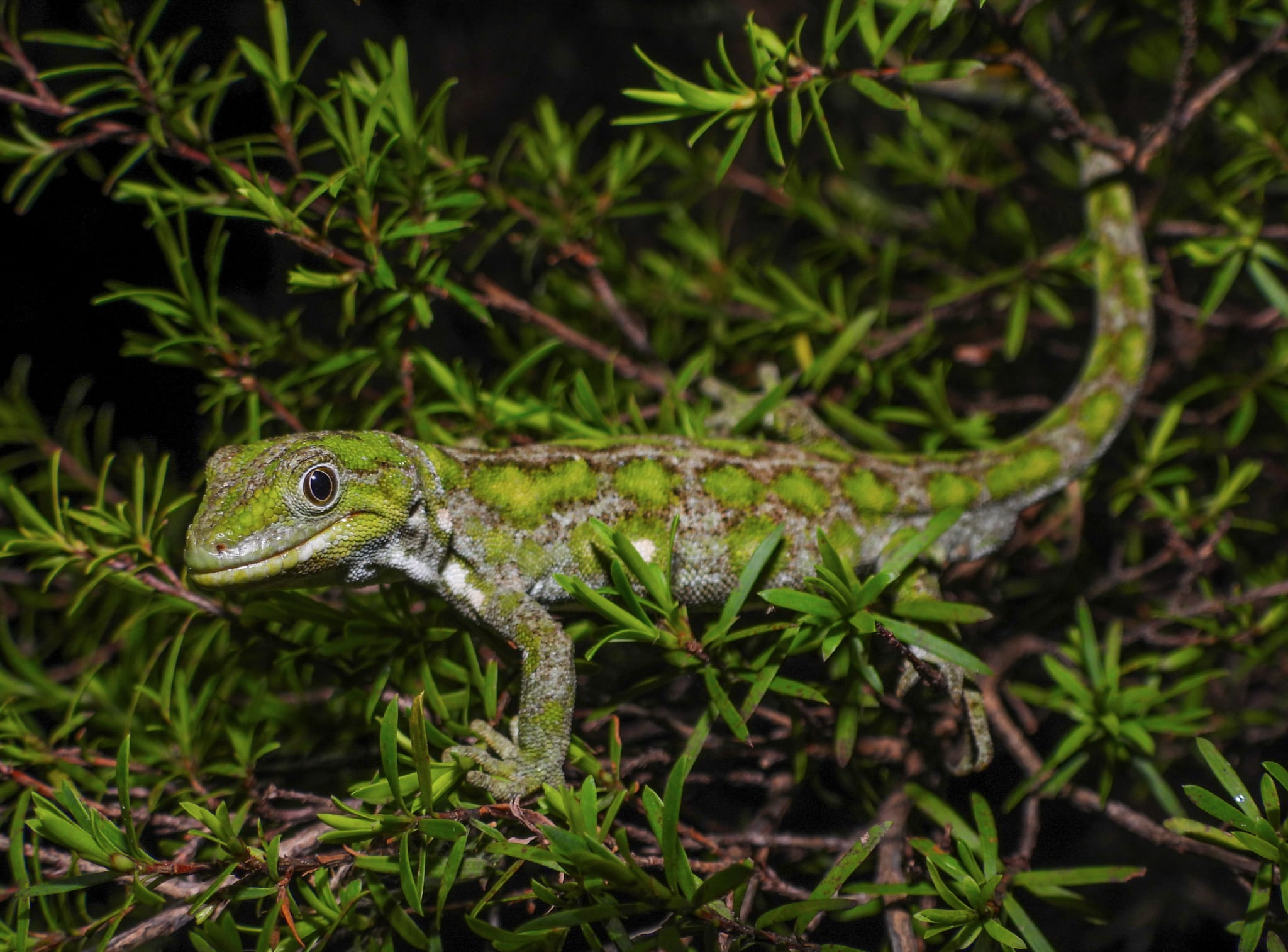
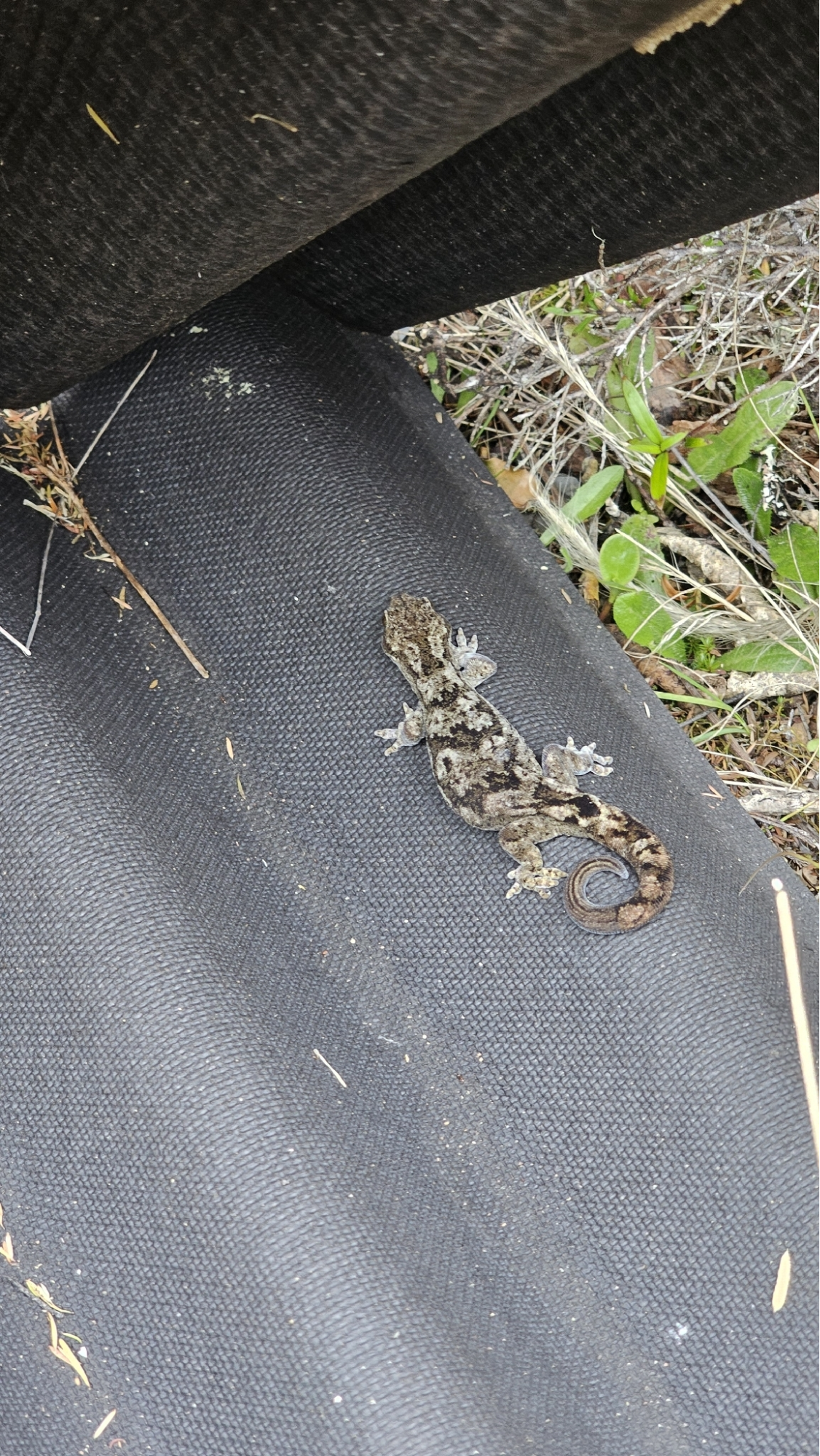
Other skinks may be present in the Sanctuary too, probably at low densities. These could be the highly cryptic and rare glossy brown skink, the big and bold northern spotted skink, and a member of the potentially species-rich speckled skink complex. The Sanctuary is also home to at least three gecko species, including the nocturnal raukawa gecko and the incredibly patterned Nelson green gecko.
How can I encourage native lizards in my garden?
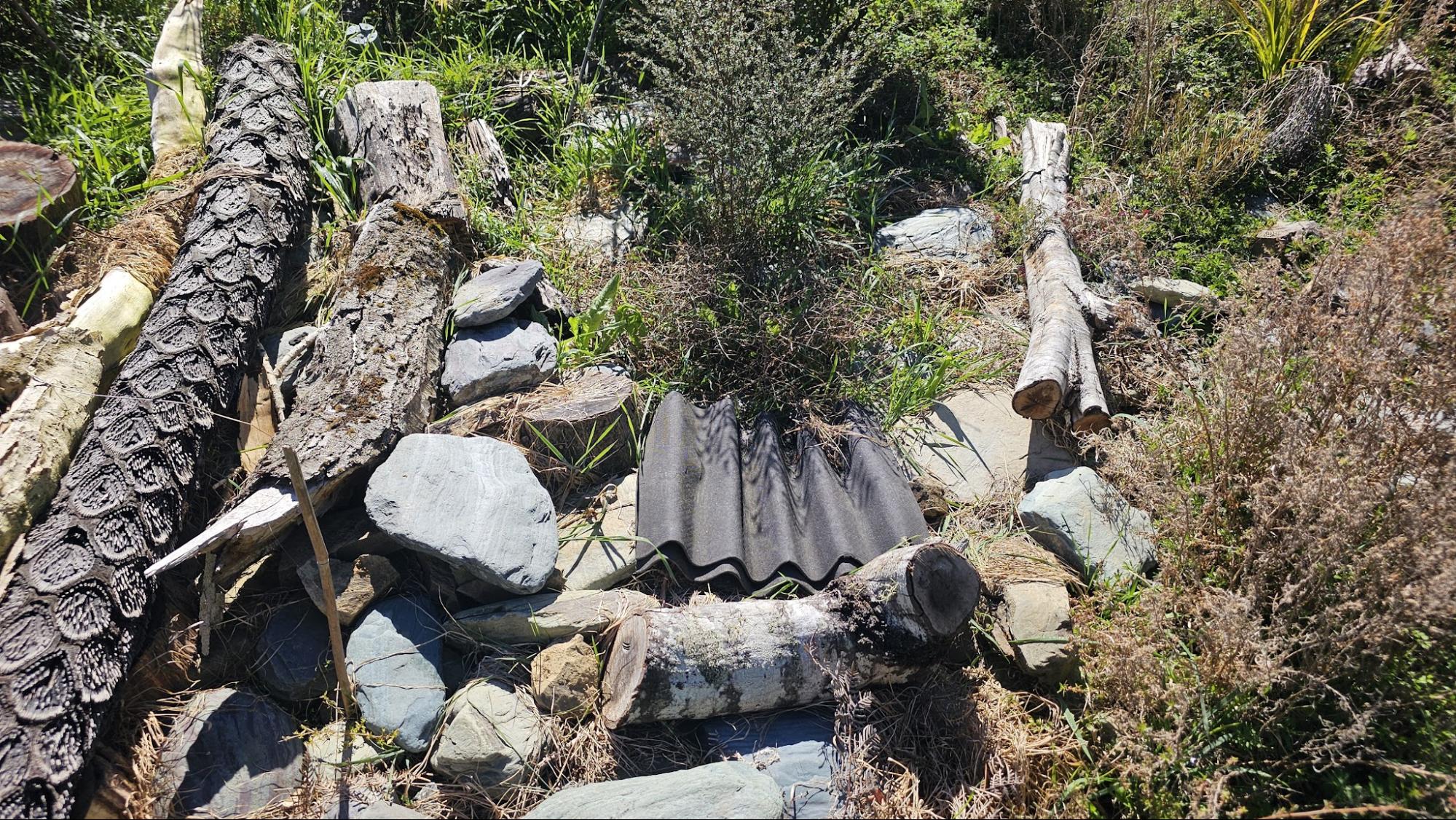
Native lizards can be common in gardens, paddocks, grasslands and shrublands in public areas. If you want to encourage lizards on your property, allow it to become messy. Plant native tussocks(Poa cita), vines(Muehlenbeckia) and shrubs(Coprosma). Pile rocks and logs together in a sunny location. Artificial cover objects(ACOs), are objects designed to be desirable to lizards or other animals. Commonly lizard ACOs are made from onduline roofing tiles, double stacked with spacers between to allow for a small gap. These ACOs can be used to detect and monitor lizards. At home, you could use them to see if you have skinks or geckos in your garden. With any lizard you detect, try getting photos to upload to INaturalist. With INaturalist, you get immediate species identifications from nerds and experts who are always happy to help. You can also look for other observations nearby to see what species live near you.