
Pua o Te Rēinga – The flower of the underworld
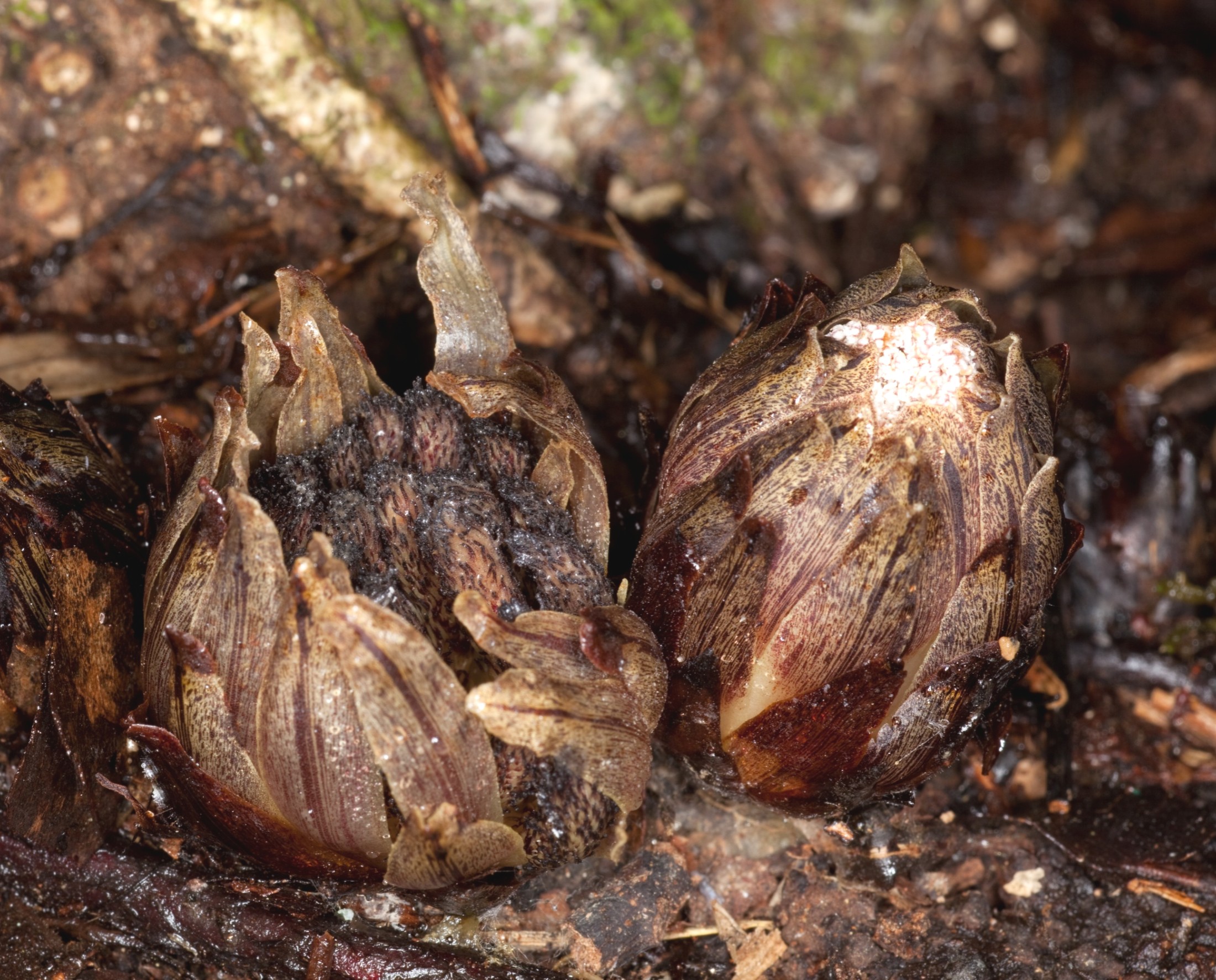
Aotearoa is the only home to a strange and alien looking plant.
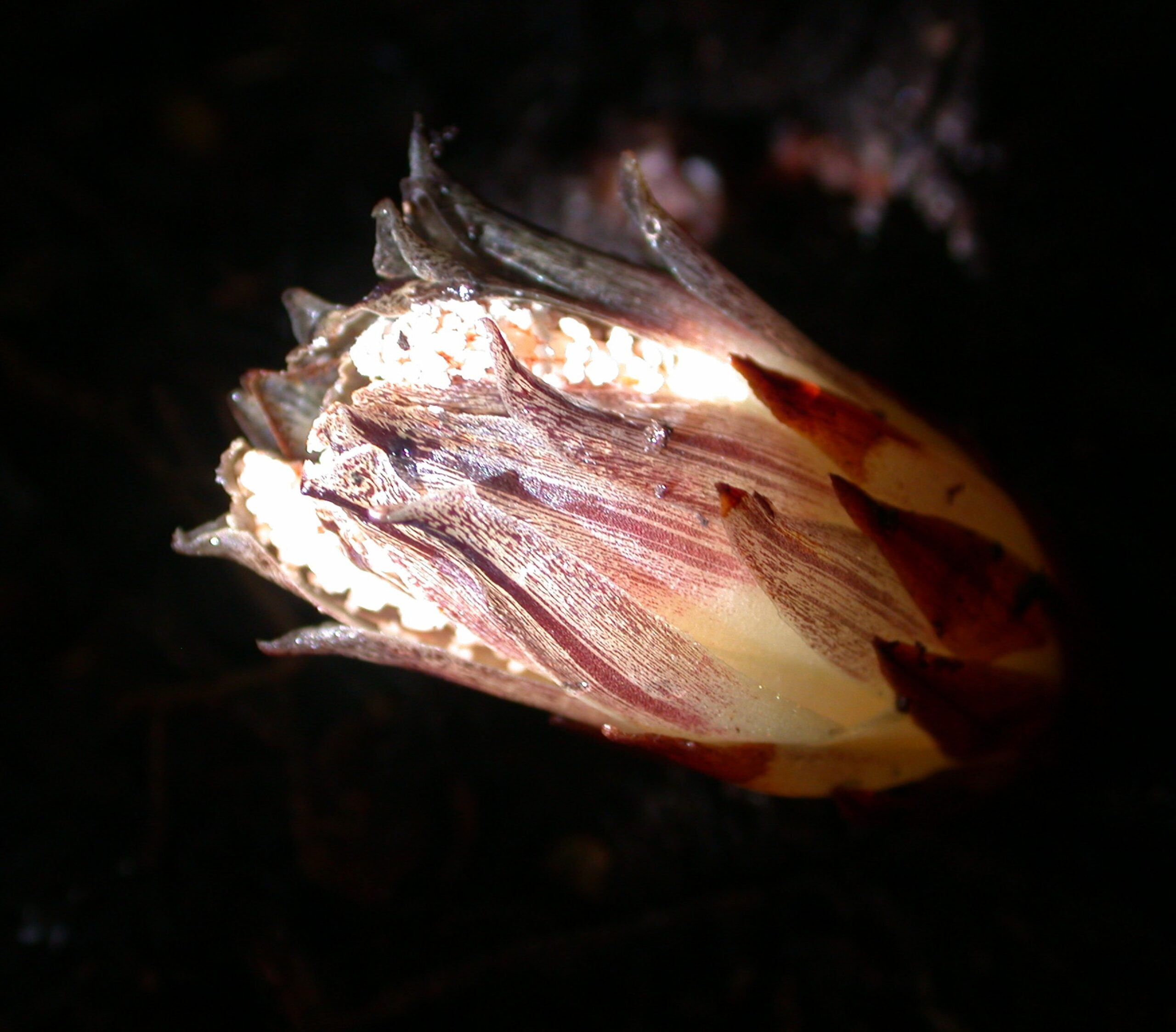
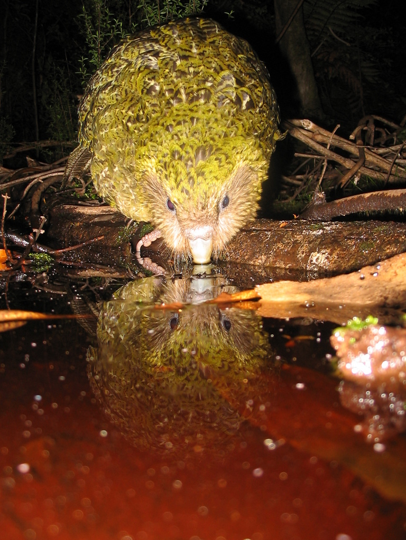
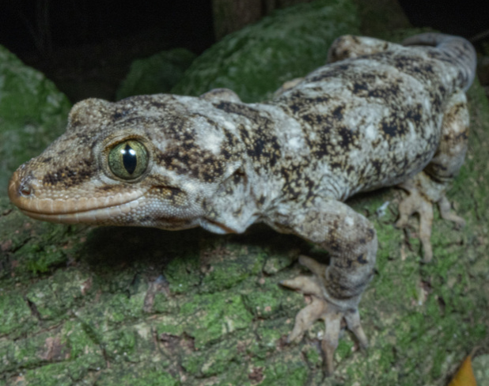
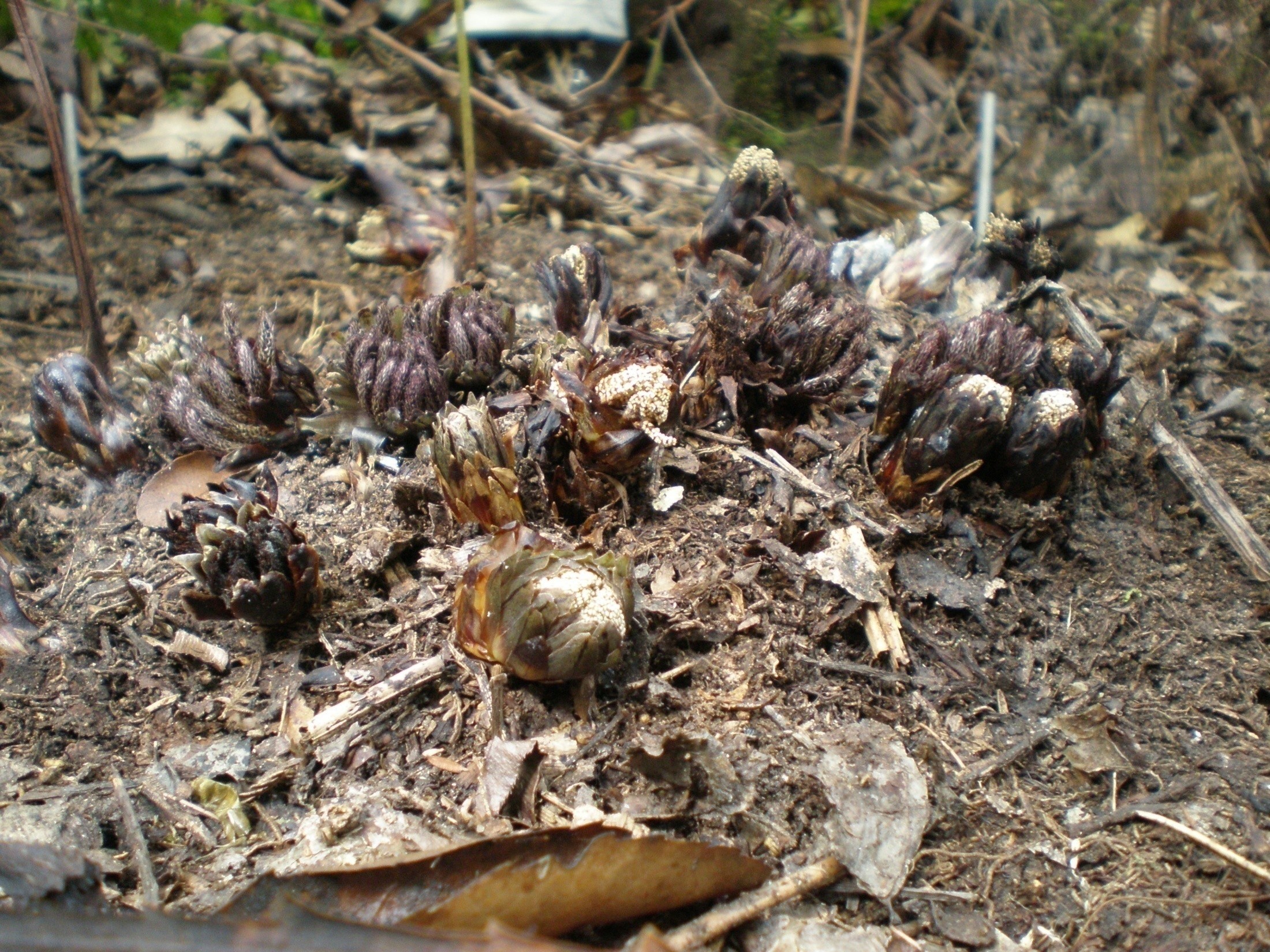
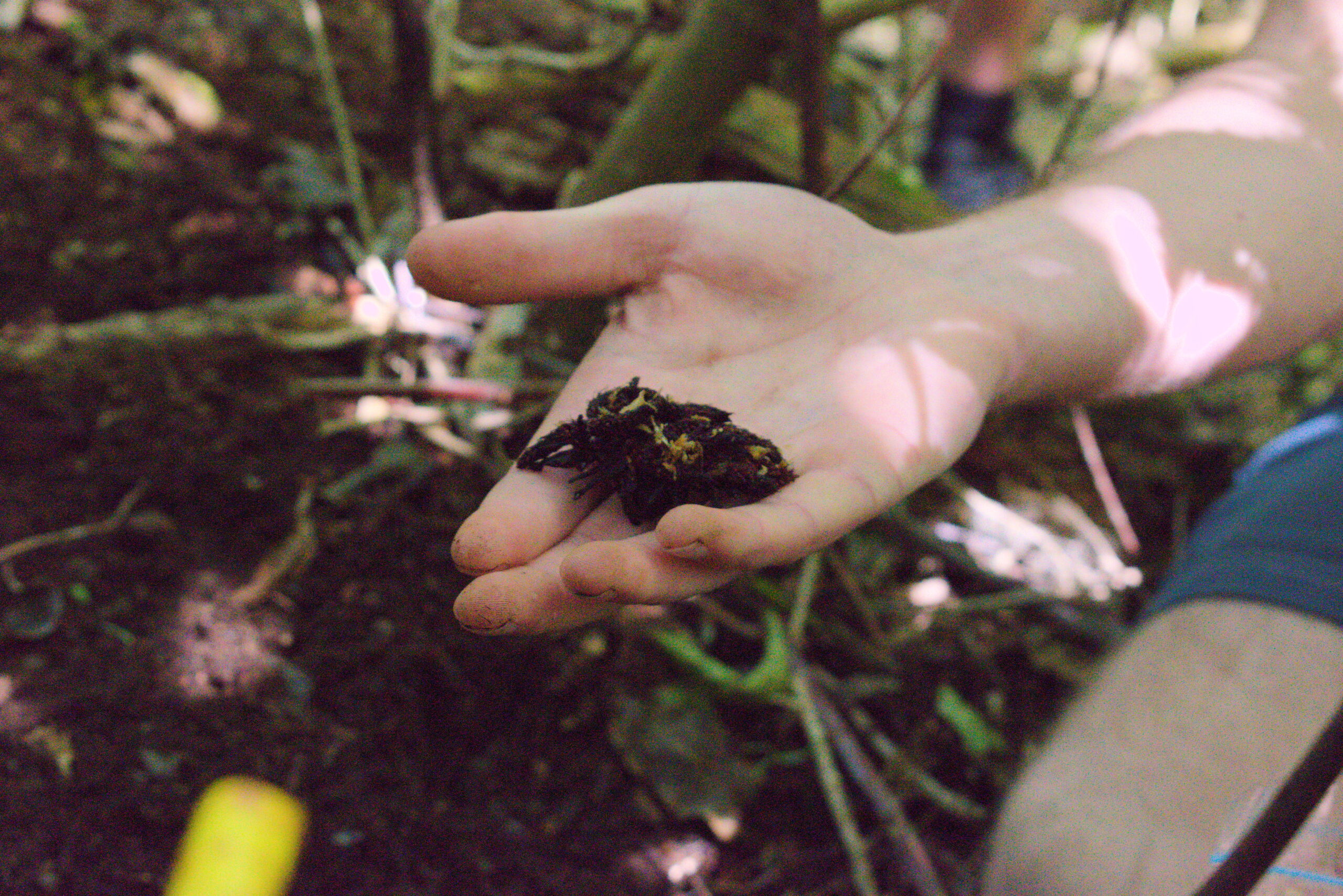
It looks more like an underground truffle than a plant. It’s brown, and covered with a hard bumpy surface. Generally it is the size of a golf ball or a fist. It is New Zealand’s only fully parasitic flowering plant, meaning that it is completely dependent on its host trees for its survival. It envelopes the root of its host, distorting that root to maximise surface area. The host root now resembles a wooden rose. Often one clump of this parasite will be a mass of several plants fused together, feeding on many neighboring roots, perhaps even latched onto different surrounding trees. The host species, all native broad-leafed trees, are not rare; they share in common their affinity of disturbed areas. Windfalls, fires, eruptions and slips upend the centuries-old forest. A new forest is born quickly with fast growing pioneer trees, species that are only a minor aspect of ancient forests. Dormant within the seed bank, the parasitic plant seizes the opportunity to make a connection to a suitable host root. A swarm of plants establish across the forest floor. The parasites will continue to live with the host for the remainder of their lives. Contrary to a common assumption that parasites harm or even kill their host, this parasite has no negative effect on its host and is, in fact, extremely vulnerable to the host’s health. If the host is not well, the parasite is not well, either. Like a sunflower, this plant’s flower heads are really a composition of many hundreds of small flowers called an inflorescence. The inflorescences of one plant will be single sexed, requiring cross breeding with other individuals. The “petals” are dark brown and papery. A gluttony of nectar is produced in each flower alongside the emission of a splendid fragrance. The parasite can afford this opulence as it is the host that provides the ingredients and water for the nectar in over-abundance. The flowers draw the attention of arthropods and sugar junkie geckos. Famously, the flowers attract a peculiar walking bat, also only found in these lands. The bat will religiously visit the same flowers each night, slurping up the generous bounty of nectar, in turn coating their face in pollen before moving on to the next plant. Birds that once dominated these lands would have also taken an interest in this event at a time when many other plants have finished flowering for the year. Perhaps ground-foraging birds like kākāriki, or saddlebacks took advantage of this rich nectar source. Possibly most intriguing of all the flower visitors is the toddler sized and toddler-brained, flightless nocturnal parrot known as the kākāpō. This bird mostly no longer coexists with this parasite as they are both near extinction, but a discovery of fossil kākāpō faeces contained the distinctive pollen of the parasite. The plant that feeds kākāpō, bats and geckos goes by the names of Dactylanthus taylorii, Pua o te Rēinga, waewae atua, flower of the underworld.
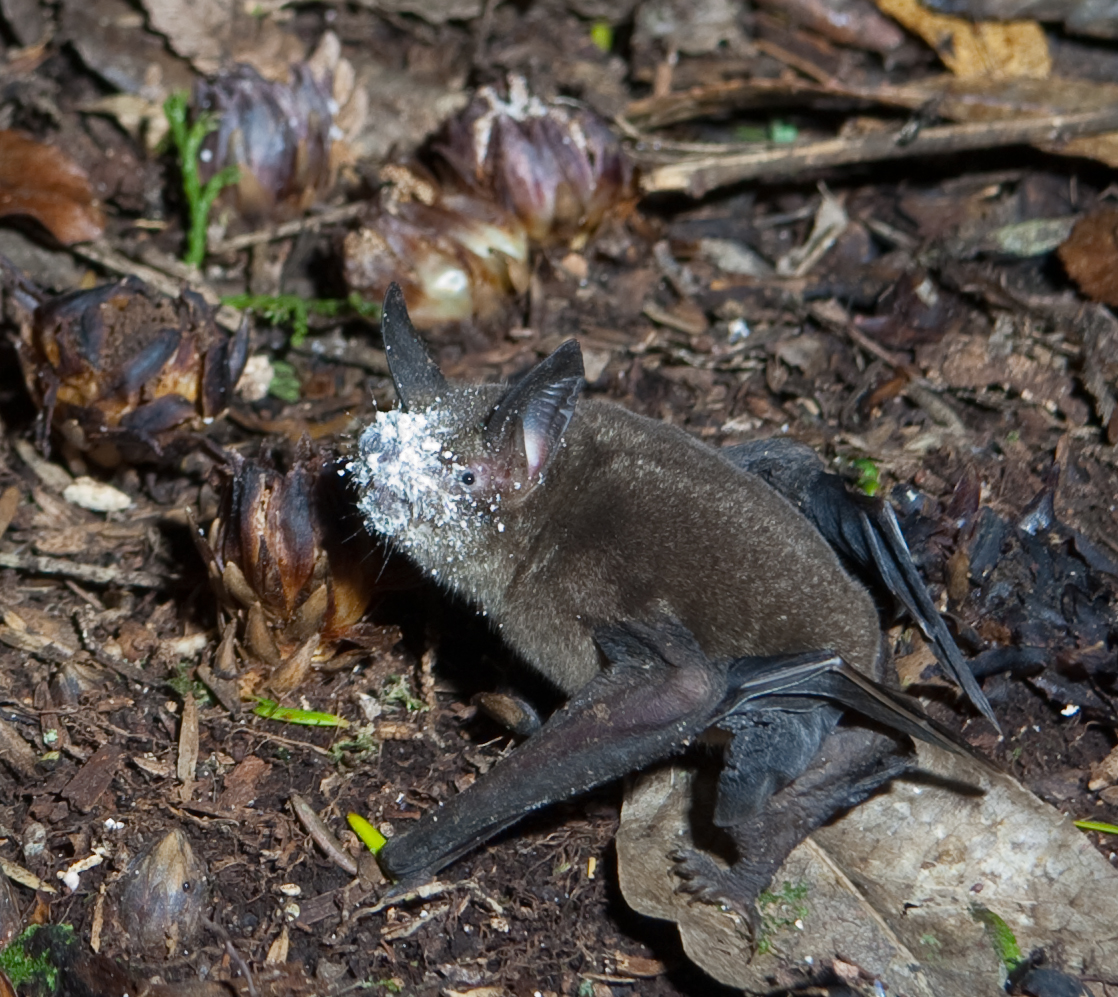
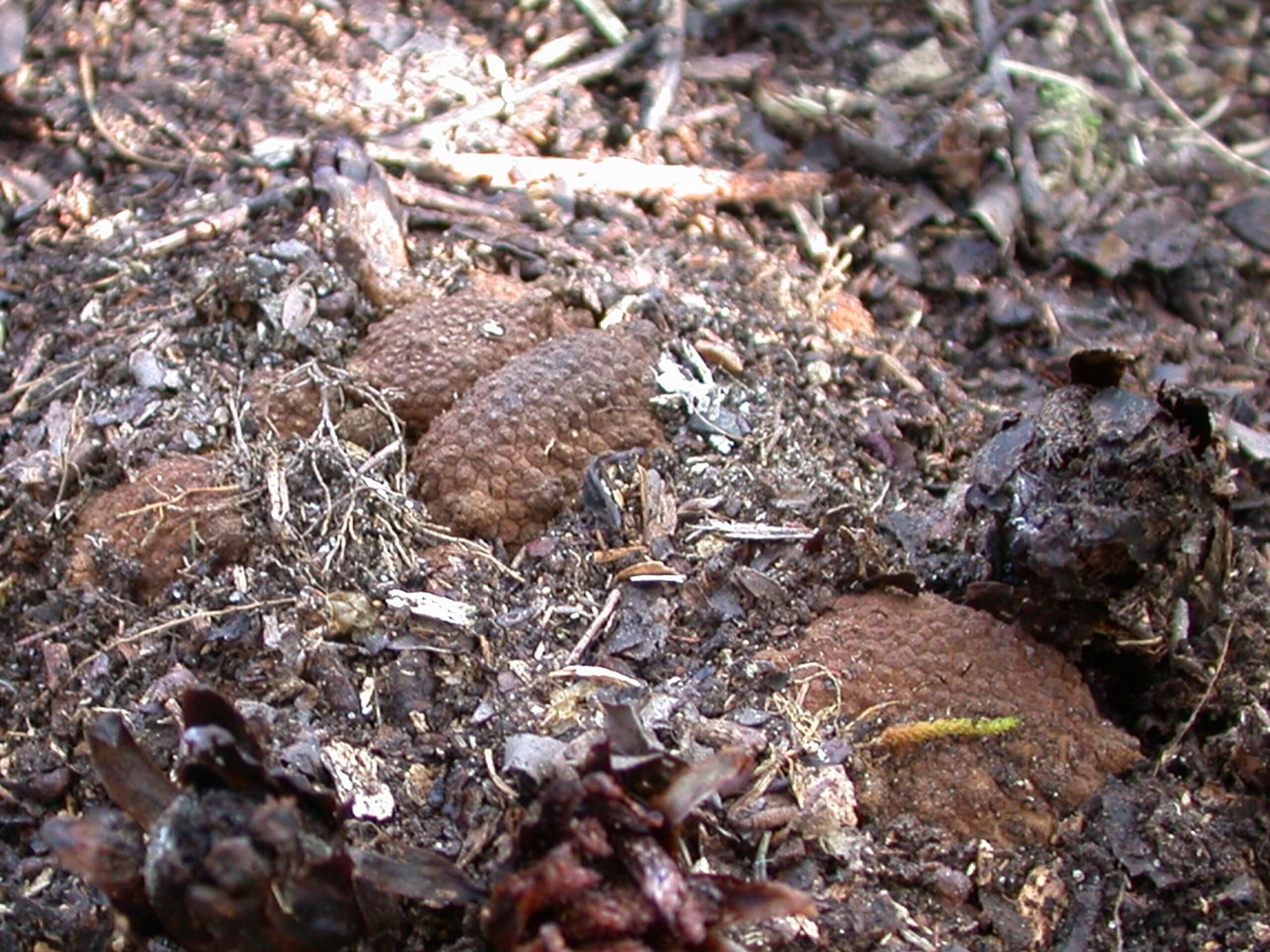
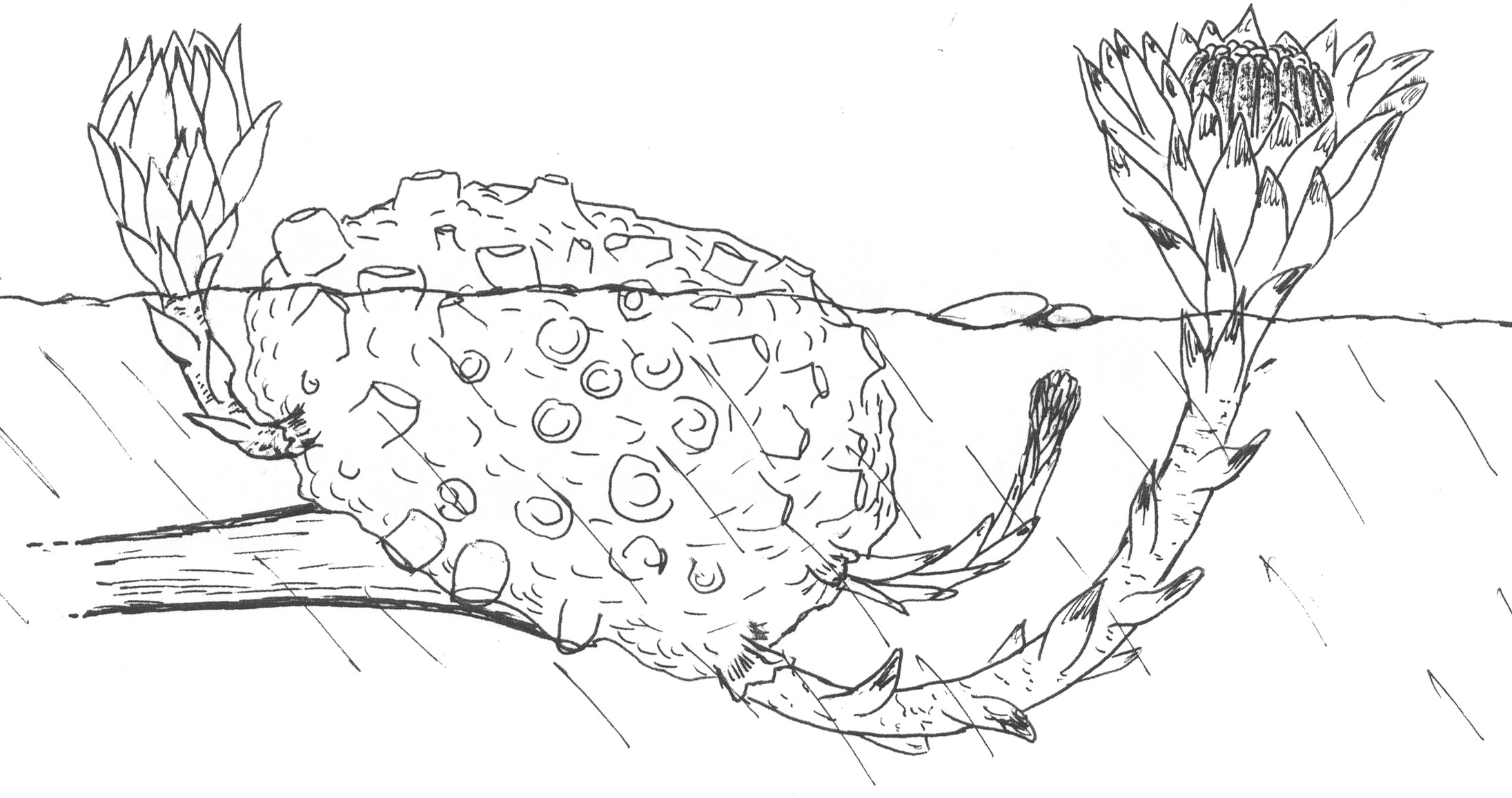
Dactylanthus was once in huge abundance across the whole of Aotearoa
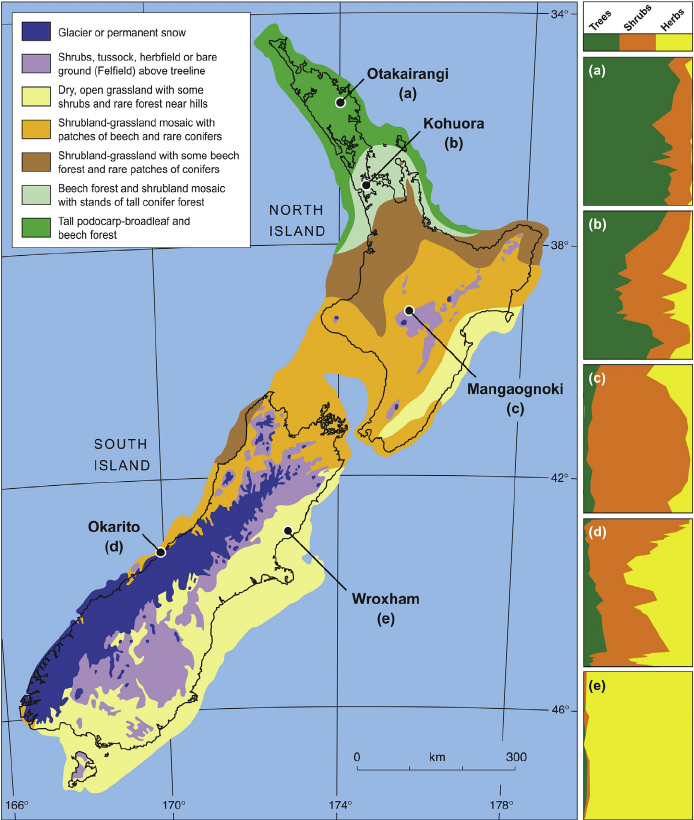
Dactylanthus was once in huge abundance across the whole of Aotearoa up until the Pleistocene, better known as the Ice Ages. During this time, the vegetation of New Zealand changed rapidly between glacial and interglacial periods. Several warm tolerant families of plants that had been present on the landmass for tens of millions of years were suddenly gone forever. What was once forest in much of the South island was covered in ice and vast shrublands and grasslands. However, at the top of the South island, near the land bridge that connected the North and South islands, a vast forest remained, protected from the advancing ice. Within this forest, many more northern species survived, and subsequently recolonised the top of the South Island (Te Tau Ihu) as the glaciers retreated. Within this forest, Dactylanthus remained. But today, in the Holocene era, it is presumed to be extinct here. Why would a plant suddenly be threatened with total extinction after surviving 80 million years on this landmass? As it went for the bats, geckos and kākāpō that pollinate it, Pua o Te Rēinga has declined massively with the arrival of alien mammalian organisms.
The global tale goes, that wherever we went, life’s abundance was lost. Humans burned and farmed, rats gnawed and possums chewed. Pua o Te Rēinga’s flowers attracted mammals like no other, and unlike the messy but dainty flower feeding bats, possums and rats destroy flowers. When reproduction is stopped in this way, the next generation never comes to replace the old. The plants continue to age with their hosts, and die with their hosts. And curiously, Dactylanthus plants seem to switch from female to male with age, meaning the aging population becomes incapable of replacing itself. The additional loss of pollinators contributed to the spiral of extinction.
The only remaining evidence for its existence on the South Island is the trace of its distinctive pollen, including the infamous kākāpō poo. This poo was found in a cave at the Ōpārara basin on the northern West Coast of the South Island. Though it is thought to be extinct here, there is still hope that some plants survive. In 2025, Dactylanthus was found in the Wellington region, a place where it had also long been presumed extinct. Pua o Te Rēinga can be excused for its lack of sightings, unlike the South Island kōkākō/Bigfoot. Dactylanthus looks like nothing special to the eyes of the uninitiated. Its colour and subterranean life make it look like a rock rather than a plant. It is a needle in a haystack even for those on a dedicated search. The only real giveaway are its fragrant autumn blooms.
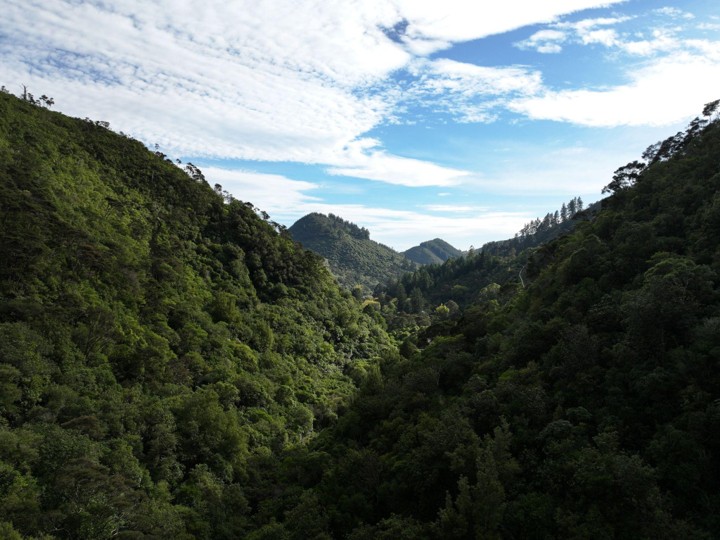
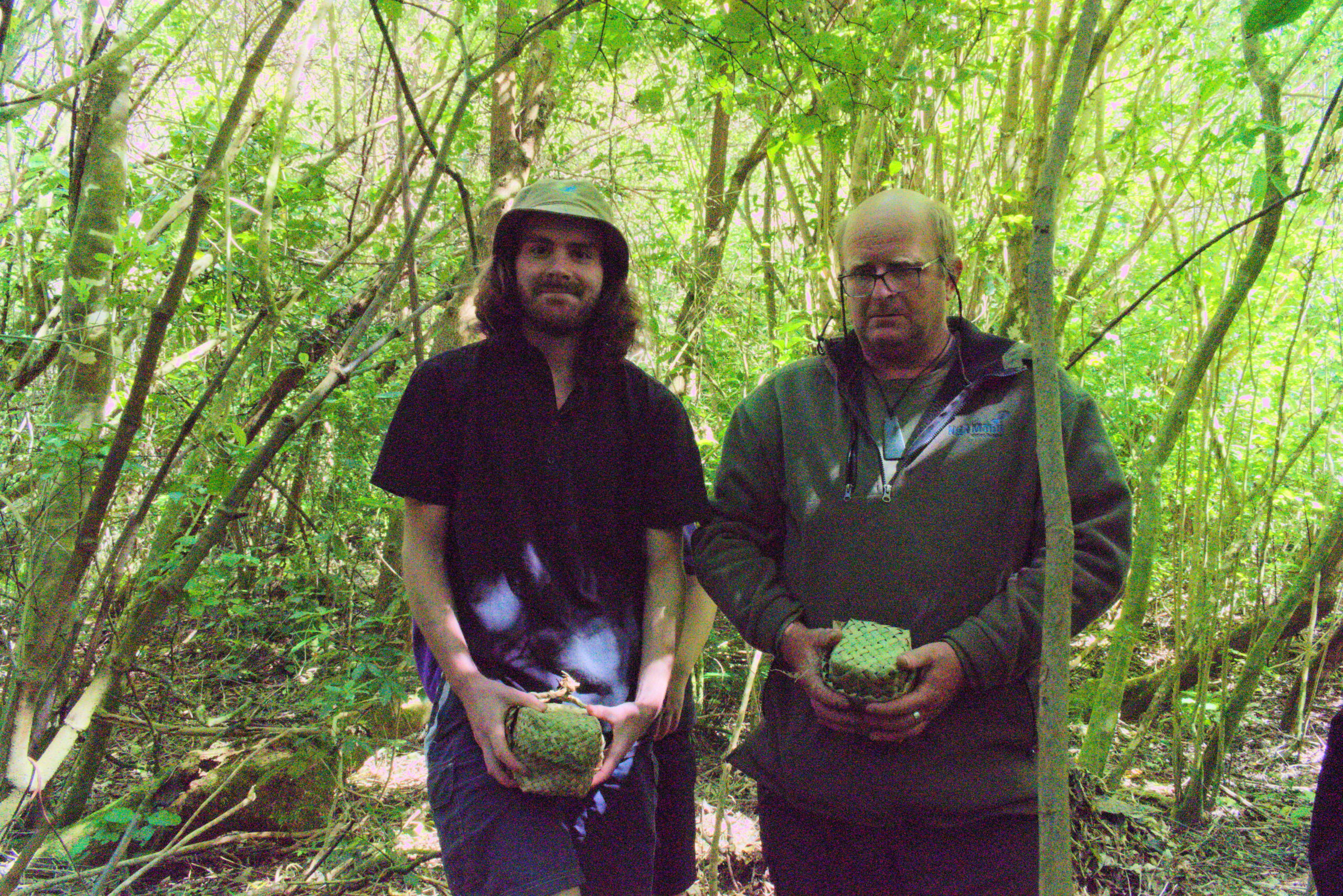
On the 22nd of October, we translocated 30 seed heads of Pua o Te Rēinga from Ngā Manu Nature Reserve in Waikanae to the Brook Waimārama Sanctuary, the first time this plant has been seen in Te Tau Ihu. Ngā Manu has managed to cultivate hundreds of plants through hand sowing and pollinating. At the Brook Waimārama Sanctuary, we intend to not only protect threatened species, but to restore populations, relationships and ancient species assemblages. Pua o Te Rēinga once drove enormous food availability at times when nectar was otherwise scarce. A reintroduction of this species could inject a food source that bounces its way up the food chain, supporting a higher density and diversity of animal species. With our long-term lofty aspirations of reintroducing kākāpō and restoring our depauperate lizard fauna, we may reunite these old friends of pua. The Sanctuary contains many of the host species required for Dactylanthus to grow, and the plant could end up occupying forest right across the Sanctuary. For a plant that now only occupies ~4% of its prior range, this could be a significant boost for the conservation of the species.
Many aspects of the plant’s biology and ecology remain mysterious. There is still no strong evidence for native animal dispersal of the seeds of Dactylanthus. Only water, gravity and sometimes rats have been recorded dispersing the seeds. These means of getting around cannot explain how the plant has ended up in high altitude mountain forests. There are still questions surrounding the sex of individual plants. They are thought to be ‘dioeceous’, meaning that they generally only produce single sexed flowers. However, new populations of the plant have predominantly female inflorescences, while old populations have mostly male. This either reflects differences in life cycle between the sexes, or it may be a curious case of sex changing with age. Returning this plant to a complex ecosystem like the Sanctuary will allow us to study this plant in a new light.
Pua o Te Rēinga are taonga, a species treasured by mana whenua.
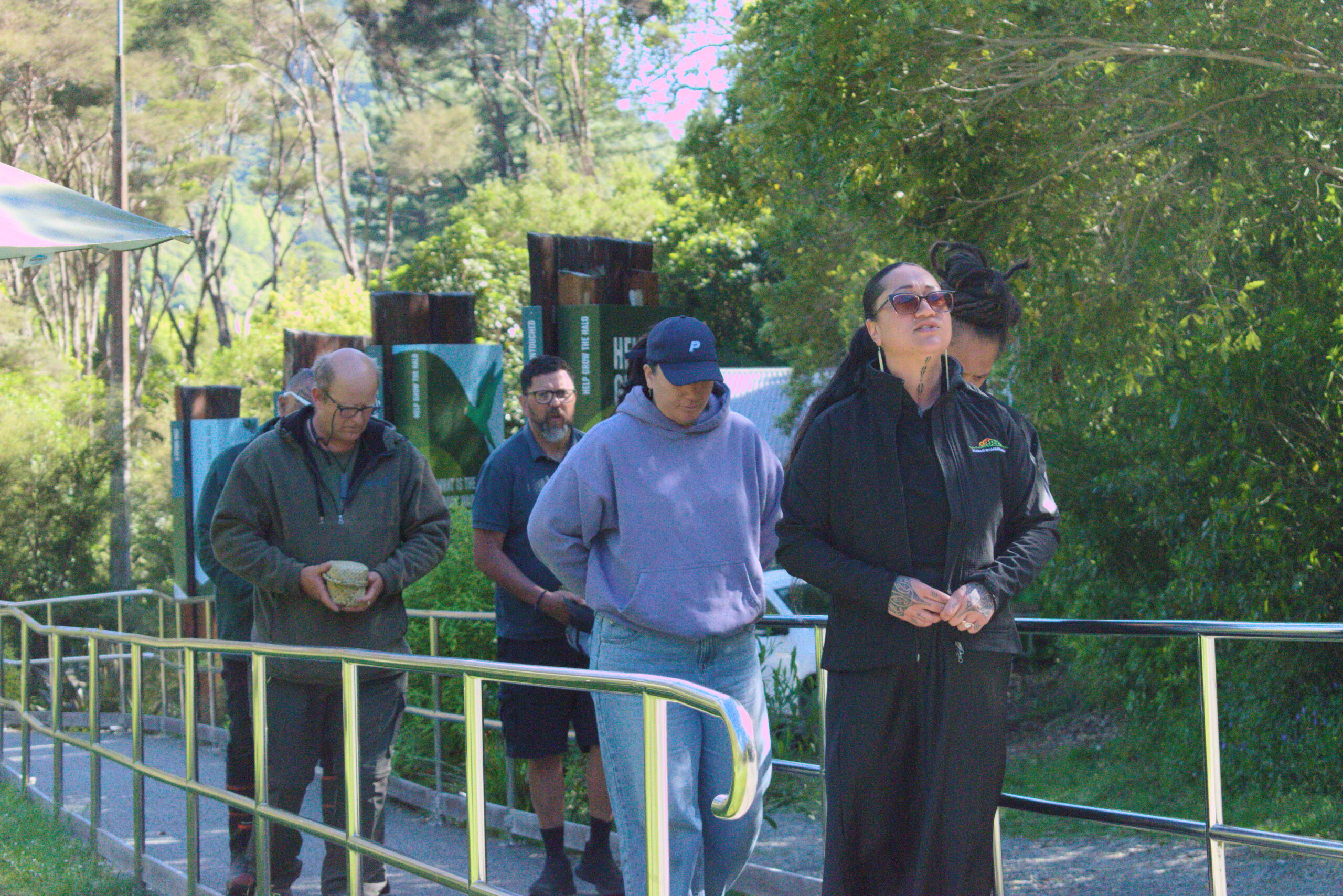
They are named both pua o Te Rēinga, flower of the underworld and waewae atua, the legs or feet of the gods. The seeds brought to the Sanctuary originate from Pureora, a stronghold for pua o Te Rēinga. Ngāti Rereahu are kaitiaki of pua that whakapapa there. Seeds were sent from Pureora to Ngā Manu Nature Reserve for cultivation and protection. Ngā Manu, alongside protecting remnant lowland swamp forest of the Kapiti Coast and rearing many native reptiles for release, has specialised in cultivating parasitic plants for conservation, successfully growing mistletoes alongside Pua o Te Rēinga. Ngā Manu has managed to create a stronghold for Pua o Te Rēinga to a point where it can now be translocated to pest-free sites. While at Ngā Manu, Te Ātiawa ki Whakarongotai also became kaitiaki of the plants at Waikanae. According to tikanga, the cultivation of the plant requires consideration of maramataka, the māori lunar calendar. Maramataka details when planting activities will be most successful. The translocation to the Sanctuary required consultation and partnership with mana whenua, from Ngāti Rereahu, Te Ātiawa ki Whakarongotai and the iwi of Te Tau Ihu, as they are to inherit kaitiakitanga of Pua. Present were representatives from Ngāti Tama, Ngāti Rārua, Te Ātiawa and Ngāti Koata. The ceremony on the day was a joyous occasion, as the seeds were welcomed to their new home on a new island.
The taonga were taken to sites of regenerating forest. The ground was disturbed by hand or fork to expose the feeder roots of the host trees. The seeds were sprinkled like one would oregano into a sauce. The plants will take years to establish and flower. Once they do, they will be pollinated by hand and their seeds spread far and wide across the Sanctuary. We hope that they will be as common as the other incredible taonga that live within and around the Sanctuary.
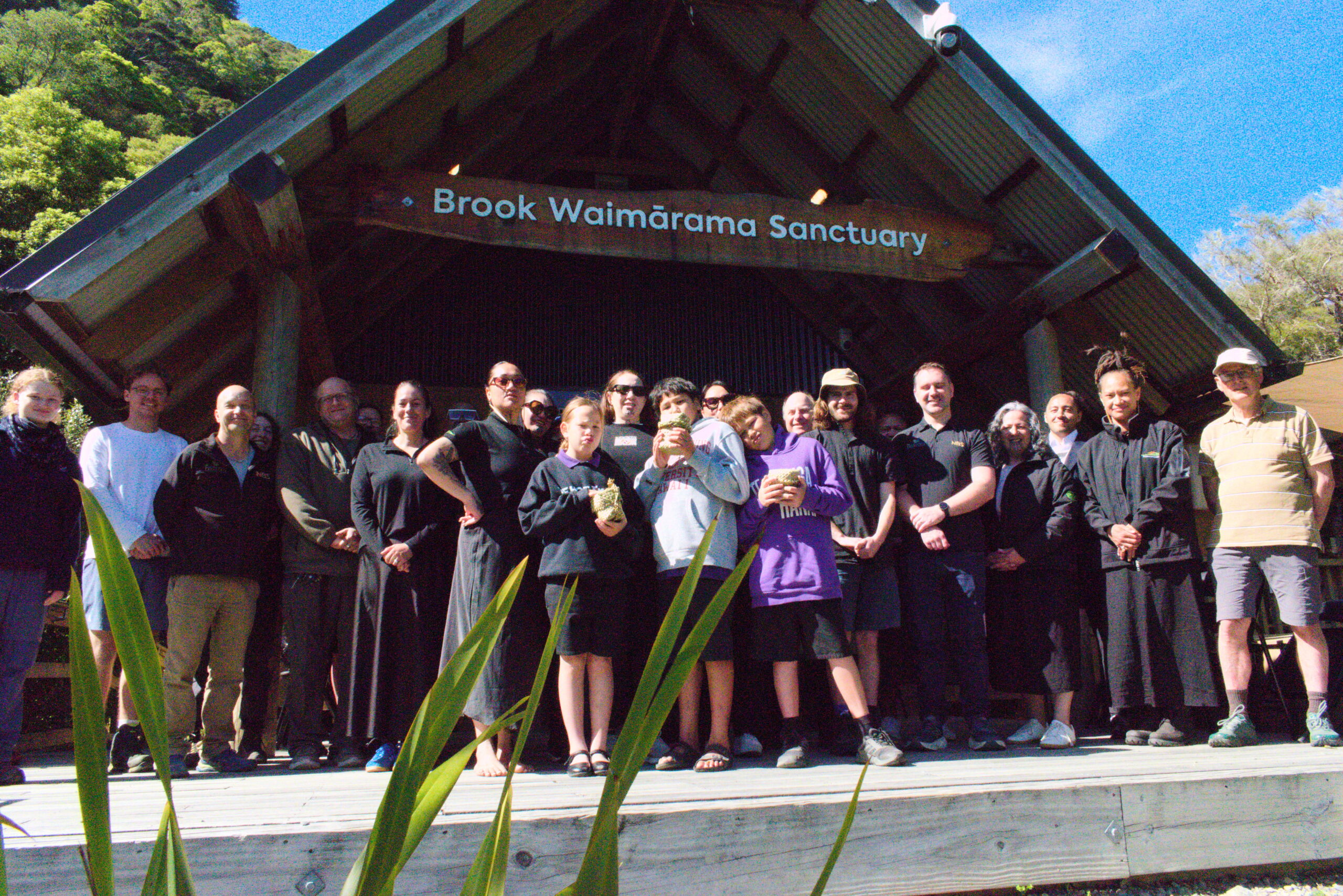
Special thanks to Avi Holzapfel, Chris Ecroyd, David Mudge, Rhys Mills, Ngāti Rereahu, Te Ātiawa ki Whakarongotai, and the eight iwi of Te Tau Ihu.