
Moko kākāriki
Nelson Green Gecko, Starred Gecko
Naultinus stellatus
Their Story
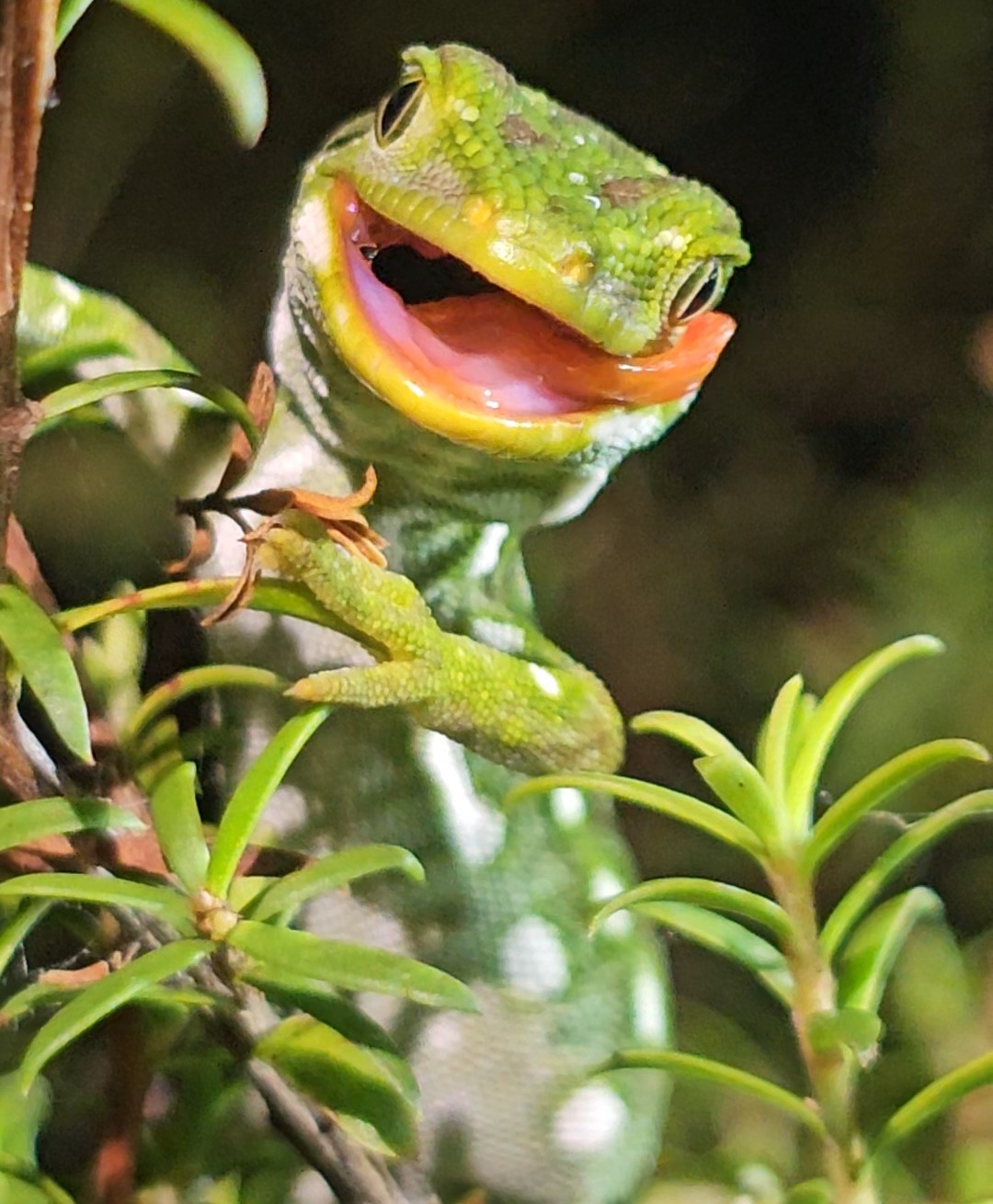
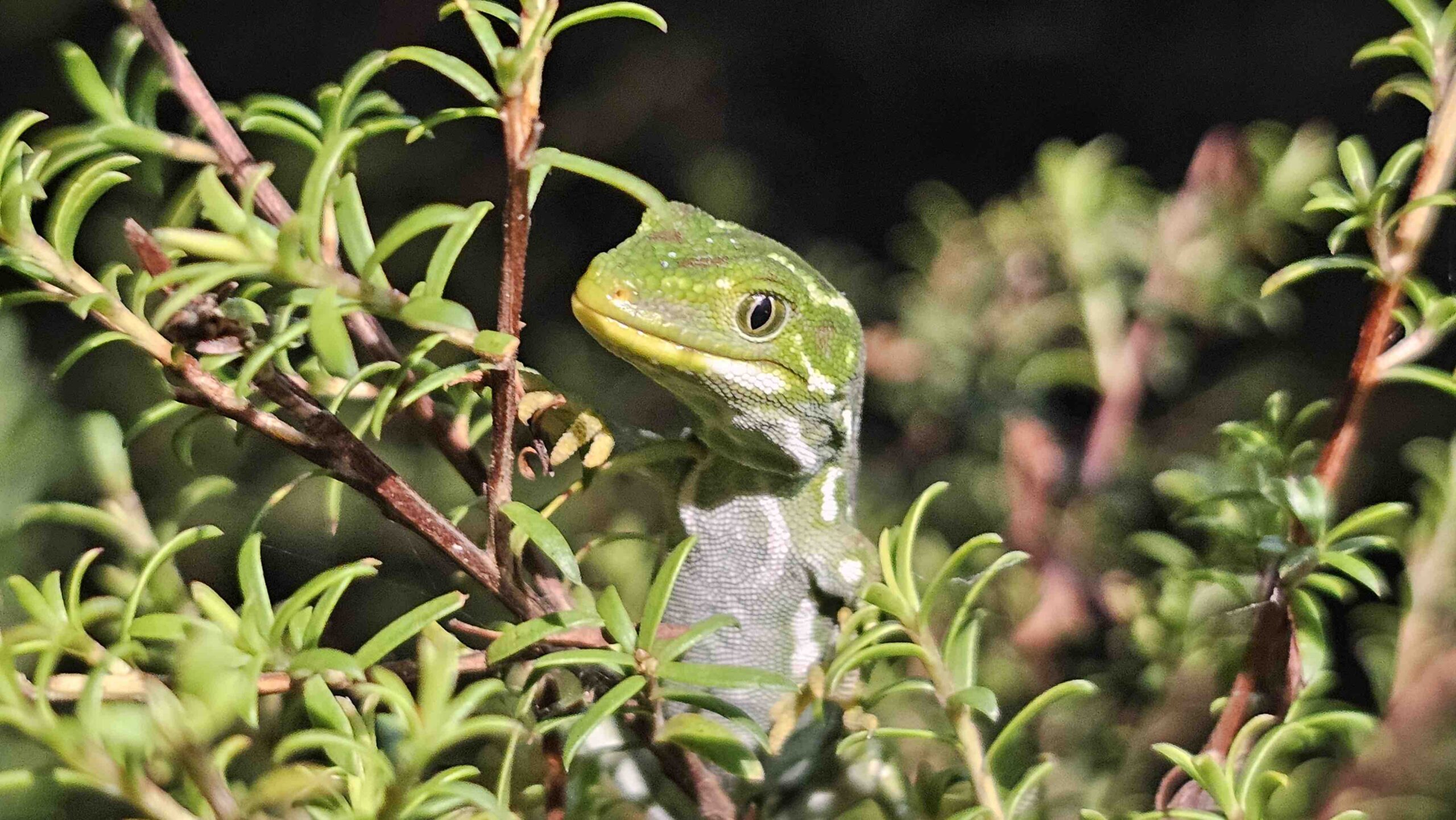
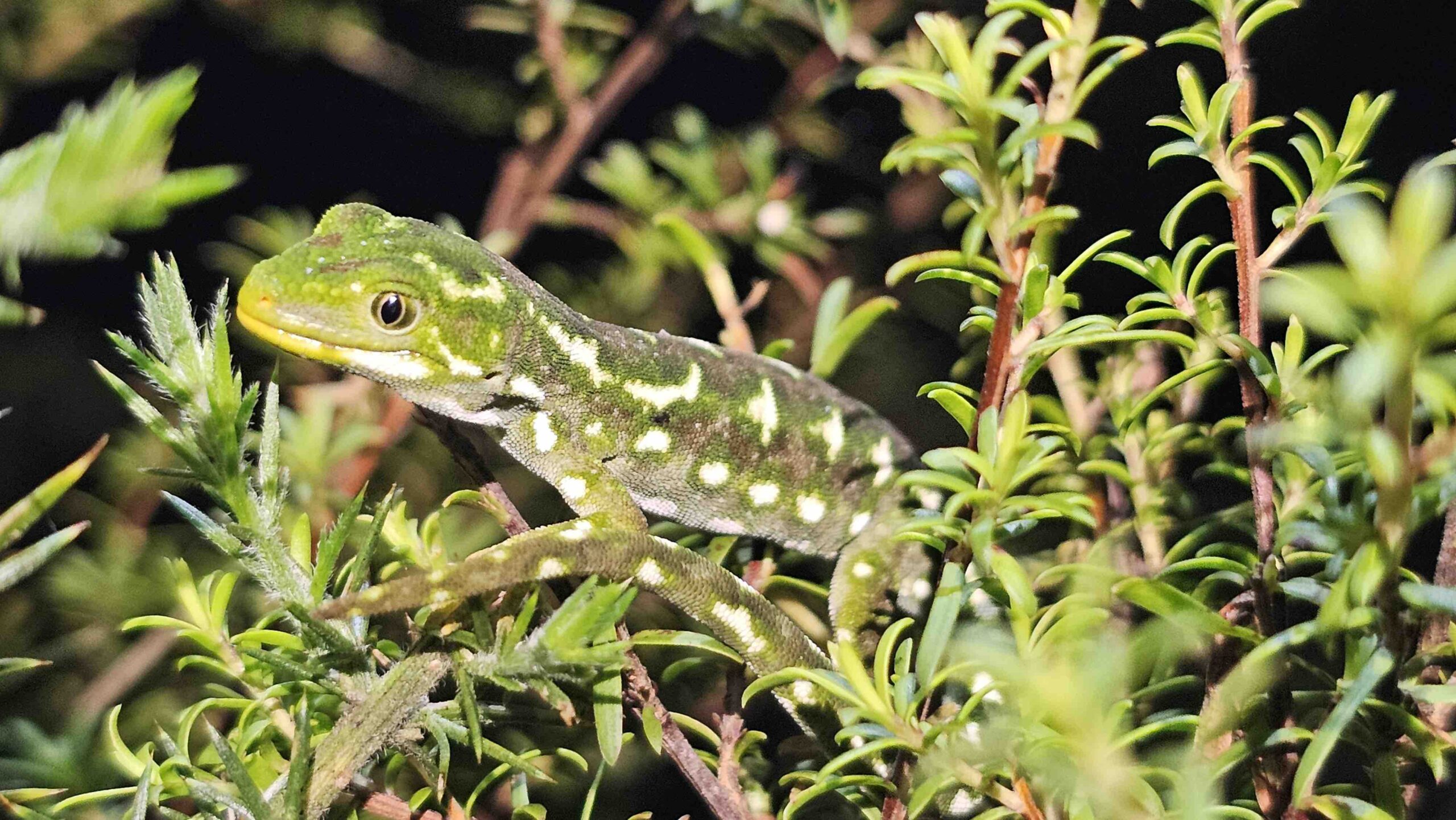
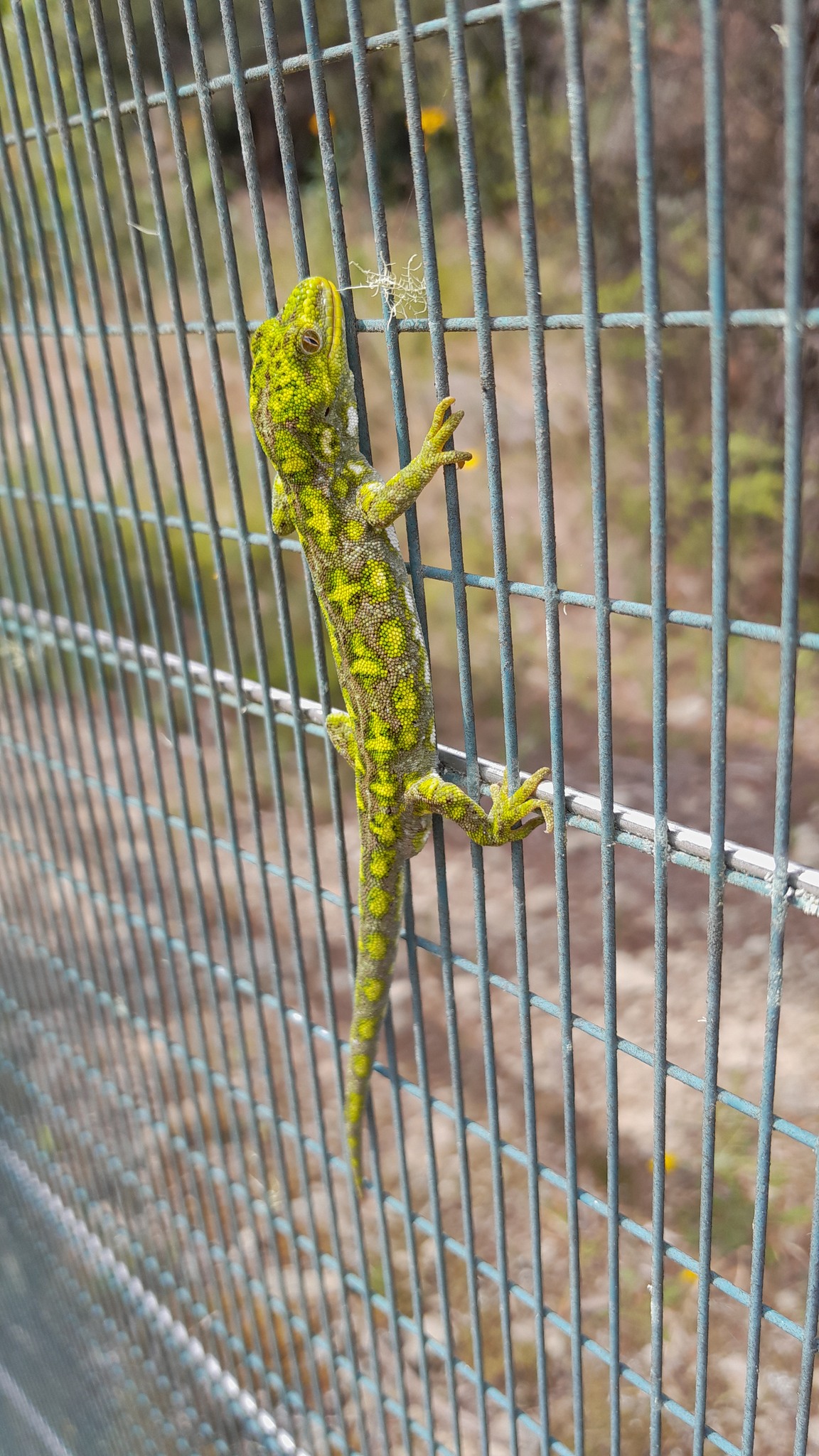
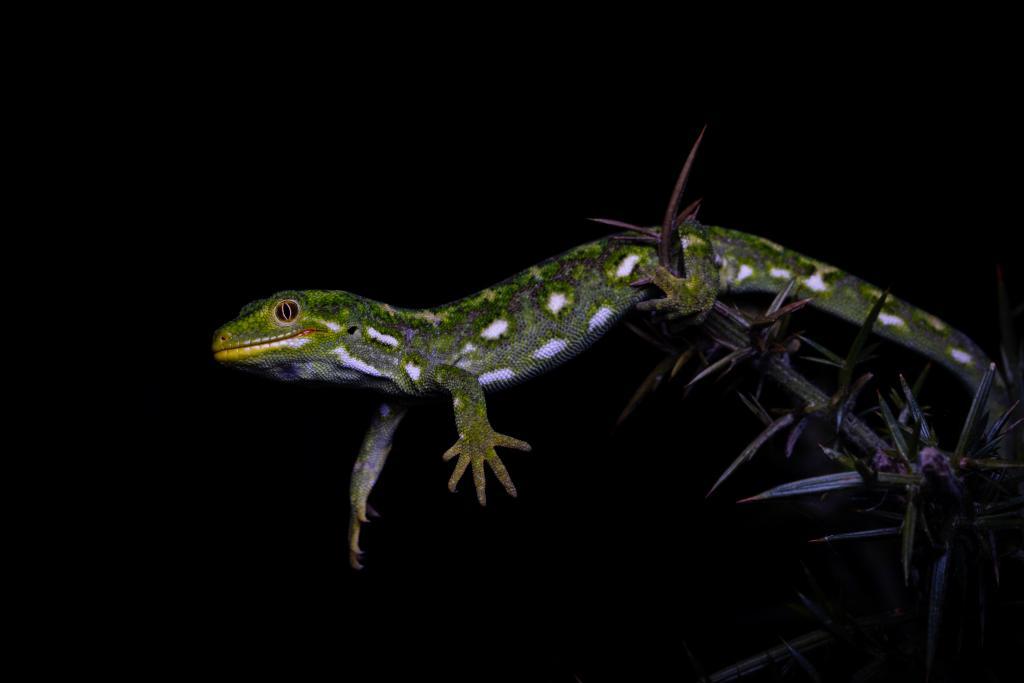
The starred gecko is an exceptionally beautiful, day active, foliage dwelling gecko. Their brilliant patterning and green colour allow them to blend seamlessly among the tops of the forest canopy. Here they evade their native predators on the ground, while remaining undetectable to predators of the skies. They are a splendid example of the beauty and biodiversity that remains unseen to most untrained eyes.
Conservation Status

Threatened – Nationally Vulnerable
Nelson green geckos are threatened with extinction. Their populations are highly fragmented due to the widespread destruction of native forest habitat and predation from introduced mammalian pests. Mice may continue to be a threat to this species within the Sanctuary, so it is hoped that a remnant population can recover within the mouse exclosure.
Population

Endemic to the western half of Te Tau Ihu(top of the South). Green geckos are canopy specialists, sometimes living in the leaves of one tree for their whole life. Their population size, distribution and stability is not well known for the Sanctuary.
Food

Moko kākāriki are omnivores, primarily eating insects like moths, flies, and spiders, but also consuming nectar, small native fruits, and honeydew from scale insects, playing roles in both pollination and seed dispersal.
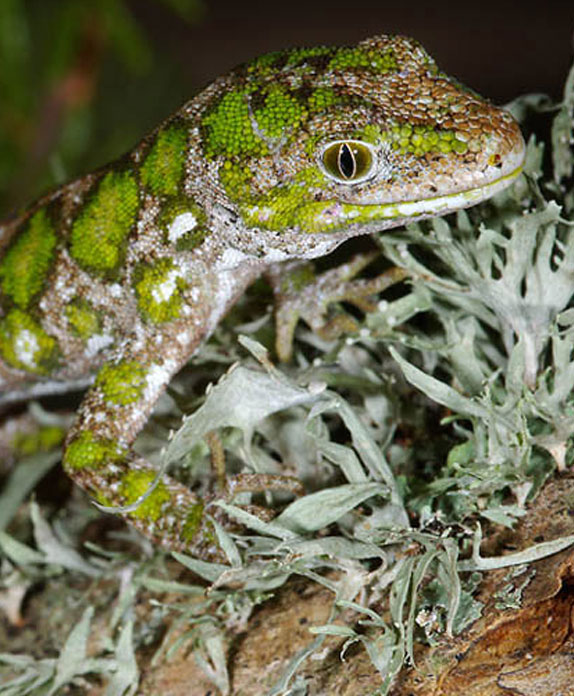
Populations of Nelson Green geckos are highly variable across the range of the species. The animals at the Brook are somewhere between the highly patterned Nelson Lakes population and the less variable Maitai Valley population. Their colours include whites, browns yellows and various shades of green, with ‘plus’ or ‘star’ shaped patterns along their dorsal surfaces
Mostly diurnal, an unusual habit for a gecko, the green gecko utilises a sit and wait strategy. It will take flies, moths, beetles opportunistically, and will take fruit and nectar when it is available. Lizards require lots of warmth to remain active, which this species has in abundance.
Green geckos reach maturity in a few years and may live for tens of years. They can only produce up to two offspring each year. New Zealand geckos give birth to live young. Both their longevity and their viviparity(live birth) is completely unique among geckos globally, which usually live fast and die young, laying many eggs. The unique adaptations of New Zealand geckos reflect a long history on these islands as well as adaptations to the cooler temperate climate.
Endemic to the Nelson-Tasman region, the starred gecko varies across its range. At the north western end it is slender and relatively small with a plain green colour lacking any patterning. In the south east, this species becomes larger and highly patterned. Within the Sanctuary, the species likely lives in a variety of tree species, including beech, kānuka and likely broadleaf and podocarp trees.
Starred geckos are threatened with extinction as populations continue to decline, with very little data to inform their status. They are preyed on by introduced animals, wiped out by fires and forest clearance. Because of their slow replacement rate of two offspring per year, their recovery takes an exceptionally long time.
If you encounter this species within the Sanctuary, count yourself very lucky. They are difficult to locate even for those who know where and what to look for. We hope that this species is able to make a good recovery within our 3.7ha mouse exclosure. On islands free from predation, green geckos can reach spectacular densities after decades of recovery.
Our green geckos are known for vocalising when they are grumpy. These sounds are likened to barking or laughing, and can be very loud for such small animals.
Our other residents
Check out some of the other incredible wildlife that call the Sanctuary home



Follow us on Instagram
@brooksanctuary
Share your photos with #brooksanctuary
🌿 BINGO NIGHT at Spring and Fern – The Meadow! 🎱
Looking for a fun night out while supporting a great cause? Join us for a night of bingo, good company and some fantastic prizes, all in support of the Brook Waimārama Sanctuary! 🌱
📅 Tuesday 20 October
⏰ 7pm
📍 Spring and Fern – The Meadow
💰 Remember to bring cash!
🎁 Great prizes are up for grabs, so bring your friends, bring your lucky streak, and get ready for a fun night supporting our native wildlife and conservation work.
We’d love to see you there! 🌿
Oct 18


Mental Health Awareness Week 2026 | Take a moment for yourself
Sometimes, the best thing we can do for our wellbeing is slow down, get outside and reconnect with nature.
At the Brook Waimārama Sanctuary, we’re lucky to be surrounded by native birdsong, towering trees and the peaceful sounds of the forest. Spending time in nature can help us feel calmer, lift our mood and give us space to reset.
Have you ever tried forest bathing? Also known as shinrin-yoku, it’s the practice of immersing yourself in the natural environment and mindfully connecting with your surroundings. It’s not about how far you walk or how quickly you get there; it’s about slowing down, noticing the sights and sounds around you, breathing in the fresh forest air and being present in the moment.
This Mental Health Week, we encourage you to take a little time for yourself. Wander beneath the trees, listen to the birds, feel the breeze on your face or simply pause and take a few deep breaths. Sometimes, a little time in nature is just what we need to recharge.
Remember, you don’t have to do everything at once, and it’s okay to ask for help when you need it. Looking after your mental wellbeing matters.
Find out more at the Mental Health Foundation of New Zealand: www.facebook.com/mentalhealthfoundationNZ
Take a breath. Slow down. Reconnect with nature.
📽 Video credit: Nicholas Roosen @nickjroosen
#MentalHealthWeek #ForestBathing #Wellbeing #NatureForWellbeing #BrookWaimāramaSanctuary #taketimeforyou
Oct 14

A big thank you to @patagonia and @mdoutdoorsnz for their recent generous donation to the Brook Waimārama Sanctuary. 💛
Through Patagonia’s Impact Incentive Programme, MD Outdoors had the opportunity to select a charity to support and chose the Sanctuary. We’re incredibly grateful to both organisations for their commitment to supporting conservation and protecting Aotearoa New Zealand’s unique wildlife and natural environment.
Every contribution helps us continue our work to protect threatened species, restore our native ecosystem, and ensure future generations can experience the wonders of our natural heritage.
MD Outdoors is proudly 100% locally owned and operated, and we’d also like to congratulate the team on recently opening their new store in Wakefield. It’s fantastic to see businesses supporting conservation and making a positive difference in our community.
Thank you, Patagonia and MD Outdoors for backing our mahi and helping us make a difference.
#BrookWaimāramaSanctuary #Patagonia #MDOutdoors #Conservation #ProtectingOurFuture
Oct 13

Support the Brook Waimārama Sanctuary at The Spectacle 2026! 💛
@runthespectacle brings runners and walkers of all abilities together in the heart of Whakatū Nelson, with challenges ranging from a mile to an incredible 100 miles.
You can support the Brook Waimārama Sanctuary by making a donation or taking part and fundraising for us. Every contribution, big or small, helps protect and restore our precious native wildlife and ngahere.
We’re thrilled to have 16 fundraisers already signed up to support the Sanctuary. Thank you for getting behind our kaupapa!
Want to go the extra mile? Sign up, choose the Sanctuary as your charity, and rally your friends, whānau and community to support you.
Together, we can make a difference for our native wildlife.
Donate or sign up today: 🔗Link in bio>>
#BrookWaimāramaSanctuary #TheSpectacle2026 #NelsonNZ #WhakatūNelson #ProtectOurWildlife #NativeWildlife #Conservation #Fundraising #SupportLocal #NewZealandNature #RunForNature #TogetherForNature
Oct 8

Yesterday, we celebrated the arrival of 29 tuatara from Takapourewa (Stephens Island) to the Sanctuary, marking another exciting milestone in our ongoing conservation efforts.
The translocation was led by @ngatikoatatrust kaitiaki of Takapourewa (Stephens Island) tuatara, alongside the @docgovtnz, bringing these incredible taonga into their new home at the Sanctuary.
The new arrivals have joined our existing tuatara population, strengthening genetic diversity and helping secure a future for this remarkable species in Te Tauihu.
Each tuatara was carefully checked before being released into a pre-drilled burrow within our mouse-exclusion fence, where they can settle into their new surroundings.
A huge thank you to everyone involved in making this special translocation possible, particularly @ngatikoatatrust and the @docgovtnz, and especially the team on Takapourewa, who put in some very long hours — and very little sleep — to make it happen.
And a special thank you to Elizabeth del Angel – @soft.currents.photography for capturing such beautiful images of this incredible moment.
@spinyback @nelsoncitycouncil @nbs.co.nz @nelsonpineindustries
Oct 4

👀 Someone was keeping a very close eye on the work!
Our Asset volunteer Barry climbed up his stepladder to finish the framing on the kākā release aviary roof — only to be met by a few very interested spectators!
Some of our kākā decided to take a cheeky look at Barry while he was busy carrying out the work.
Was it simple curiosity… or were our feathered friends making sure the job was being done properly?
Either way, it’s safe to say Barry had some very attentive supervisors on site!
When visiting the Sanctuary, you may be lucky enough to spot kākā too — so keep your eyes and ears open. You never know who might be watching you!
@ngatiapakiterato
#BrookWaimāramaSanctuary #Kākā #NativeWildlife #Conservation #Volunteer #Nelson
Sep 30
