Threatened Orchid Found!
Written by: Henry Hart, Bio-Diversity Ranger
Hūperei/ uhi perei/ perei or potato orchids (Gastrodia) are very unusual plants.
Gastrodia spend much of the year underground as a starchy potato-like tuber, gaining their nutrients from fungal “associates”.
Many plants form a symbiosis (a biological relationship) with fungi. Their roots and the filamentous mycelia form connections, either between or within the cells of the root. These mycelial networks transfer nutrients between the plant and fungus. The plant usually provides sugars gained from photosynthesis, while the fungus provides inorganic minerals as well as water. Beech trees require these relationships to live, without them only reaching a young age before dying. Often, many trees will be linked underground by the same, or many fungi. These networks can act to share resources in times of stress, with the mycelium able to transmit signals between trees.
Orchids form unique relationships with fungi.
Orchids have evolved to produce the smallest seeds in the plant kingdom. Being so small and so numerous, they are able to disperse in the wind like dust, colonising any available space to grow. This is because they lack the large starchy energy stores of most seeds. However, the seed must germinate near a host fungus, which quickly forms a root-mycelial relationship (mycorrhizae). The fungus provides the nutrients for the orchid to grow its first leaf, and then the orchid becomes independent. So, for a short time, each orchid begins as a parasite, or what is termed a mycoheterotroph (fungus parasites). Orchids are evolutionarily recent, while plant-fungal associations have been around almost as long as plants have been on land. This newer antagonistic pathway is probably exploiting the ‘evolutionary good will’ of the long-established plant-fungal associations. Gastrodia or potato orchids however, take this to the extreme…
Gastrodia, along with several other odd plant groups, are lifelong mycoheterotrophs, relying entirely on fungi for energy. Ironically, the sugars that Gastrodia are parasitising from the fungus were originally obtained from a surrounding plant, often a beech or kānuka tree. So, in a roundabout way, the Gastrodia is a true freeloader, taking from both the trees and fungi of the forest.
Fungal species are rich within the Sanctuary with a mixture of saprotrophic(wood/leaf/fecal decaying), mycorrhizal(plant buddies), parasitic(on plants or insects) and lichenous(algal buddies) fungi. The mycorrhizal fungi are the species that form symbioses with living plants, with many that grow a sheath around the roots of kānuka and beech trees, and massively expand their resource gathering capabilities. Typically mycorrhizal fungi are the species that are hosts to Gastrodia. Though this is not well understood and Gastrodia may parasitise saprotrophs as well, at least for a short time.
When a Gastrodia seedling establishes a fungal victim, a starchy tuber forms. It grows into a long narrow tuber that looks like a kumara on a diet. Come December, the tuber sends up a tall stem adorned with fragrant flowers. The height of the inflorescence(entire flowering stem) can be over one metre tall. Because the plant steals its nutrients, it has no need to produce the photosynthetic pigment chlorophyll, the pigment responsible for making plants green. The stems are often black and the flowers can be highly variable in colour. The New Zealand Gastrodia flowers are black or creamy whites, yellows and reddish colours.
The fragrance of the flowers are strongly sweet, floral and with a hint of citrus. This serves as an attractant to all manners of insect pollinators. Honey and bumblebees are given plenty of credit for pollination, however New Zealand ecosystems have evolved entirely without them. Ngaro huruhuru, native bees, come in three different genera with at least 27 species, and pollinate many plants. Some of the most important pollinators in Aotearoa are within the huge diversity of flies, moths and beetles. Sadly for these species, orchids often exploit the long history of good will between plants and pollinators too. Many orchids provide no nectar at all, and some species even trick or trap their pollinators. However, studies of an east Asian species of Gastrodia found that, though the flowers lack nectar, a pseudopollen is produced in the flowers. This was found to offer a protein reward for bees in the genus Lassioglossum, a genus also found in New Zealand.
And for all their thievery and trickery and their temptingly large food store, the potato orchids ought to have natural predators. In Aotearoa, Gastrodia are sometimes dug up and eaten by clever weka who have learned where to find their tubers. Perhaps the now endangered or extinct birds exploited this resource too. You could imagine kākāpō or moa digging up these rich meals. To Māori, perei used to be cooked in earth ovens (hangi) and eaten. The name should not be uttered during harvesting or else you wouldn’t find any! Gastrodia are vulnerable to insects like aphids, who feed on the stems and inflorescences.
Gastrodia species for the most part are not threatened in New Zealand. The Sanctuary hosts at least four endemic species. Most probably not present is Gastrodia sessamoides, which is found in NZ and Australia.
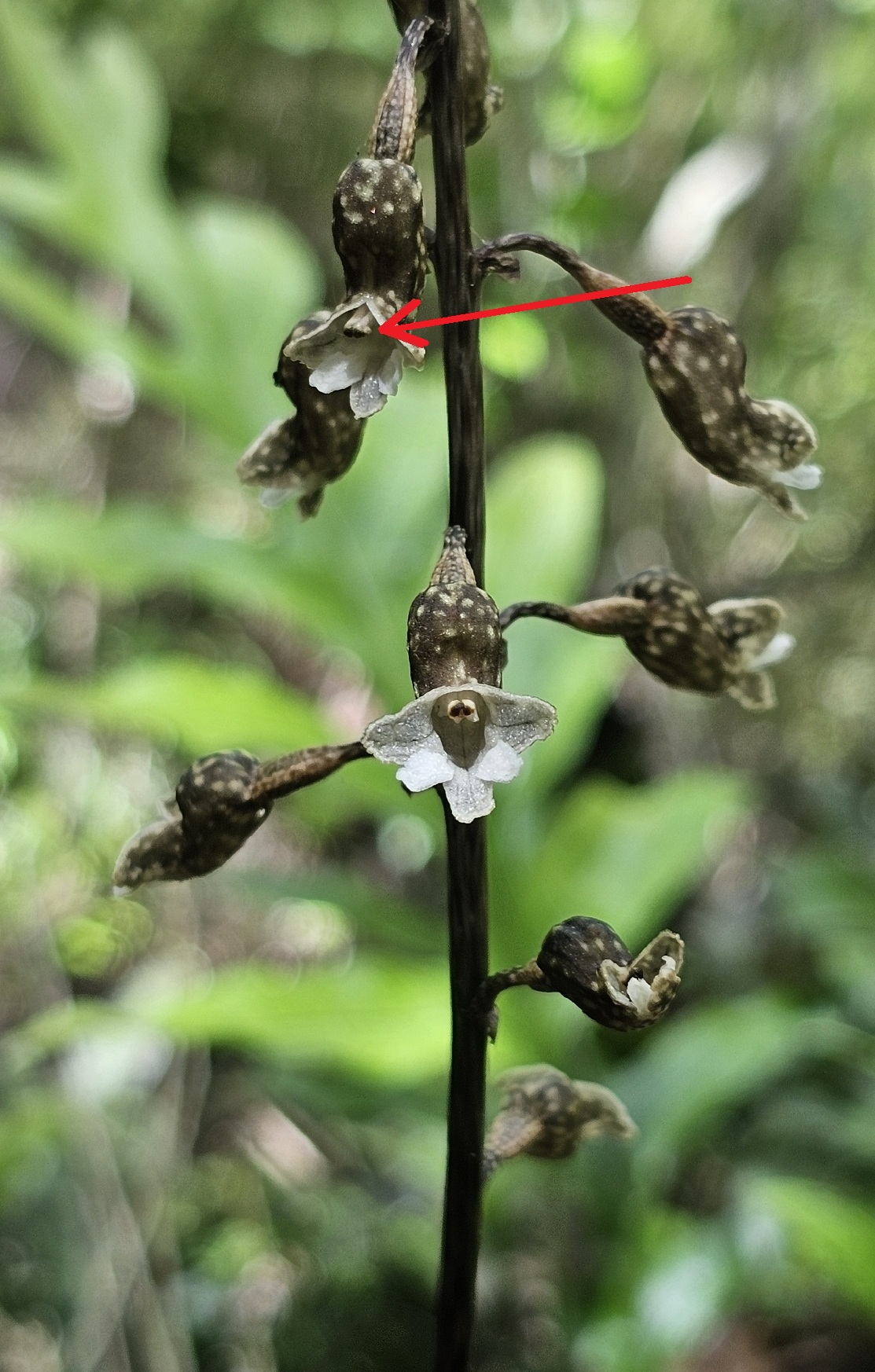
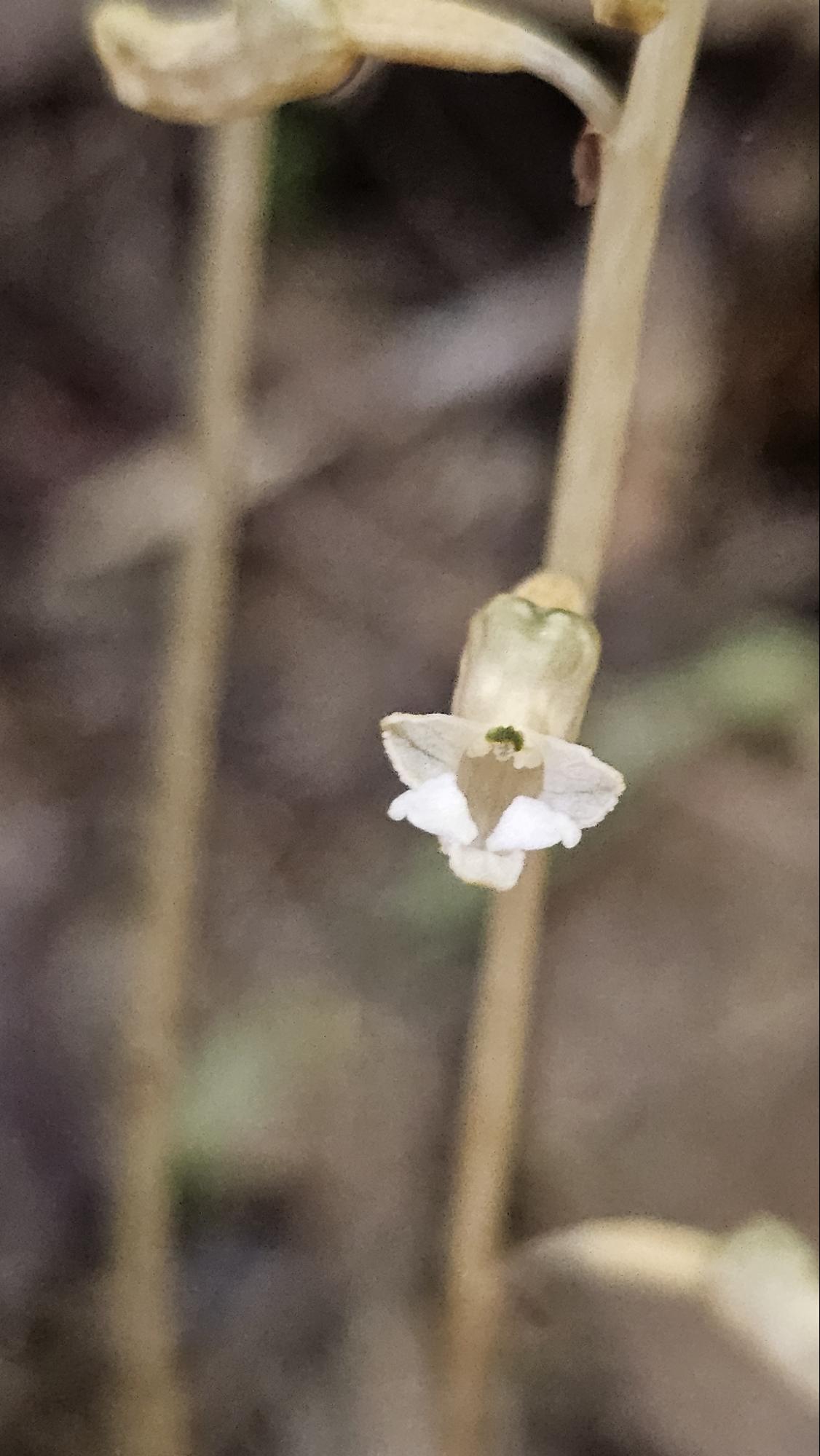
Gastrodia cunninghamii is the most common and widespread species. It is tall, speckled with a black tipped labellum and a short column that is not visible from the outside of the flower(see images to learn these plant parts). Some plants display odd colour morphs like pale yellow or dull green.
Left: Typical Gastrodia cunninghamii, arrow pointed to black-tipped labellum
Right: Pale colour morph of G. cunninghamii
The second most common species in the Sanctuary Gastrodia minor with a glossy black/bronze colour. It’s the smallest species and has only a few small flowers. This species is found almost exclusively in kānuka forests.
Gastrodia molloyi is large, greenish to orange, with a distinctive yellow-tipped labellum and a long visible column. This species is fairly uncommon, especially within the Sanctuary
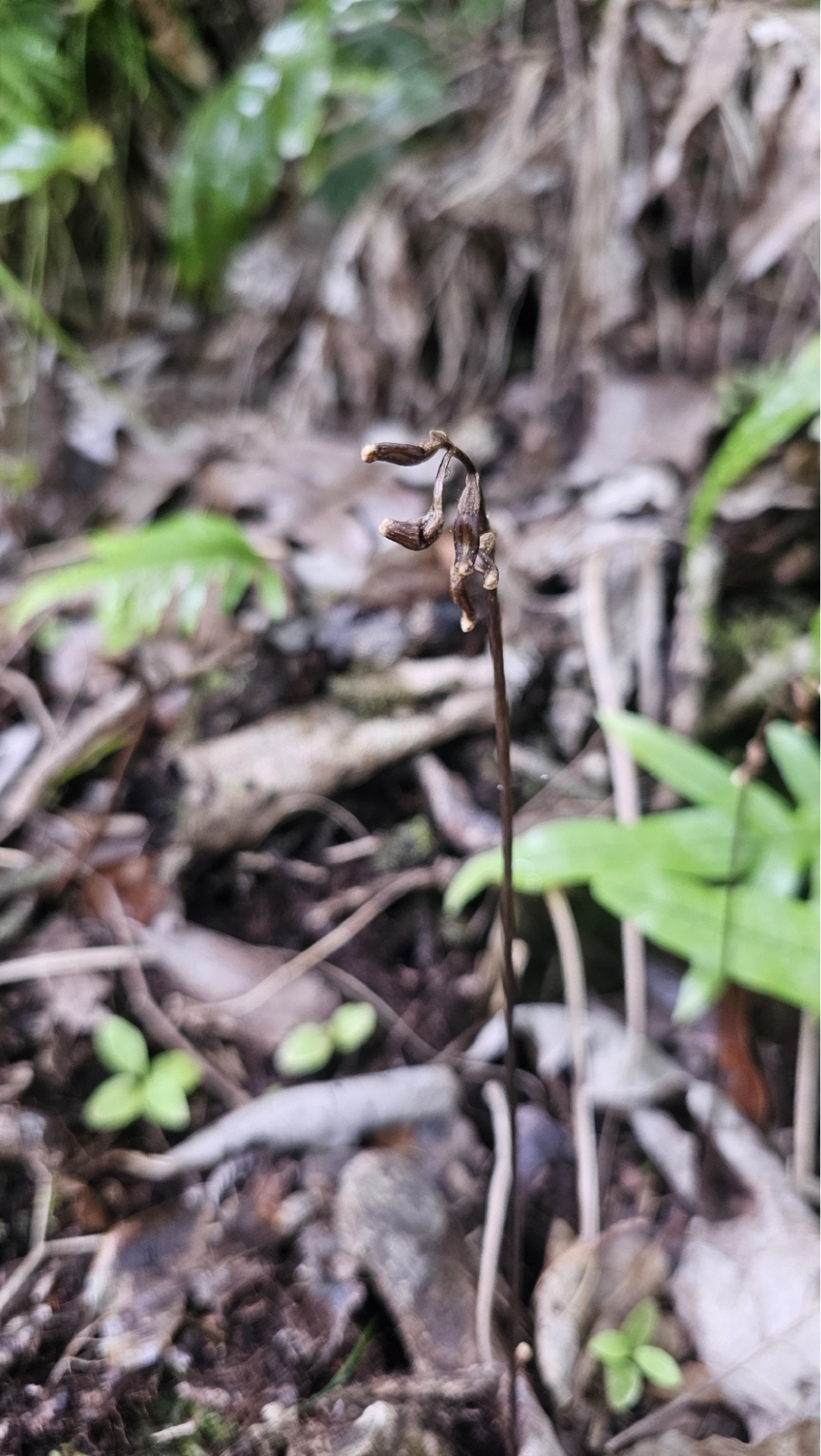
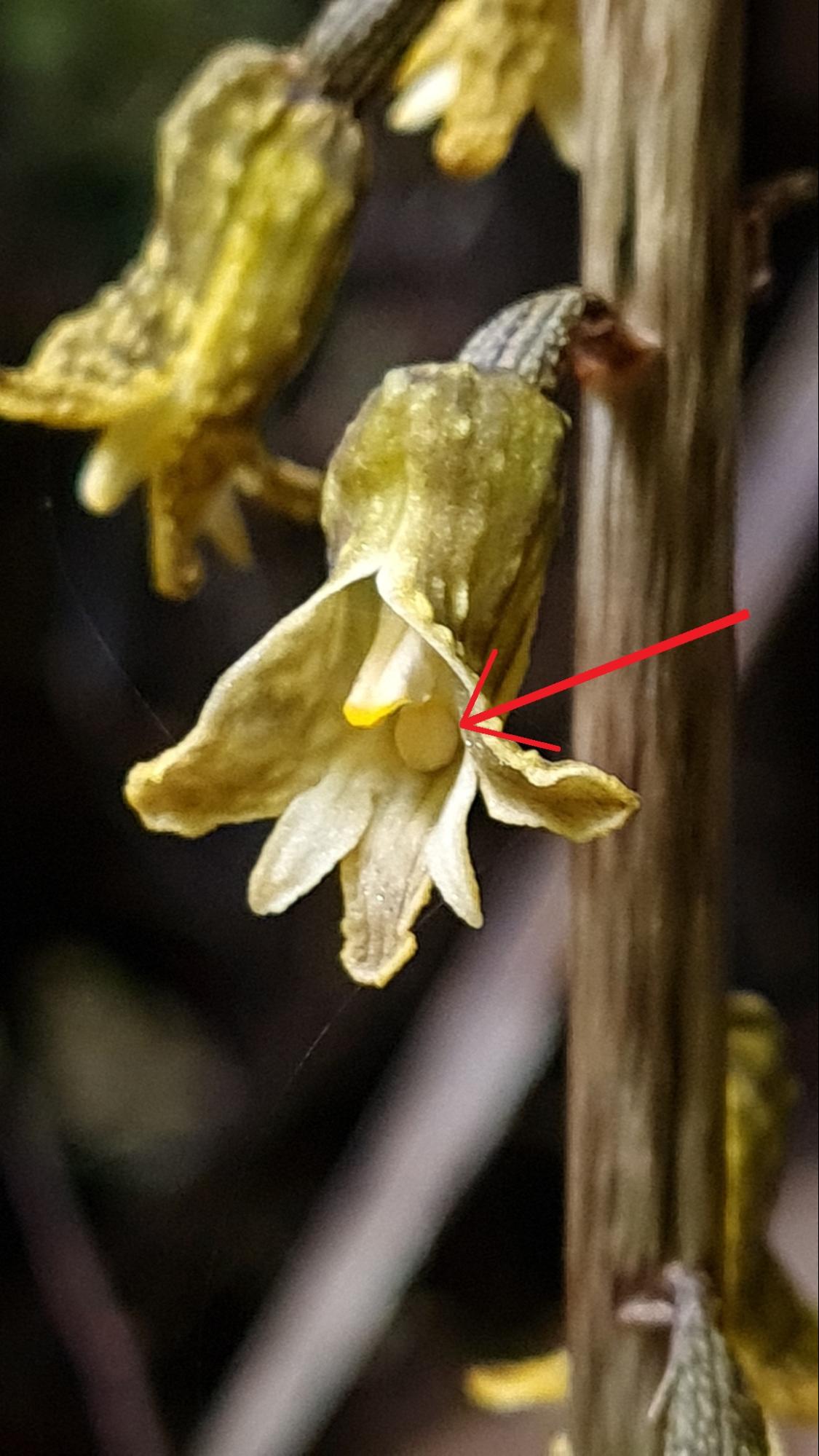
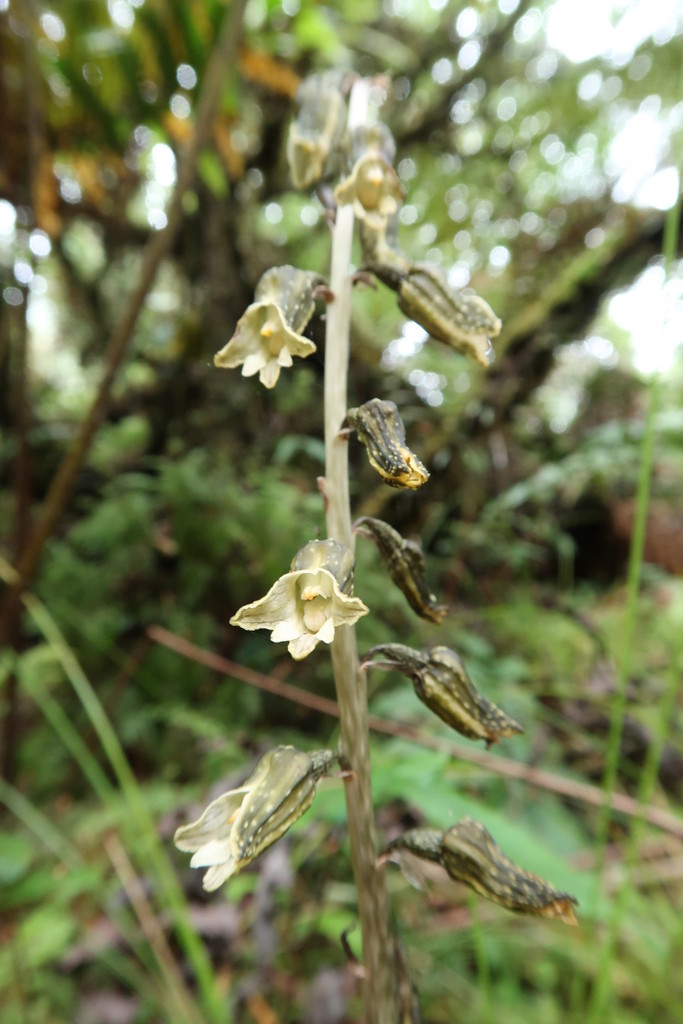
Left: The dainty Gastrodia minor.
Centre and Right: Gastrodia molloyi with visible column (red arrow) and yellow tipped labellum (above the column)
Gastrodia cooperae is the rarest native species. There are two small populations in the North Island and scattered populations around the top of the South Island. They look like the common Gastrodia cunninghamii except their column is long enough to be visible.
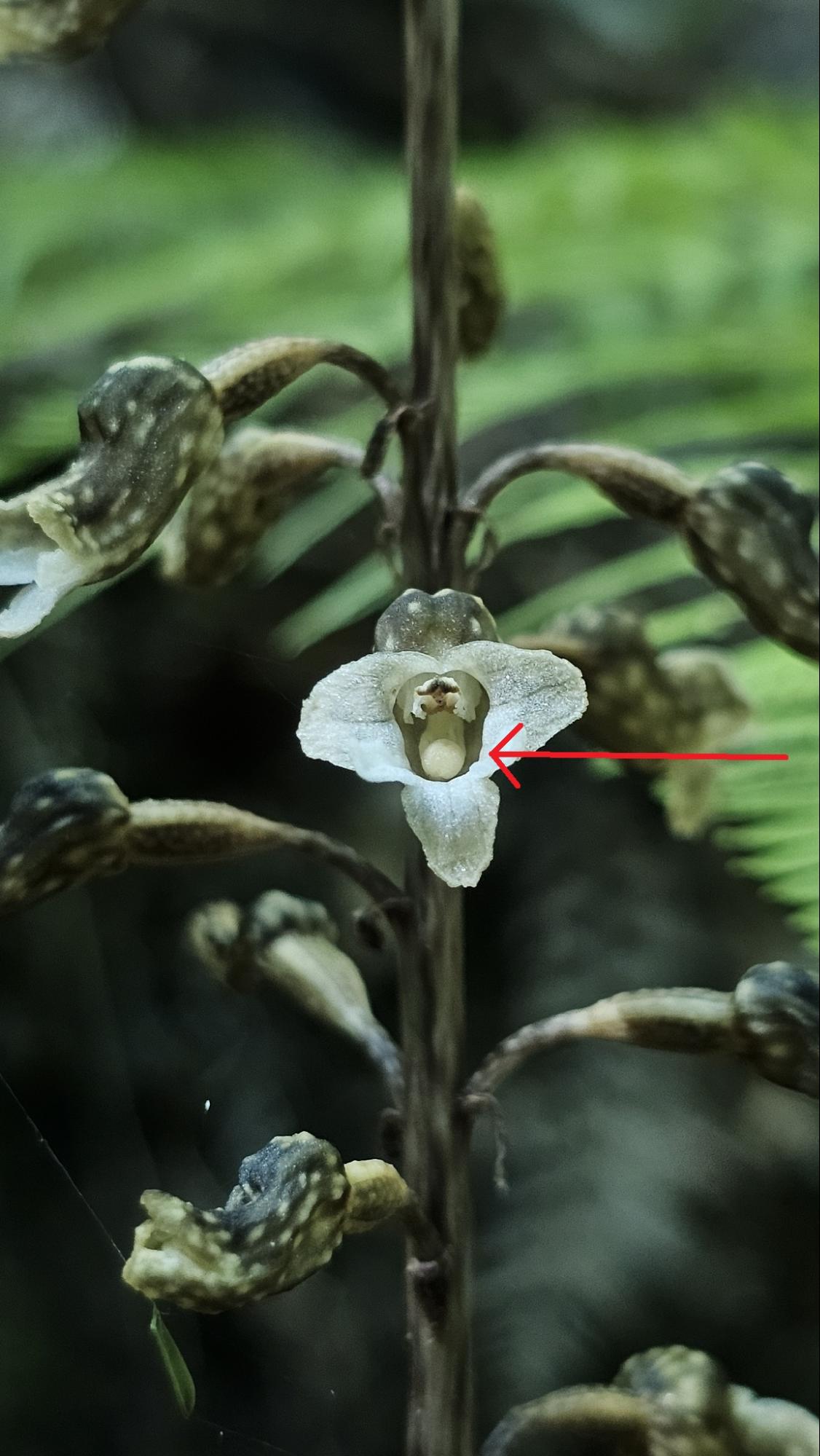
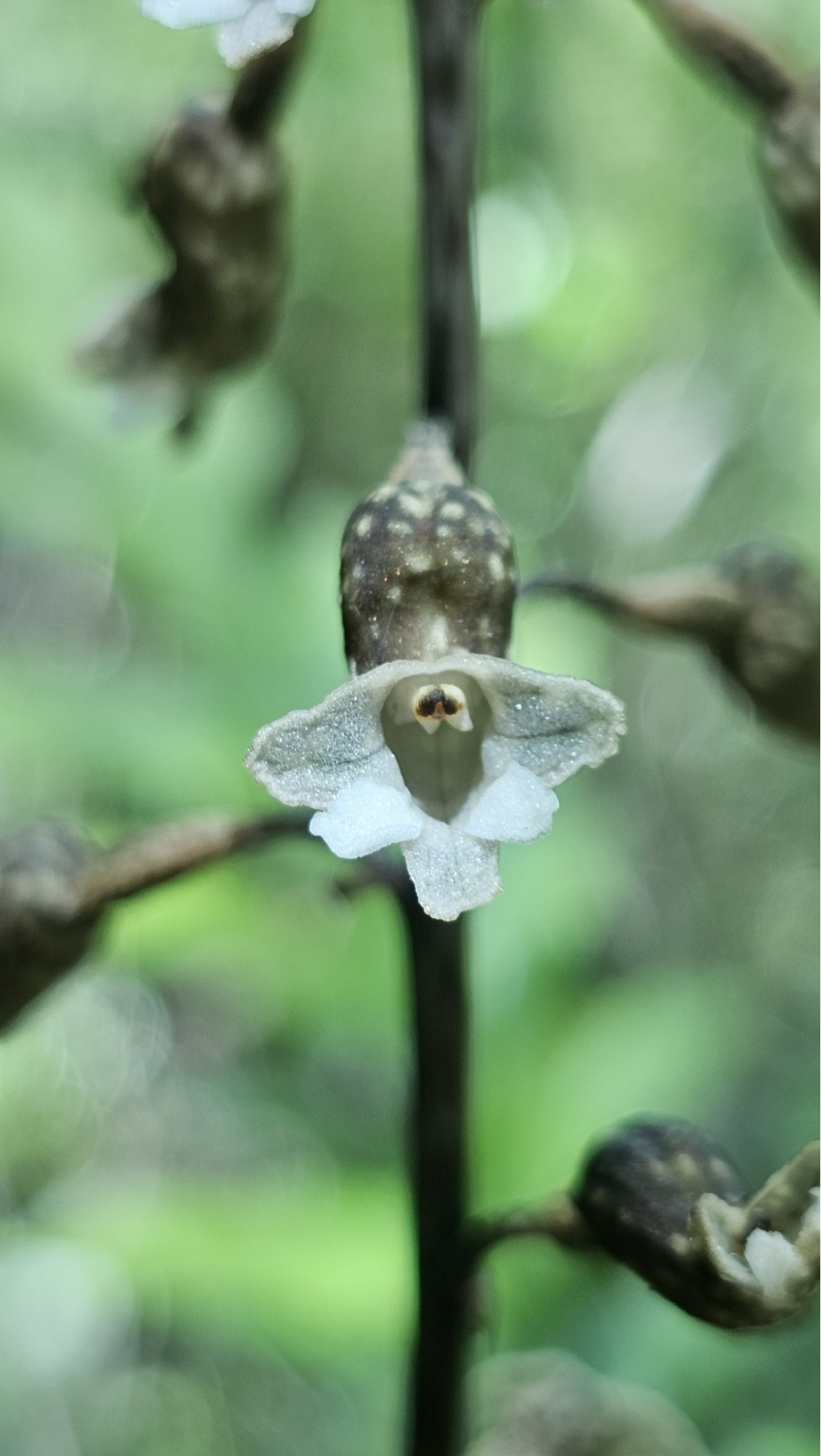
Left: Gastrodia cooperae with a visible column compared to Right: Gastrodia cunninghami with no visible column. Both have black-tipped labellums.
Gastrodia cooperae was only described in 2016(alongside G. molloyi). It was determined in 2017 and 2023 to be Nationally Critical. This threat status is one step from extinction, which is the same threat level as kākāpō. This status was chosen because the known populations are few and consist of small numbers of individuals. There’s also not enough information on population trends to know how this species is coping. Perhaps the species was uncommon to begin with, but has declined more since the widespread destruction of forests and the introduction of non-native species.
There are known drivers of decline in this species. The flowers’ powerful scent is highly attractive to non-native mammals, and the inflorescence is often munched by deer, goats, pigs, and possums. Pigs are especially bad as they root up the soil and eat the tubers. Plants are also susceptible to trampling by all introduced large mammals, including humans! The orchids often appear on tracks because they favour disturbed soil.
In December this year, we conducted two dedicated surveys for this species within the Sanctuary. A couple of days before the first survey, a plant was found by orchid enthusiast Marian W… This was very encouraging for the upcoming survey!
“When taking part in the first round of the survey, we recorded a lot of G. cunninghamii, but G. cooperae remained elusive. It was therefore to my surprise a couple of weeks later while volunteering on my usual perimeter line that I spotted one right by the track.”
A quote from volunteer, Niall D
The final survey found no new plants, but…
I found a third plant when putting in adjacent lines! Plants only seem to appear when you’re not looking for them. Nevertheless, surveys are incredibly important for determining the presence and spread of a species. DOC have also been surveying and finding this species in a number of new locations this summer.
“It is always important to survey and check if a threatened species is present in the Sanctuary before undertaking any reintroductions and to understand exactly what the Sanctuary is protecting.
I think in this case, we are all learning how to distinguish this species from the more common G. cunninghamii and learning where it grows. It is more common than first thought, but we still do not know its full distribution or understand its rarity.”
A quote from botanist and volunteer, Chris Eckroyd
It was lovely to have around 12 different volunteers participate, and perhaps explore parts of the Sanctuary they don’t often see. Many of the attendees learned of this orchid on the day of the survey, making them forever able to make new records of the species should they stumble upon them.
Often people see Waimārama Sanctuary as a ‘bird sanctuary’, but we are equally important for the restoration of the flora and funga and all the other underappreciated organisms that form the New Zealand beech forest ecosystem. Orchids represent a large chunk of the plants in Aotearoa, and they are being restored to their former glory here at the Brook.
A huge thank you to the survey volunteers!
We will continue to survey for this species over the next two years. If you’re interested in joining next December, all are welcome. You can register your interest by letting me know at henry.hart@brooksanctuary.org.nz
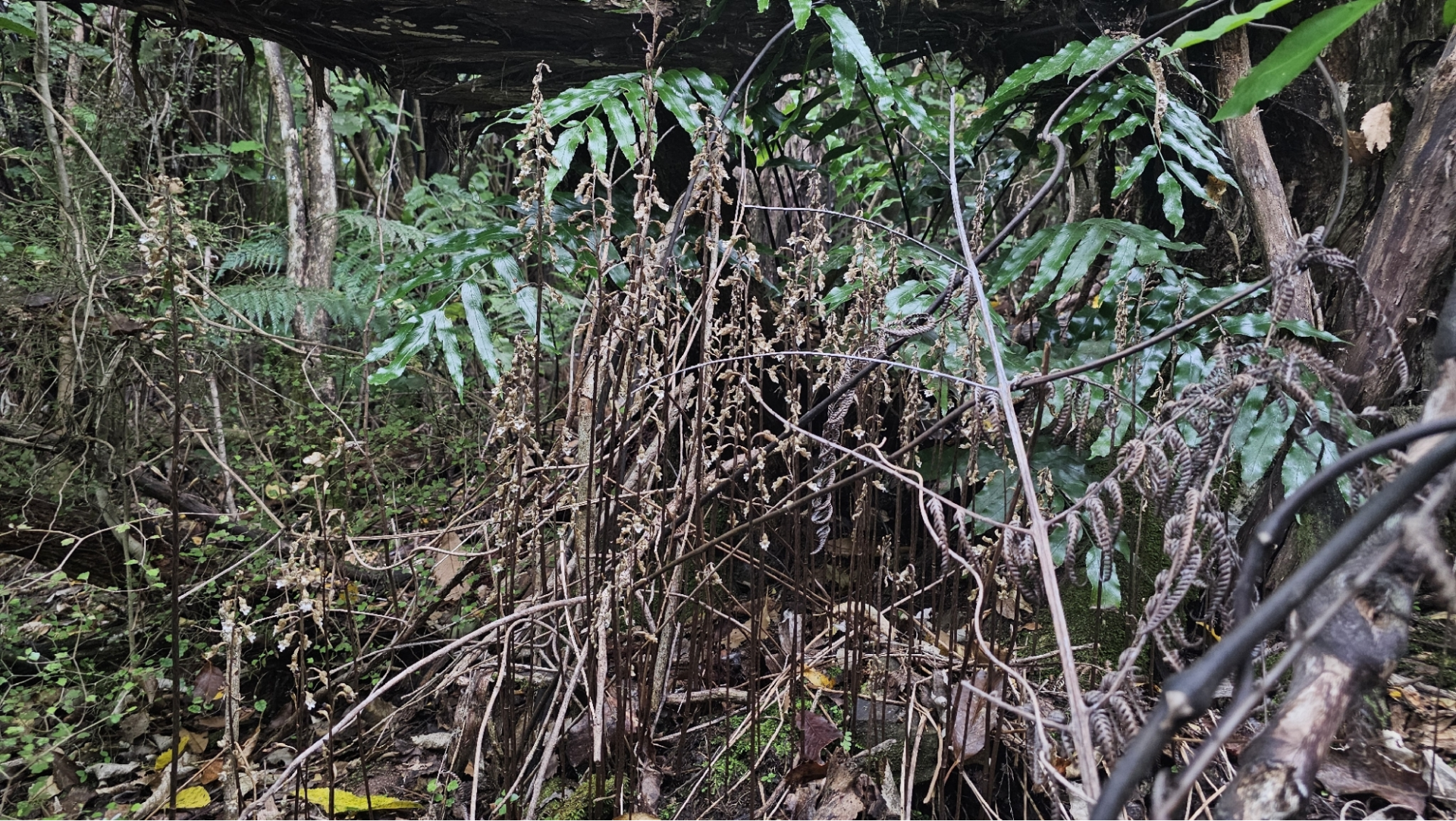
Parting image: Huge ‘party’ of Gastrodia cunninghamii in one patch (at least 100 stems)