DOC 200 trap upgrade: stainless, sensitive, and kiwi-ready
Written by: Neroli Amyes
BWS’s trapping programme has always been a quiet line of defence for our sanctuary wildlife. We run 370 DOC 200 traps across the sanctuary—traps designed primarily for mustelids but which also take rats and the occasional mouse. In recent years we’ve systematically improved both the safety and effectiveness of those traps so our sanctuary is ready for kiwi.
Making traps kiwi-safe
In 2019, every DOC 200 box on our lines was inspected and tested for “kiwi proofness.” We checked whether a long kiwi beak could reach through external mesh to the trap mechanism and fitted extra-fine mesh where required.
Tuning sensitivity for the real invaders
Factory settings for a DOC 200 trigger at about 100 grams. At BWS we have a local twist: our mustelid problem was dominated by weasels, which are much smaller—often under 50 grams—and primarily hunt mice. Research by Kevin Bolitho and colleagues recommended lowering trap sensitivity to better target weasels while avoiding excessive mouse-take. During 2020 we recalibrated all field traps to trigger in the 38–48 gram range.
Corrosion problem and the temporary fix
A June 2022 audit showed many triggers no longer met our sensitivity standard because of corrosion in the steel trigger mechanism. Initially, we cleaned and reset existing traps; many regained sensitivity, so line monitors were asked to trigger and reset them monthly when re-baiting. This worked short term but was labour intensive and not a long-term solution.
Moving to stainless steel
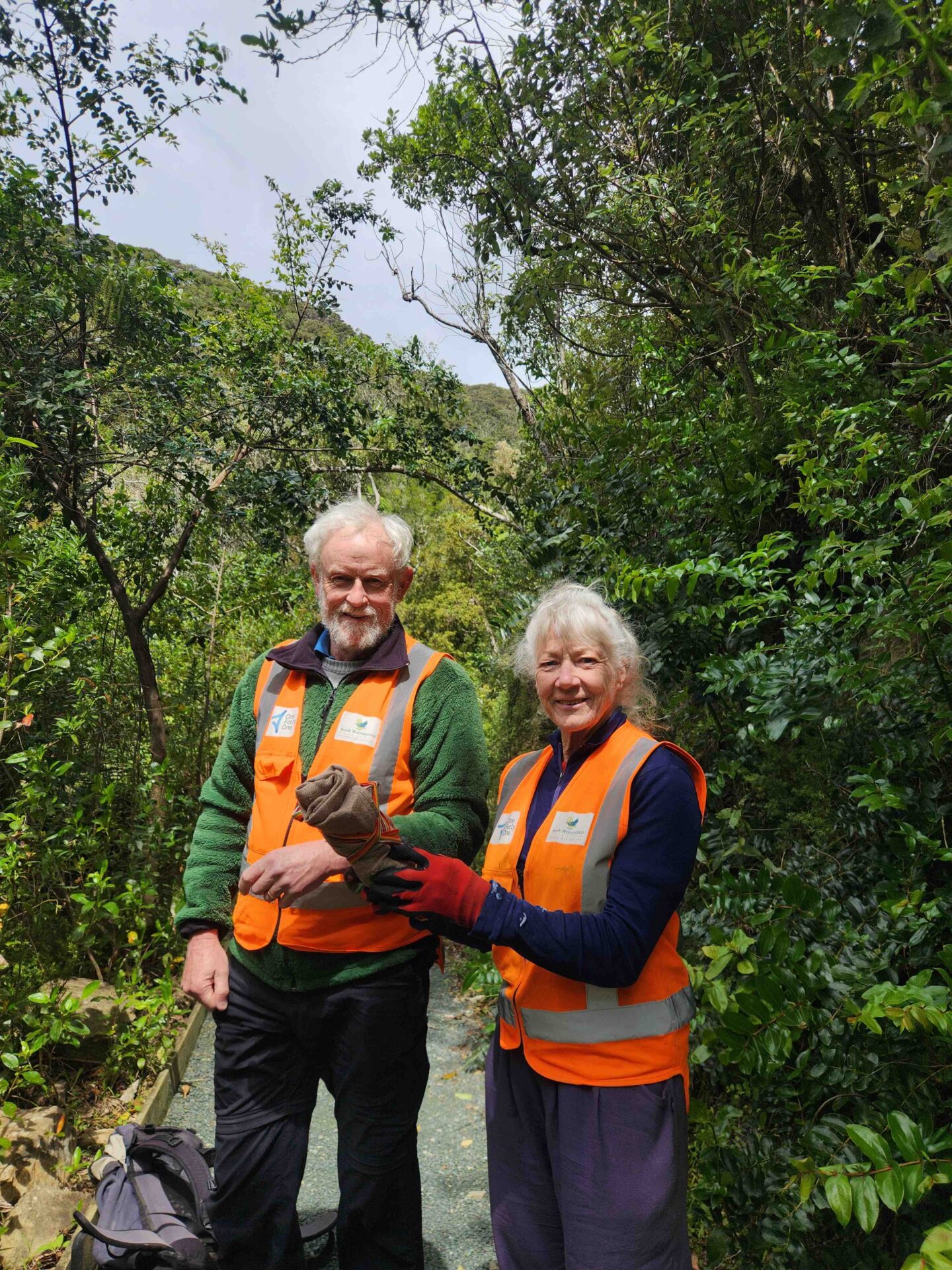
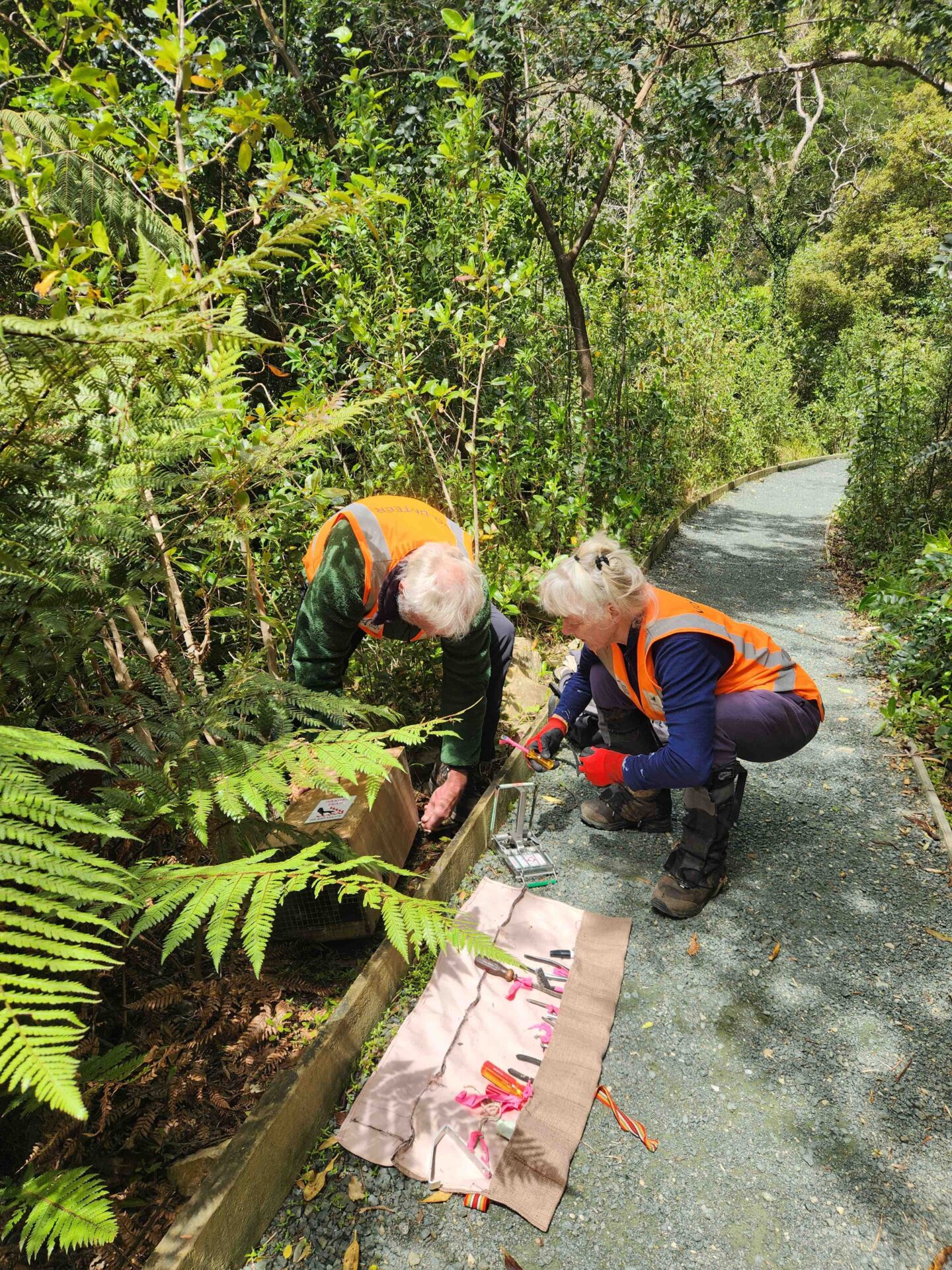
By December 2022 we decided to replace steel traps with stainless steel ones. Two sample traps were trialled for fit and function. Replacement outside the perimeter fence was completed in August–September 2023, and the internal X-line was upgraded in January–February 2024. As funds allowed, batches of stainless traps were bought, calibrated at home, and volunteers were trained in a simple SWAP-OUT method to replace old traps with new ones. Volunteers recorded progress and box condition on a central spreadsheet, replaced worn boxes where needed, and removed corflute from boxes during visits.
Project completion and what’s next
By October 2025 all DOC 200 traps in the main sanctuary body had been replaced with calibrated stainless steel units. New trap boxes—designed and built by Geoff Galbraith—are being deployed as older boxes reach end of life, and existing stainless traps will be recycled into those new boxes.
This project reduced maintenance workload, improved capture reliability for the species we most need to control, and tightened safety measures ahead of our kiwi introduction. A huge thanks to the volunteers who swapped traps, logged conditions, and kept our lines running—your steady work makes Brook a safer home for native birds.